


With a deep understanding of your business alongside clear and honest communication, we help clients face challenges fearlessly.
Learn more about our services and how we help clients.



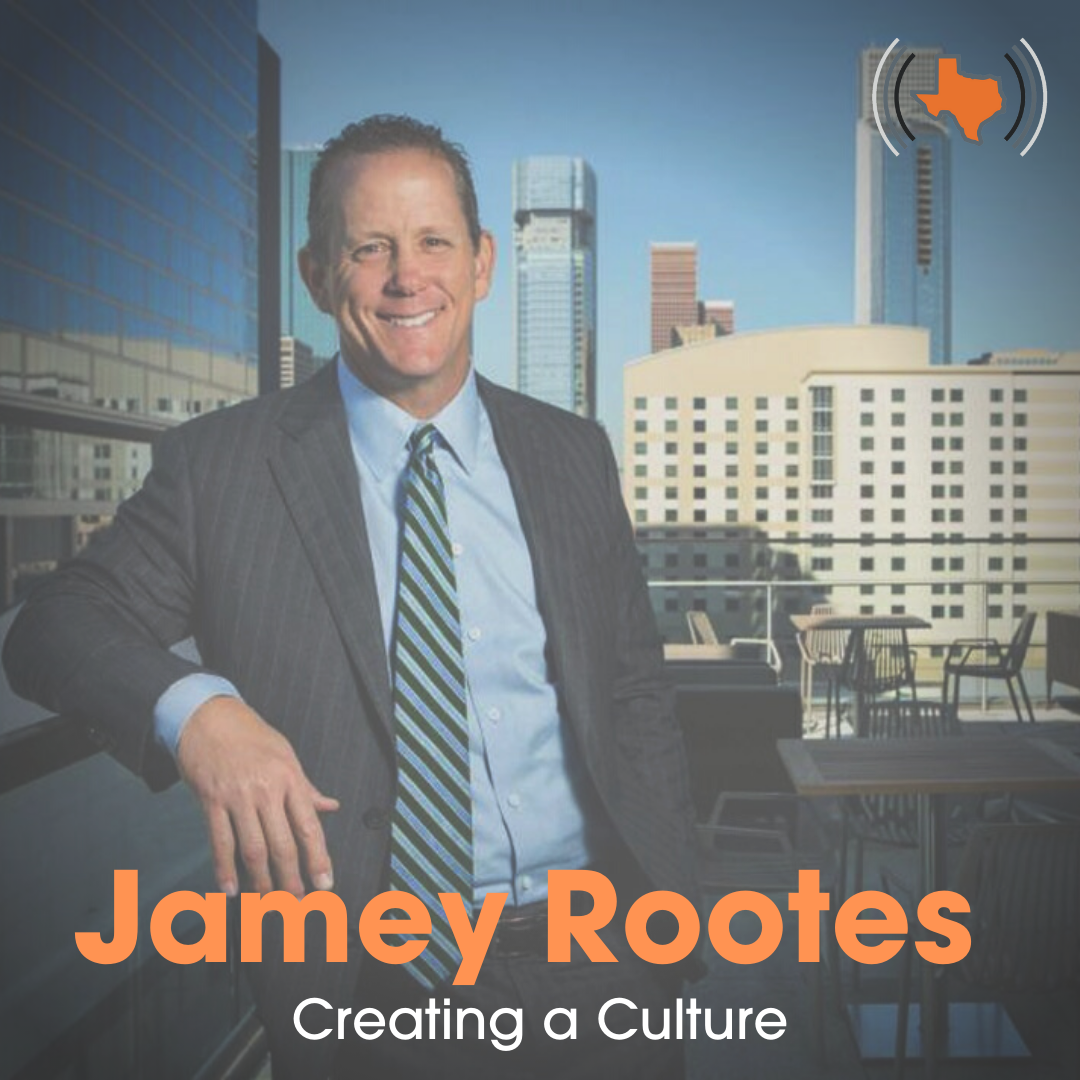
Jamey Rootes, former President of the Houston Texans and MLS’s Columbus Crew, and President and Founder of Lone Star Sports & Entertainment, appears on the latest episode of Building Texas Business. Jamey talks about his long career and how he combined a passion for sports and a strong work ethic into building two sports franchises from the ground up. His commitment to the sport, the people he works with, and the fans comes together in the culture he fosters in these organizations.
Transcripts are generated by machine learning, so typos may be present.
Chris Hanslik: Hello, everyone. My name is Chris Hanslik and I’m the chairman of BoyarMiller, a mid-size law firm in Houston, Texas. I want to welcome you to Building Texas Business, a podcast about corporate innovation, entrepreneurship, and business leadership in the Lone Star State. The goal of this podcast is to learn from some of the best business leaders in Texas in hopes that their stories of growth, challenges, and success will inspire our listeners in their own journey to building a successful business. Today’s guest is Jamie Roots. Jamie has been one of Houston’s leading business executives for over two decades. He most recently served as the president of the Houston Texans, where he helped launch the then new NFL franchise. Jamie has also served in a variety of nonprofit capacities, including terms as board chair for the Greater Houston Partnership and the United Way of Greater Houston. Prior to his time in Houston, he helped launch the Columbus Crew, an MLS franchise. Jamie’s talents as a leader had been recognized by the HBJ as the business person of the year in 2016, most admired CEO in 2019, and Sports Business Journal’s 40 Under 40. Welcome to the podcast, Jamie.
Jamey Rootes: Chris, it’s great to be with you.
Chris Hanslik: Always good to see you. Let’s start. You’ve had an incredibly successful and long career in the sports industry. What inspired you to get involved in sports management or sports leadership?
Jamey Rootes: Yeah, well, I was involved with sports growing up as a soccer player and played through college left and didn’t really know what I wanted to do. And so I went to IBM and. spent several years as a sales rep for mainframe computer equipment, but really didn’t feel the passion for what I was doing and had some friends that were involved in a sporting goods manufacturing company and really thought that looked pretty cool. So I decided to go back to graduate school, thought I might want to be a coach, might want to be in a sports business in some way and that gave me an opportunity to evaluate both and made a decision I wanted to be in a sports business. The only problem was I didn’t have a job in the sports business, right? So I went to Procter & Gamble. But during that whole period of graduate school and beyond, I did informational interviews all over the place. Anybody who would sit down and talk to me about it, I’d spend time with them. And then eventually one of those connections that I made came back around with an opportunity when Major League Soccer started. There weren’t a lot of folks involved in the soccer business from a business perspective. And so I had a coaching background, a playing background, and a business background. So all those things melded and Lamar Hunt gave me an opportunity to work with him to launch the Columbus crew. And I took it off from there.
Chris Hanslik: That’s neat. So you use the term informational interview. Sounds like you did some of your own informal kind of market research to see if this was something you might find an opportunity in.
Jamey Rootes: Yeah. And you never know whether those discussions that you have are going to lead to something or not. But people don’t, people typically don’t object to you coming in and finding out about what they do. And so that was the premise. Fortunately, one of those, one of those interactions that I had eventually turned into being something that could get me into the industry. And I tell you, the hardest part about it is getting in. It’s just a very difficult industry to get in and to get back into once you get out of it. And so that’s just the nature of the beast.
Chris Hanslik: Gotcha. So you get this job in Columbus, Ohio, brand new league in a brand new franchise. What were some of the I guess, fundamentals or building blocks that you thought were going to be important to make that successful.
Jamey Rootes: Yeah, the entire time that I was there was a startup. It was five years. First of all, I was starting up the team and playing at Ohio Stadium. And then we built the first training facility for an MLS franchise, which was needed because didn’t have anywhere for our guys to practice. And so we put that together and then eventually it launched a stadium. So it was the series of launches. I think that as I reflect on it, just the absolute necessity to move quickly, to do something. When you’re faced with a problem, do something. And if it’s not exactly right, you can alter course. But so many things had to get done in such a small period of time, you couldn’t spend a lot of time debating and analysis paralysis. You had to act and know that if it wasn’t exactly right, that you were smart enough to to engage, kind of like a car with manual steering, that until you get the wheels rolling, you can’t really drive it. You’ve got to get the wheels rolling and make decisions and make choices and figure out what is right and what isn’t right, and then address what’s not right and get it fixed on the fly. You’re building the plane as it’s flying.
Chris Hanslik: Gotcha. And I think something I use and I think similar to that is you have to act, but then you need to adjust. Right? And you learn from what you’re doing and you make the right adjustments, but then you get back into action.
Jamey Rootes: That’s right. You act and you adjust, you evaluate, you adjust. And then, you know, it’s just peeling back the onion, you know, figuring out what isn’t working right and get that fixed over and over and over until the organization hums.
Chris Hanslik: So you took that experience in Columbus and you brought it south to Houston, Texas a little over 20 years ago. When you’re thinking about taking on this job and starting an NFL franchise in a league that was already established, what did you bring with you and what were some of the fundamentals of when you think about we need to be a successful business that you really tried to incorporate and how did that evolve over time?
Jamey Rootes: work ethic, humility, thinking that we could be at an elite level, but we were going to work like we were in last place. In the NFL, it’s not hard to get people to connect with you and engage with you about and involvement with the team, but the trick is doing things at a level that would meet the pro forma expectations of the franchise, whether that’s naming rights or tickets or suites or sponsorships. As you’re putting all that together, it’s all gotta be done at the highest level. Fortunately for us, we consistently were able to do that and it’s set a foundation for the franchise for a long period of time.
Chris Hanslik: Well, I know I’ve heard you talk before about that, that you focus on the fan experience. Tell us a little bit more about how you incorporated that mentality into your team to make sure the execution was there.
Jamey Rootes: Well, there’s a phrase we used from the beginning that still exists is create raving fans. every fan every time, right? So the goal is, and you’re not always going to get it right, but then at that point you move into service recovery, trying to fix the problems and fix the people and demonstrate to them that you’re going to go the extra mile. So there’s very little traffic on the extra mile, right? And you’re going to go the extra mile to ensure that the experience they have with our organization is exceptional.
Chris Hanslik: So as you did that here, what were some of the challenges or setbacks that you encountered Along the way and maybe one or two that you are at the top of your list. I’m sure there may be several What were they? What did you learn from them? And how did that make your team better?
Jamey Rootes: Yeah, so the tailgating was a kind of Shining light for us from the very beginning. It didn’t exist here in Houston When the Oilers were here for whatever reason that it wasn’t allowed, right? And so the games became a transaction and you come and You’d go to the game and then you’d leave. And so we worked very hard to extend that day. So roughly 30,000 people tailgating two and a half hours prior to kickoff was a really a magical thing for the first number of years. Then there was Astroworld was taken down and a parking lot across the highway became available and someone got the rights to it and started selling parking and allowing people to come over into the tailgating lot. to enjoy that experience without ever intending to go into the game. And first couple of games were fine. And then eventually we had one game, we had 20,000 people that weren’t intending to go into the game. It was a Cowboys game. And it was just really a threat to the experience that people had come to expect. And so we took a very bold action. You know, we felt like we needed to protect the integrity of what our fans, our paying fans, our ticket holders and parking passals, what they had invested in. And so we took the bold step of making not just the stadium a ticketed experience, but the entirety of the campus a ticketed experience so that you couldn’t come onto the property unless you had a ticket and were intending to go to the game. And it fixed it right away. I mean, it was a bold action, a lot of debate about whether, you know, is that the right thing or the wrong thing to do, but the results speak for themselves. And, you know, sometimes you do have to take bold actions, particularly when you feel like you’ve encountered an existential threat to the experience that you’re providing your customers.
Chris Hanslik: That’s right. Yeah. I’m sure there was a lot of concern over whether that might backfire on something that was such a shining star for you.
Jamey Rootes: Yeah. And fortunately for us, the very first game, everything went back to normal. And as you went around through the parking lots, the fans were very appreciative of the fact that we did what it took to ensure that we could deliver upon the experience that they were expecting and that they had historically had.
Chris Hanslik: Yeah. The things in telegating may be a good example. As you look back at what you were doing, you and your team at Houston Texans, what were some of the things that were really innovative for their time that you executed on and implemented and now are almost institutional?
Jamey Rootes: Yeah. The fact that tailgating had not existed and we spent two years communicating with our fans that they are the best tailgaters in the National Football League and encouraged them to create that experience because you can facilitate that experience. But the fans have to embrace it and they have to create it, right? So we did everything that we needed to do in terms of infrastructure. And from day one, fans got it, loved it, and engaged in it. The idea of a ticketed environment was another innovation. that now across the league, either folks are doing it or looking to do it. So that would be a great example of an innovation that we champion. The other thing is, from a food and beverage perspective, NFL stadiums have moved from hot dogs and hamburgers to really providing a culinary experience. We talked about Houston is the culinary capital of the South, and we were going to be a celebration of that. whether that’s Chris Shepherd or Ronnie Killen or Good Company Barbecue just slowly but surely started introducing these well-known concepts and provided folks a chance to do kind of a taste of Houston when they come on Gay Bay in addition to coming to a great experience.
Chris Hanslik: So I got to thank you know, bringing in those named chefs and restaurants inside the stadium is to me one of the most unique things about a Texans game that you’re starting to see take place other places.
Jamey Rootes: Yeah, that’s right. We were, you know, we were on the front end of the of the trend, but absolutely the trend is accelerating because fans’ expectations are raising. It’s more expensive to go to a game. You know, what else besides watching the game are you providing me because I can, their biggest competition that you face is your own game on television, right? Sure. People can stay at home and they can watch the game in the comfort of their couch. But what’s different about coming here, the food and beverage experience is part of it. The interactivity that you experienced while you’re in the stadium, tailgating is an experience that you don’t do from your couch. And so we really did try to focus on those things that made coming to a game different than sitting and watching on television.
Chris Hanslik: When you say interactivity during a game, what are some examples of that?
Jamey Rootes: Well, the video board prompts, audio prompts, one example is the karaoke that we created. We picked a point in the game that we thought fans would really want to participate and engage, try to pick songs that everybody knew the words to, and then just ask them to do it because people People typically, most people want to participate in the, in the action. They want to be part of it. You think about all the screaming and cheering that goes on when you’re on defense. I mean, that’s, they want to influence the outcome of the game. And so we really thought. often about how do we bring people into it, not just to watch the game, but to be part of the game, to participate in the game. Whether it’s the first down chant that we’ve done forever, or the player introductions that have the opportunity for you to shout the last name. Over time, those things will evolve and things get old and you move away from them and move into others. But I do think interactivity is is the thing that makes coming to a game different and really sticky for fans. Tailgating is another great manner activity because it doesn’t just happen. You have to prepare for it. You have to communicate with your friends. Who all is coming? What are we going to have to eat? You prepare the meal. And, you know, in this fast paced world that we live in, we never stopped to really be human with others and, and game day as a chance to be able to do that, to build a community.
Chris Hanslik: Yeah. Well, and I know the Texans are really about building community. And I’ve heard you say before, really, and I think this started with Mr. McNair. You saw the team as a community asset.
Jamey Rootes: Yeah. McNairs have always approached the Texans as that, that they are caretakers of the community asset. Right? That this is for Houston. That was really Bob’s sole ambition was to ensure that Houston had a national football league team and to work hard to win a championship. Think about the core fundamentals of any sports franchise that succeeds. It’s about winning championships. Not that you always win, but that you’re constantly focused. That’s your primary focus. Creating memorable experiences. It’s not just about coming to a game. It’s doing things that touch people. emotionally that’s different than just watching the game at home. And then to do great things for the community. And the Texans have long been recognized for being an anchor from a charitable perspective and always looking for ways to move the ball forward. The McNairs, whether that’s Bob McNair or Janice Cow-McNair now, they still continue to carry on that great tradition.
Chris Hanslik: Houston’s grateful for it, for sure. So you’re talking in the terms of fans and the focus on that game day experience, but I think fundamentally for any business, what you’re talking about, you recognize that those fans were your customers, right? And obviously our listeners aren’t going to be running a franchise, NFL franchise, but if you think about the things that you tried to focus on and get your team to focus on about creating a great customer experience. What are some of the maybe fundamentals you think transcend any industry that you could share?
Jamey Rootes: Yeah, it’s about whatever mechanism you have to understand what it is that people are looking for from you and give it to them. And give it to them at a great value. Value is not necessarily in price. Value is the quality of the product, the experience, and price. That intersection between the two. And so figuring out what people want and giving it to them applies to any business.
Chris Hanslik: I got you. Yeah, it makes sense. The other thing that, you know, that I think, I don’t think I know, the Texans have been known for for years was a great place to go work, to be trained. You did a lot of promotion within, but you’re also right out there where your people got good jobs, maybe somewhere else.
Jamey Rootes: Right.
Chris Hanslik: My interpretation of that is you created an amazing corporate culture there. Can you tell us a little bit about how you felt the culture was when you were at the helm and maybe some of the things you did to foster that?
Jamey Rootes: Yeah, culture is absolutely imperative, right? Peter Drucker said, culture eats strategy for breakfast. So it’s about the habits that people engage in within the organization. Culture, I can’t say it’s good or bad. It’s strong or weak. A strong culture indicates that you’ve got a consistency. of thought and of action. One of the things we did when we transitioned from a startup environment to more of an ongoing business was to have a look at the employees within our organization that were exceptional. What are the things that they do more often than not, and how might we replicate that throughout the organization? We came up with an acronym that encapsulated that, and there’s impact. We want people that want to have an impact. And the I is about being innovative, constantly looking for new and better ways to do what we do. M is about memorable. People who wanted to create memories and they wanted to be remembered for something. They wanted to go out and make a difference. P is about being passionate about the work, being passionate about our customers and our fans, about the organization. the community. A is about accountability, you know, holding themselves accountable for their best performance every day and holding others around them accountable for their best. C is about courage, you know, just ask people to do what’s right and accept the consequences. And T is about being team first, that it’s about team victories. You have individual accomplishments, but they’re within the greater framework of a team environment. And it’s not just about establishing those things. It’s about over-communicating those and creating processes that facilitate that. So our annual review process, our rewards and recognition program was all built around impact and telling stories. Telling stories of ways that people were out being innovative, memorable, passionate, accountable, courageous and team first.
Chris Hanslik: I would take those stories as you’re able to tell them reinforces those behaviors because people can, it’s tangible. People can say, okay, I can see how I can demonstrate passion or innovation.
Jamey Rootes: Yeah. Well, you’re recognizing the individual, which is great. It reinforces that you’re headed in the right direction, but for everybody else, it does. It gives them a great example of how they might engage more deeply in the idea of impact.
Chris Hanslik: How did you incorporate, if you did, this impact concept into the hiring process?
Jamey Rootes: Well, we talked about that as a cultural thing in the hiring process. We talked about three things. We need people with a great work ethic, having a winning attitude, positive, optimistic, team-oriented, and a demonstrated commitment to operate consistently with the values of our organization, which we termed as impact, because it really felt like you can operationalize that, people can understand that, they know what’s expected of them. It’s probably the most important thing for an employee is to know what’s expected in the everyday at work, right? So, and we would talk about it, and we all, you know, in the hiring process got to this idea of a draft class of bringing in a group of interns, let’s say 12 interns on an annual basis, they spend nine months with the organization, demonstrating that they get it. and that they want to be part of that. Because it’s there, it’s palpable. And you either show by your actions that that’s who you are, you have a great work ethic, you have a winning attitude, a desire to operate consistently with the values, or you don’t. And if you do, we work hard to try to find a place for you. And if not, then we’ll work to help you find your next somewhere else.
Chris Hanslik: Gotcha. Now, the other thing that transpired in your tenure at the Texans is a second company was created. Most people don’t know about Lone Star Sports and Entertainment. Maybe tell us first just a little bit about that so people understand what that is and I have a couple questions for you about it.
Jamey Rootes: It was an opportunity to host other events at NRG Stadium and so we put that under the umbrella back in 2003. Lone Star Sports and Entertainment really focused on soccer to begin with and then moved into college football. So you see the Texas Bowl, you see the Texas kickoff, you see Gold Cup or Copa America, etc. All of those events are managed under the Lone Star Sports and Entertainment abroad.
Chris Hanslik: So some of our listeners may have either two companies they’re managing or different divisions. What were some of the things that you did as the president of both of those organizations to make sure, one, they were both getting or felt like they were getting enough of your time and attention, and how did you go about that to make sure you were actually giving them both sufficient time and attention to be successful?
Jamey Rootes: Well, fortunately, we were all in the same place, right? And the leadership of Lone Star Sports and Entertainment participated as a leader within the leadership team of the Texans. The key to it was the collaboration and cross use of resources so that you didn’t replicate things that could be done best on one side or the other. And so we found a good place where there were a number of people focused on the Lone Star business and then got the full support of the organization, broader organization of Texans.
Chris Hanslik: Gotcha. So kind of leading to maybe more of a personal question for you. How would you describe your leadership style and leadership philosophy?
Jamey Rootes: always try to lead by example. Don Schueler said, I know no other way to lead than by example, right? And when I think about the traits that leaders need to have, I actually created an acronym to remind myself, right, of these are the things that really matter. And it’s praise, P-R-A-I-S-E. And P is about people, understanding people, being a good evaluator of talent, getting the right people on your team. R is about resilience. You gotta be able to bounce back from failure quickly and keep everybody headed in the right direction. A is about authenticity, being authentically passionate about the purpose of the organization, about the people, about the organization itself. I is about being inspiring, being able to inspire others. S is about seeing around corners, being so deeply engaged in what you’re doing that you can kind of see the next challenge and the next opportunity and bring that back to the team in order for it to be worked on. And then E is about execution, having a way of doing things that gets results consistently. And there are a lot of different ways you can look at leadership. For me, that’s always just been a great reminder of the things that I have to be good at as a leader.
Chris Hanslik: And I like the use of acronyms. I’ll do this for you, but I know those two and others are in the book you wrote that was released, I guess, in 2019, I believe.
Jamey Rootes: A 2020, end of 2020. End of 2020? The Winning Game Plan.
Chris Hanslik: The Winning Game Plan Award-winning best-selling book. So congratulations on that. Thank you. You know, thinking about your journey, I know there’s been people in your life that you look to as mentors. Maybe share a little bit about who those people are and what it was that made them such an impactful influence in your life.
Jamey Rootes: Yeah. I think that there were two, and one was in Columbus, and there were others. But Lamar Hunt, when I was in Columbus, Bob McNair, here with the Houston Texans. You know, back to being at Indiana University, Jerry Agley, who’s the head men’s soccer coach there. I think all of them, they were great people, very successful in their own right. But just the example that they set, was there was really not a lot of hand-holding education, instruction. It was more by the way they conducted themselves. It really had a profound impact on me and was able to pull things from their activities their personalities, just their way of being, and try to put that into myself to become a better leader, manager, father, husband, whatever. They were pretty good across the board, all three of them.
Chris Hanslik: That’s great. Pretty special people that have come across your life.
Jamey Rootes: They’re blessed.
Chris Hanslik: But not everyone takes advantage of it. And I think that’s the other thing, right? You be aware that that’s a special moment.
Jamey Rootes: Yeah. And keep your eyes open and identify those things that you think are positive and can help you and work hard to try to put them into your repertoire.
Chris Hanslik: the listening base out there is business owners or people may be thinking about it, right? And I just wonder if you have two or three things that you might share with someone who’s out there thinking about starting a business or has started it and wants to grow it or take it to the next level. Anything that you’d say, hey man, I wish I’d known this when I started or here are some fundamentals that have applied across everything I’ve done.
Jamey Rootes: I think the biggest thing I can say is thank you. Our economy is so reliant upon small business owners, entrepreneurs, it isn’t easy. Just know that it is very, very important. and go do it and keep doing it and you know that that going back around to what we talked about at the beginning that you know you just got to you got to keep going forward and identify what’s working and what’s not working and just keep moving the ball forward fix what’s not working and what is working double down on might might have been the greatest learning that I that I had starting up a soccer team and in a league that was starting up. So everything was brand new. But the thank you that the community really owes a debt of gratitude to the small business owners and the entrepreneurs that helped support employment and capital investment within our community economic development more broadly.
Chris Hanslik: Yeah. One of the things that I interpret from some of the stories you’ve told that got you going is don’t be afraid to follow your passion.
Jamey Rootes: Absolutely. It’s important. Purpose and passion go hand in hand. If you find that you’ve got a purpose in your life that you want to fulfill upon, go do it. That purpose will fuel your passion. If you’re not passionate about it, you’re probably not going to be able to withstand the the hard knocks that are going to come and they are going to come. But if you are passionate about it, you feel like it’s a purpose. I think back to the Columbus experience, I mean, there were lots of challenges in the way, but we’re so dead set on making this a success that we were able to push through. We were able to endure the challenging times in order to see the successful times.
Chris Hanslik: So as a leader, it’s important to have some self-awareness about yourself, right? What did you do to kind of build your team to accentuate your strengths, but also take care of your weaknesses or blind spots?
Jamey Rootes: Yeah, well, just try to think deeply about the types of things that I’m good at. I mean, I’m kind of a blue sky, over the horizon kind of guy, and not so much details. blocking and tackling, just embracing that. Somebody who is the kind of green into the weeds, into the details, will see the world very differently. But bringing those two things together is, you know, creates energy. You’ve got to embrace that, you know, that other people have strengths that you don’t and be humble enough to accept that, you know, in this case, I’m going to take their lead and in this case, Maybe this is where I should be leading, you know.
Chris Hanslik: All right. Kegersbeck, I think you said this earlier, work ethic and humility. Yeah.
Jamey Rootes: Absolutely critical.
Chris Hanslik: Well, those are all great things I think that anyone can benefit from. So kind of go to a little bit lighter side of some questions before we wrap it up. What was your first job?
Jamey Rootes: My first job was when I was 15, I think, and I worked at a soccer camp in Atlanta, Georgia. And my job was to lock and unlock doors for the campers, right? I got to eat for free. And I got the chance to train every day. And so, which was awesome. People asked me, you’re not getting paid? No, I’m getting, nah, but this is great. This is exactly what I need to be doing. And then I went about later, you know, starting my own soccer camp. So got me into a little bit of a business that helped me through college.
Chris Hanslik: Oh, that’s great. Okay. So I know, I know you like food. So Texas podcast, prefer Tex-Mex or barbecue?
Jamey Rootes: Yes. But if I had to pick on a day, I think I’d go with Tex-Mex. That’s where you’ll see me more often than Barbecue, but they’re both great.
Chris Hanslik: That means we’ve done a good job converting you to being a Texan.
Jamey Rootes: Hey, it didn’t take long. Texas is a wonderful place. We love it here and feel like this is home, absolutely.
Chris Hanslik: That’s great. Any book you’re currently reading or just read that you would recommend?
Jamey Rootes: actually I’ll throw out two. One is Extreme Ownership and that’s by Jocko Willink and Leif Bavin, both Navy SEALs. It’s a great concept, actually it’s an awesome read, fun read. And the second would be Confidence by Rosbeth Moss-Kanner. where she looks at organization and tries to figure out about winning and losing and what drives it. And lots of organizations, not just, you know, does some in sports, but more traditional business, nonprofits, et cetera. Those are both two, you know, pretty foundational books and the way that I look at leadership and business.
Chris Hanslik: Very good. I got those written down. So finally, what do you do for fun? What are your hobbies or interests?
Jamey Rootes: Our focuses really are around work and around family. And then maybe an occasional round of golf. But I’m not a big, I’ve never been a big hobby person. I kind of get really very engulfed in what it is that I’m doing. I’m an all in person.
Chris Hanslik: That’s great. Well, Jamie, I want to thank you for agreeing to come on today and share your thoughts and stories. And it was great to learn more about you and really appreciate the time.
Jamey Rootes: Great to be with you, Chris.
Chris Hanslik: And there we have it, another great episode. Don’t forget to check out the show notes at boyarmiller.com forward slash podcast. And you can find out more about all the ways our firm can help you at boyarmiller.com. That’s it for this episode. Have a great week and we’ll talk to you next time.
With a deep understanding of your business alongside clear and honest communication, we help clients face challenges fearlessly.
Learn more about our services and how we help clients.