


With a deep understanding of your business alongside clear and honest communication, we help clients face challenges fearlessly.
Learn more about our services and how we help clients.



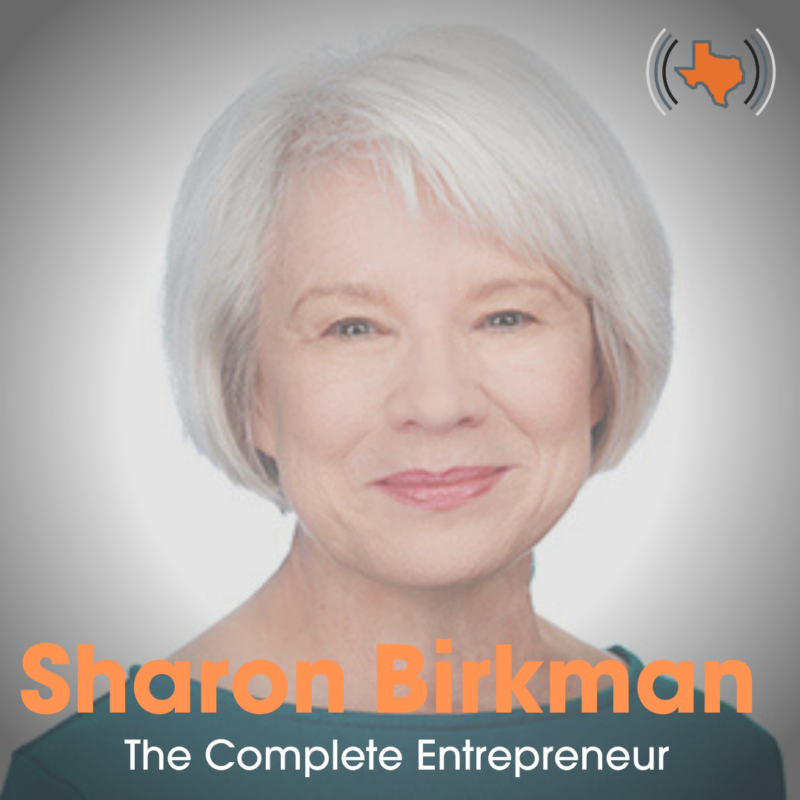
Sharon Birkman, Chairman and CEO of Birkman International, an industry-leading behavioral and occupational assessment company headquartered in Houston, Texas shares her passion for personal development. Sharon shares her approach to empowering human potential and how she believes raising a family helped her become a better business owner and create products that look at the multiplicity of characteristics that make you rich human being you are.
Transcripts are generated by machine learning, so typos may be present.
Chris Hanslik: In today’s episode, you will meet Sharon Berkman, chairman and CEO of Berkman International, and hear why she believes Raising a family of three children helped her translate to an entrepreneur and business owner. Hello, everyone. My name is Chris Hanslik, and I’m the chairman of BoyarMiller, a midsize law firm in Houston, Texas. I want to welcome you to Building Texas Business, a podcast about corporate innovation, entrepreneurship, and business leadership in the Lone Star State. The goal of this podcast is to learn from some of the best business leaders in Texas and hopes that their stories of growth, challenges and success will inspire our listeners in their own journey to building a successful business. Today’s guest is Sharon Berkman, Chairman and CEO of Berkman International, an industry leading behavioral and occupational assessment company. The company began assessing personalities through a proprietary methodology founded by innovative organizational psychologist, Dr. Roger Berkman in 1951. Sharon was named president and CEO of Berkman International in 2002 and transitioned to chairman and CEO in 2019. Welcome to the podcast, Sharon.
Sharon Birkman: Thank you, Chris. It’s a delight to be here.
Chris Hanslik: Well, so Berkman International, your name’s obviously in the company name, but tell us what is the company known for?
Sharon Birkman: The company, I think, is known best for being able to offer a way for people to get a glimpse of how they’re similar and different from the important people in their lives, whether it’s people they work with, people they live with at home. But when you understand more fully how we’re each motivated and what our perceptions are, it’s so much easier to be more understanding and a lot less defensive. and also more appreciative of these relationships. So in a business context, it’s primarily used for executive coaching or coaching at any level, frankly, where the company is willing to invest in the employee. And it’s used for career pathing, career transition, anything that involves making good career choices based on not only your interest, but your temperament as well. And then finally, it’s used for basically really understanding teams and how a team can function most effectively. We always know that a good team consists of diversity of people. So you don’t want group think. You want people that bring different ideas and we call it perceptions. The reason we latch on to the word perception even more so than personality is that my dad realized early on that the most powerful way to get a better, deeper understanding of human behavior is to not simply ask people, Chris, tell me about you. And you would give me true answers, and I would understand a lot just from your self-description. And if I also ask you, Chris, tell me about how you see the world around you. How do you view the majority of people and their behavior? How do you perceive the people in your life? and in your world, and I put those two side by side, it’s literally like being able to see through both eyes rather than just one.
Chris Hanslik: Fascinating.
Sharon Birkman: And so what we do that’s unique to the Berkman methodology and different from every other famous, well-known personality test, the others do a fine job of describing what we call our usual socialized day-to-day behavior. It’s positive, it’s how we choose to show up, how we get work done, how we get along with people, and it’s all good. There are many assessments out there that can do a fine job of that. And we want to say, but there’s so much more. If I’m studying, for example, something organic like a tree, I can walk up to a tree and by understanding types of trees I can tell you well that’s an oak or that’s a pine or that’s a cypress or willow whatever because I can see it it’s visible and so that’s valuable knowledge it’s all fine that’s what most assessments do. And we say, but if you really want to deal with that tree holistically and you want maybe to take care of the tree and preserve its life, you better know the roots are healthy too, not just the top of the tree. So what we found out years ago by understanding the perceptions of not just self but others, that gives you the understanding of the root system as well. And at the end of the day, what’s holding that tree up is not the leaves at the top. They can make it top heavy as we just saw in our storm. But it’s understanding that root system and making sure it’s healthy. And if the roots are healthy, the tree is supported, it’s nurtured, it’ll stay alive. So we believe that those motivational needs are derived from the understanding of others as well. And then we added one more dimension. What are you interested in doing? So we ask people, if you had to rank, we give them choices of four different jobs and say, pick your favorite to your least favorite of these four. And it’s forced choice, because we know some people are going to say, I don’t like any of them. Well, which ones do you dislike the most? Right. We look at that. And from those, we can diagnose 10 kind of universal areas of interest that are also powerful magnets and motivators for people. If you’re a business owner, and you are hiring for that job, it’s really important that you know what that person enjoys doing, because then you have a much better shot at placing them in a role where they’re going to thrive. So I keep going back to my organic thing, the tree where it’s going to grow.
Chris Hanslik: It makes total sense. So it sounds like Not only do companies hire you to come in and assess their teams or employees or leadership, but I guess some individuals may if they just want individual coaching.
Sharon Birkman: Absolutely. Our business model, Chris, is that we really do two things primarily. About 80% of our work and revenue is derived from making sure that the Berkman method assessment is reliable, solid, that all the IT systems that carry it out all over the world are functioning as they should. So that’s our responsibility to provide that assessment in all of its robustness and validity. The other part is about 20% or so is we train practitioners, and there’s two kinds of consultants. We work with people. For example, we could have somebody from BoyarMiller come and get certified in the Berkman Method, and then they would be the professional expert at Berkman. and be able to authorize the questionnaire, be able to debrief on the questionnaire, be able to use it to help teams be more effective, more enlightened, and working together. So there’s the corporate ones, and there are quite a few examples of that. And then there are the independent solo practitioners that go from company to company. So they’re the coaches that would rotate from one project to the next.
Chris Hanslik: Okay.
Sharon Birkman: Self-employed.
Chris Hanslik: So you mentioned Berkman Methodology. That was developed by your father. Tell us, so he started the company, but you obviously grew up in it and took it over. What was the inspiration for you to join your dad in this?
Sharon Birkman: Okay, well, that’s quite a story because my dad, in the early days, he was really fighting an uphill slog. By that I mean he came back from World War II. He was a Purple Heart B-17 bomber pilot who completed 19 successful missions, came back and resumed his college work in psychology. And social psychology at that time in the 50s coming out of the Ivy League schools was still a radical concept. It was a brand new idea for the most part when it came to business. Because that was pretty touchy-feely stuff. We weren’t bombed in this country. We were roaring to go after World War II was over and the economy was booming. But the idea of social psychology was still not really very popular. Too much touchy-feely stuff, right? Yeah, definitely. It’s like, well, I don’t have time for that stuff. I’ve got industrial work to do. Right. And I’ve got real work, engineering and legal and all of that wonderful stuff. And it was laborious. Everything was hand-scored, manually dictated, manually typed. On a big day, he said they could get three to five reports out in one day. Now we get thousands and thousands out in 24 languages all over the world. But that’s been enabled by technology. And so most of the innovations that happened over our seven decades, frankly, were technological. But, you know, we continue to evolve in the ways that we can feel we’re speaking the vernacular of the day. Language is dynamic, as you know, and language is In many ways, it’s the medium that we must use to convey our concepts and our thoughts, and language is problematic, as any lawyer knows. You’ve really got to carefully wordsmith every single translation, every single word that’s going out there that’s describing human behavior so that people can hear it accurately for what you want it to say.
Chris Hanslik: So then how did you get in the business?
Sharon Birkman: Oh me, okay. Well, as a teenager, I was like, my mom was a violinist and loved classical music. So I grew up thinking that’s going to be my path. So I went to school. I got a master’s degree in opera production at University of Texas. And I was all set to go out and be a director in the arts. And that’s what I did actually was was totally involved in musical theater and the world of the performing arts for quite a number of years. And then had three children and had a marriage that was wonderful. And my husband is a world-class opera singer. He’s done with Houston Grand Opera. He got a Grammy from the Metropolitan Opera. So I was totally ensconced in the world of the arts. Loved it. And at the same time, I understood the instrument itself. And I respected and appreciated what my parents were doing. Excuse me, can I take a sip of water here? Sure. And so now, excuse me, I hope I edited that one out. Long comes my dad’s 80th birthday. And I’m seeing that there is a point where my parents are just not going to be able to keep working. And there seem to be, as you might expect for the succession plan, many of the consultants would come to me and say, Sharon, what are you doing? You need to help your parents. So I started going in mostly to learn the lay of the land because I love my parents and I love what they did. Never fancied myself any kind of business or entrepreneurial person, but I thought, well, I’m a learner. It’s all interesting. I’ll go in and see what I can do to help them with the transition. And honestly, the more I got involved in it, the more excited I got about learning business. And I realized, Chris, that so much, and I think this applies for a lot of female business people, there is so much that’s translatable. When you’ve raised children, by that time my youngest was in third grade. And when you’ve raised three children and you’ve run a household, and especially with husband travels most of the time, a lot of that translates with common sense to business practice. You can hire for the IT gurus and you can bring the skilled accountant and counting people in. You can hire for skill to augment. But if you’ve got a sense of how do you manage people? How do you motivate people? And you love what you do with an absolute fiery passion because you believe it matters. Well, you can jump in with both feet like I did pretty much with zero experience in business and start learning.
Chris Hanslik: That’s great. So as you have grown Berkman International, what are some of the key things you’ve done to help that growth be successful?
Sharon Birkman: In my encore career, yes. Well, one of the things that helped me was very early on, I joined a Greater Houston Partnership CEO Roundtable. I started learning from just talking to other businesses and learning what they were doing, best practices. I did tons of reading. I ran up to the Barnes and Noble and grabbed, I loved to read anyway. So every book that I could find on how to be a good leader, how to be a good CEO, how to be a better manager, I was reading like a sponge. And then I joined the group, this Vistage, and my Vistage chairman recommended that I do a Harvard program called OPM, the Under-President Management Program. which actually proved to be ideal for me because what it involves is going to the campus in Boston for three years consecutively for three weeks at a time. And you don’t have to take tests like those poor MBAs do. But you do, your test is reading case studies, learning and seeing if you can keep your business alive. That’s the test. It’s like, it’s hands on. And that ended up being a really wonderful rich experience for me. And then a few years later, I transitioned from the Vistage Group to the Women Presidents’ Organization, and I’m still in that 10 years on. That’s been a valuable thing, learning specifically from other women who run businesses as well as the Vistage, which was all of the above was really helpful.
Chris Hanslik: Learning in all of those experiences, right? So along the way, could you describe maybe a setback or two that you’ve encountered, how you overcame that, and what the learning was? Because listeners out there may be experiencing something similar.
Sharon Birkman: Yes, the first big moment of concern was the 2009 recession. And initially, the first few months we thought, well, you know, guess we’ll be okay. But then we started to see our own business certified consultants really struggling. Frankly, what helped us the most to weather that storm was that we were working with right management, which is now part of the manpower, and they were using us for all their outplacement. That was a huge boom for us. It was the equivalent of the PPP loans in this recent setback. And so we had been steadily, slowly organically growing, and then we’ve kind of flattened, but we didn’t go down. Many of my colleagues in these groups that I was in were seeing much worse results. And I was just grateful that we stayed flat. Then when the recession ended, we started going back up again organically until, really until the COVID shut down. And even in that, we had our best year ever in 2019. Really? Yeah. Yeah. With some large accounts that were using us in a major way. These were global companies. whose names you would recognize and so we actually had a big jump in revenue between 18 and 19 so we’re sailing in thinking oh these are good days and so much so we left the Galleria area and moved to our dream offices over of I-10 at Campbell and we’re just thrilled to get into that space because it was just ideally built out for us and suddenly we’re in quarantine right that was that felt like like, well, I’ve never been here before. I just, I really was soul searching to figure out, well, first we thought it was only going to be a few weeks. I don’t know if you remember that far back, but we thought, okay, well, a few weeks and we’ll quarantine and then everything will be okay. And then as the weeks went by more and more, I was thinking, oh my gosh, how do we deal smoothly with this? Because it felt like things suddenly were just imploding in many ways. By May, June, July of 2021, I started really perking up again and feeling like, okay, we’re steady. We’re back where we were back in 2018, which was not bad. We were fortunate to get the PPP loans and get them forgiven and thought that was the real windfall. And I think right now we’re still, we’re hiring and we didn’t lose any personnel.
Chris Hanslik: That’s great. It seems like all that’s being discussed now, right? shut down, quarantine, work from home, hybrid models or not, that I would have to believe there’s a big demand for a company like yours because other companies are wanting to regain the cultural momentum that they had before the pandemic. Are you seeing that?
Sharon Birkman: We are. And what’s interesting for us, we had just been working on a new product called High-Performing Teams. And what’s nice about this is, and for many years, we really allowed our independent consultants to just kind of concoct whatever kind of team situation they chose to do. We left a lot of freedom and liberty to our trained consultants. We trained them on how to use the method, and then they did their own thing. Well, high-performing teams is a package. I probably shouldn’t call it this, but it’s a little like a cake mix, you know. But you make it your own. But it also kind of guides you through the three pillars of psychological safety, purpose, and clarity, and then brings the Berkman in relevant to how does a team focus on those three pillars using our information and their context. And a good consultant, it’s easier for them because it’s kind of pre-prepared and they can just walk in, they can buy it off the shelf and make it their own. Well, this was just going live at our conference in the Woodlands, February of 2020, late February. Happily, we made it safely through that.
Chris Hanslik: Right.
Sharon Birkman: barely. But then, because I think the shock of the pandemic, things just idled for a bit. Well, now that’s getting some real traction again. And to your point, what one of our top dynamic consultants discovered, he was working with the world’s largest retailer, starts with an A. And he said, I can actually do this online even. I can do it virtually. Because prior to that, we thought it has to be in person. It’s got to be. But now people are learning that you can do things effectively with the right content in the right setting. And if you’ve got good Wi-Fi, you can do it virtually or you can do it in person. My preference is always in person, but that’s me.
Chris Hanslik: Sure. So when you think, it’s kind of interesting because you’re in the business of helping companies develop a strong culture. Let’s talk about your company and the culture there. How would you describe the culture at Burman?
Sharon Birkman: Well, during the summer of the pandemic, I decided that I wanted to not just have a typical mission value statement, but I wanted to really sit down and think hard about what are the key words that I want Berkman to live by. And so that afternoon I wrote down inclusive, humble, resilient, compassionate and curious. And I came up with a little one-liner definition for each of these. And with inclusive, I would like to elaborate on that for a second. We know there’s a great deal of warranted emphasis on diversity, equity, and inclusion. And from our standpoint, what I want to add to that is let’s think about diversity of personality types. and diversity of interests and how each of those perspectives and perceptions make for the diversity of the team as well as the obvious diversity. Sure. And then humility is that I really stress with our staff, I make them rotate kitchen duty because servant leadership, being humble about learning forever. I mean, I will hope to learn, Chris, until I take my last breath. because there’s always something better and something new to learn. And that kind of seems to go with curious, right? Yeah, that there’s more to learn. There’s another way to look at it. So the humility of the humbleness says that we are there to be servants really of one another no matter what level you have. You’re there as your brother’s keeper. And then resilient. Well, that was kind of the word of the year, wasn’t it? We all know what that means. It’s almost a risk of overusing that one. Compassionate just means that we truly care about each other, whether we’re at work or at home, and that we show that with our actions, not just our words. And then curious, we’re social science. So we’re constantly, there is so much happening right now in brain and neuroscience. We also just launched in April a neurodiversity initiative. We’re doing research and we’re doing a new product for the neurodiverse. By that I mean people that are diagnosed on the autism spectrum. We’re learning they can be employable. But yet most of them are sitting at home. If there’s a way to get these people working again, then it’s a win-win. And so that’s had a huge response from outside of Houston as well. And so we’re excited about that.
Chris Hanslik: Very good. I mean, one of the gems for you and your company of the pandemic was it forced you to kind of sit down and think about the value statements or words that you just kind of went through with us.
Sharon Birkman: Yes. At an even deeper level than just, you know, this is our mission statement or we value typical stuff that people can’t, they have to memorize this. We have it on our mouse pads now. So I don’t want it just to be on the wall kind of thing. I want it to be something that we’re truly exemplifying in our daily life.
Chris Hanslik: So you were talking just a minute ago about some of the current, I guess, research in the neurosciences. What are you all doing at Bergman that you kind of believe is innovative in your industry?
Sharon Birkman: One thing that we’ve been working actively on and hope to release in the next few months is a new kind of mobile dashboard. So that if you, for example, if you and your team at BoyarMiller had all done the Berkman, you would be able to just on a mobile device pull up, what three things do I want to remember before I walk into a meeting with Chris? what’s going to be important to Chris.
Chris Hanslik: Oh, wow. That’s great.
Sharon Birkman: Yeah. And that’s something we’ve actually been talking about for a long time. And it’s turned out to be a little bit more of an eye mountain to climb than we expected. But it’s about to go live at least by next year.
Chris Hanslik: Very good. Well, I mean, something like that I could see your customers getting a lot of use out of because rather than having to find the file or remember from the time that you all got together with what the outcomes were.
Sharon Birkman: Eight months ago we did that, but what was that? It’s definitely something that’s needed, I think.
Chris Hanslik: We’ve talked a little bit about, you know, COVID. When you look back over the last 18 months, what’s been the maybe the biggest challenge for you in leading the company through the pandemic?
Sharon Birkman: For me personally, because I’m such a admittedly such a people person, I just miss them. I miss the social energy like a teacher not having kids in the classroom. I just miss it. The one team meetings, that’s what we call our all staff because I do believe we need to function as one team. Looking at a zoom screen versus looking at their lovely faces in the room was just difficult for me I really had to talk do a lot of self-taught to get myself not to feel too Negative about that and and now for the most part I found that even just with a hybrid model that we’ve been using since early May that a lot of my anxiety about that has really calmed down and I’m getting used to it and The plan was to stay on hybrid for the rest of this year. If that ends up having to be extended, I think I can live with it. Would I prefer most to be back in the office, frankly? Yes. But, you know, we’re still kind of working through what our ultimate policy is going to be for 2022.
Chris Hanslik: We’ve talked about this and you hear a lot of people say there’s such an importance in human connection. Humans were meant to be connected.
Sharon Birkman: Yes, they’re born for that. We’re hardwired for that.
Chris Hanslik: That’s right. And so that is a challenge with the work remote and the hybrid kind of working environments that we find ourselves in now. And I think, didn’t you recently write a book about human connection?
Sharon Birkman: Yes, it came out March the 10th of 2020, in fact. called Creatures of Contact. The subtitle is Why We Need More Than a Personality Test. There are two reasons why I chose that rather provocative title. One is that Berkman feels like we are more than just a personality test, because that will pigeonhole you and say, well, maybe you’re an introvert, you’re an extrovert. We say, no, you are a multiplicity of these almost, in many cases, contradictory traits, but that’s what makes you a rich human being that you are. So we’re all about occupational and relational information. So there’s that. But the other important reason I chose that subtitle, Why You Need More, is that we firmly believe that when we offer the questionnaire to an individual, that you were to take the questionnaire, the first thing that I would want to do is say, but Chris, let me have a conversation with you and walk you through it so that I can make what’s on that page, that simple data, relevant to you, your story, in the context of your life, how it will help you connect the dots that make it relevant for you. And if you don’t have that, They’re not allowed to send out a signature report without that because we believe that follow-up from a human being, that meaningful conversation is the other half of the equation. One’s an inhale, the other’s an exhale, but you’ve got to have both.
Chris Hanslik: Got you. Got you. So, if you think about yourself as the entrepreneur taking this business over, growing it, And we have listeners out there that are entrepreneurs and business owners. What are two or three things if you would say, you know, if I’d have known this or, you know, this is a recommendation that you think about in growing your own business, what would you share?
Sharon Birkman: I think I would share that one thing be open to learning in every way you can. Number two, just know that you’re going to make mistakes. because many of them aren’t apparent until you look in the rear view mirror. Whether it’s somebody you hired, and this has happened to me, where I thought they had great talent, and then I promoted them to a job, and I don’t know if it was hubris or who knows? Humans have free will, they have free choice. We can’t predict what they’re going to choose and how they’re gonna be down the road. So you will make mistakes. You have to forgive yourself to a certain point and move on. And then finally, just be willing to be persistent and keep doggedly slugging it out. Even on those hard days when you get a little discouraged, know that tomorrow’s a new day and it can be better. And there’s always room for improvement and there’s always room for new opportunities.
Chris Hanslik: That’s great. Great advice. So I’m going to switch and kind of go to some more fun questions about you. So can you tell us what was your first job?
Sharon Birkman: Oh, it was teaching music. It was teaching first piano and then theater kids and voice lessons. So it was all teaching.
Chris Hanslik: Gotcha. And as I’ve said before, this is a Texas-based podcast, so we like to ask you, barbecue or Tex-Mex?
Sharon Birkman: Oh, Tex-Mex. I love barbecue too, but Tex-Mex reigns.
Chris Hanslik: I think that’s winning out so far. And you mentioned some things. I know you wrote it, but is there a particular book that you are reading currently or that you’ve read recently that you would recommend?
Sharon Birkman: Yes. During the pandemic, well, I read cast by Isabel, I think it’s Wilkerson who’s Pulitzer Prize winning. And that really taught me a lot about, about the whole race issue going all the way back to the 1600s. But that was heavy reading. I am a huge fan of anything by Brene Brown.
Chris Hanslik: Of course.
Sharon Birkman: Of our local star. Yes. And for an enjoyment, I did a lot, because my dad was a World War II vet, I got onto this historical fiction kit. And I was introduced to Kristin Hannah, who wrote Nightingale, about two sisters, real-life women, but she pretended they were sisters, and they rescued allied pilots, of which my dad was one. But she’s a brilliant, fun, page-turner writer, woven into a great story, but did all her research. Then she followed it up last year with the book called Four Winds, which taught me so much about the Dust Bowl in the 30s, but once again was a fun page-turner of a novel, but historically accurate. And then, oh, is there anything else? I’m reading The Stargiver right now, which is teaching me a little about coal mining in Appalachia. But I’m finding if I can kind of blend the historical side with fiction, it makes me feel like I’m actually relaxing rather than reading another book that’s heavy.
Chris Hanslik: Gotcha. Gotcha. Last question. If you could take a sabbatical, where would you go and what would you do?
Sharon Birkman: I keep thinking I would love to go up to New England and just get a cottage by a lighthouse. and watch the ocean and just enjoy walking and reading, see the fall leaves turn. So I think that would be my dream sabbatical.
Chris Hanslik: That’s great. That sounds wonderful. It’s coming up on my time of year, right?
Sharon Birkman: It sure is.
Chris Hanslik: Well Sharon, thank you so much for taking the time to come and be on our podcast and for sharing your story and we really appreciate it.
Sharon Birkman: Thank you, Chris, so much for having me. You had one other question, and that was what TV series or movie? Oh, yes, yes. We’re hooked on Ted Lasso right now.
Chris Hanslik: I am as well.
Sharon Birkman: It’s so good. It’s so good. And I think it’s also got just such a good content and messages for all of us.
Chris Hanslik: Multiple layers, right? Yes, multiple layers. And definitely, I hope that one continues, because I’ve definitely enjoyed it.
Sharon Birkman: I do too. So, long live Ted. Thank you again.
Chris Hanslik: Take care. Believe. That’s right. And there we have it, another great episode. Don’t forget to check out the show notes at boyarmiller.com forward slash podcast. And you can find out more about all the ways our firm can help you at boyarmiller.com. That’s it for this episode. Have a great week and we’ll talk to you next time.
With a deep understanding of your business alongside clear and honest communication, we help clients face challenges fearlessly.
Learn more about our services and how we help clients.