


With a deep understanding of your business alongside clear and honest communication, we help clients face challenges fearlessly.
Learn more about our services and how we help clients.


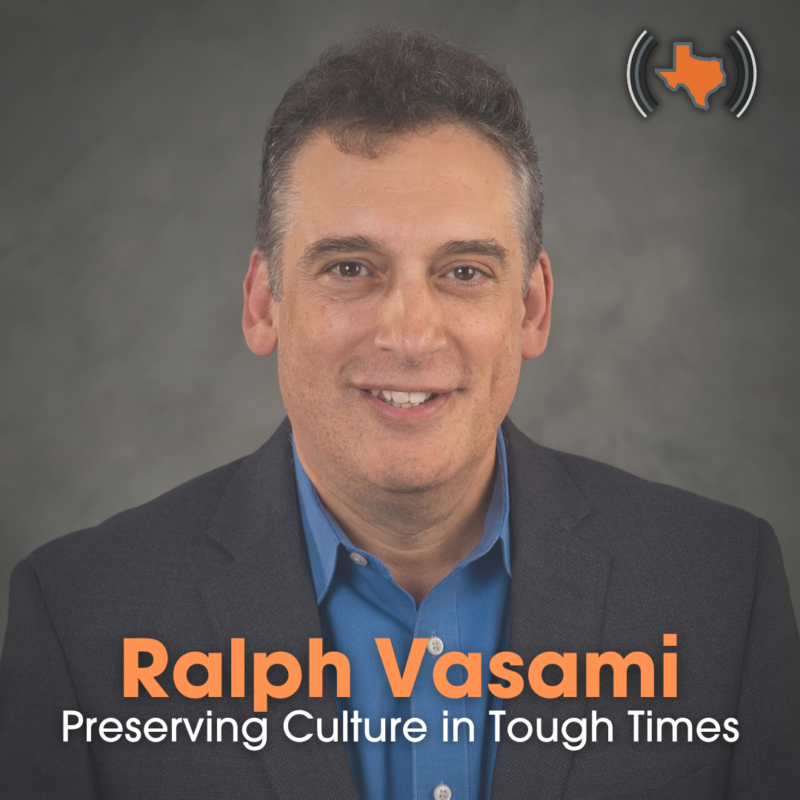
Ralph J Vasami, CEO of Universal Weather and Aviation, Inc., headquartered in Houston, Texas joins the Building Texas Business podcast to share his uniquely inspiring story of triumph.
Starting as a high school intern in their meteorology department and rising to the position of CEO in 2007, he credits being a lifelong learner and staying curious as two of the qualities that have helped him lead Universal for the past 15 years.
Transcripts are generated by machine learning, so typos may be present.
Chris Hanslik: In today’s episode, you will meet Ralph Vasami. Ralph has a unique and inspiring story of starting at Universal Weather and Aviation as a high school intern in their meteorology department to becoming the CEO in 2007 in a role he still holds today. Ralph credits being a lifelong learner and staying curious as two of the qualities among many that has helped him lead Universal for the past 15 years, including the past two through the COVID pandemic. Ralph, I want to thank you for taking time to come visit with me today. I’m excited for you to share your story with our listeners. Thank you. It’s great to be here. Why don’t we start with you just telling us a little bit about your business and what it’s known for.
Ralph Vasami: Sure. Our business is actually known for moving organizations that move the world. That’s sort of our purpose statement. And what we do is we provide all the support services for people that own and operate business aircraft. around the world. So we don’t operate the airplanes, we don’t pilot them or anything like that, but we provide all the meteorology services, which is how I started many years ago, flight planning, and then international permitting, ground transportation, catering services, credit, and craft handling when they land in foreign locations.
Chris Hanslik: So really full service for the business aircraft?
Ralph Vasami: Yes, it’s almost like a travel agency that caters to owners and operators of business jets, correct? Interesting.
Chris Hanslik: How long has the company been in business?
Ralph Vasami: This is its 63rd year.
Chris Hanslik: Now, I understand you had a very unique experience with the company as far as you’ve been there for a number of years and you’re now the CEO.
Ralph Vasami: Correct.
Chris Hanslik: Give us just a little bit of a background of your journey with the company, how you got started and how you made your way to the CEO position.
Ralph Vasami: OK, sure. Well, I started in New York where I grew up in White Plains. We had a small satellite office there for weather services. And when I went to school, for meteorology, because I had a love for the weather, I was allowed to do an internship through a high school program that my high school sponsored. So Universal was there. They were at Westchester County Airport. This was back in 1977. So I did a summer internship with them in my last year of high school. And then when I went to school in Vermont to study meteorology, they said, hey, if you want to work summers and things like that, Christmas breaks, Feel free. So they paid me a whole $1.95 an hour to do it. But it was fun because I got to learn quite a bit just by listening to the meteorologist on the phone with the pilots and doing the weather briefings and things like that. So after I completed my four years in Vermont with my degree in meteorology, was basically handed a job as a meteorologist. I never even done a resume. Wow. And so I started as a junior meteorologist up there and I spent eight years doing weather forecasting for corporate pilots flying around the US.
Chris Hanslik: Okay.
Ralph Vasami: And then we opened a small office in Pittsburgh, Pennsylvania, and I was then named manager. But as a manager, you were also responsible for a sales territory. And I knew nothing about sales.
Chris Hanslik: Okay.
Ralph Vasami: So I did a lot of self-learning. I read a lot of books and Tom Hopkins and Zig Ziegler and everyone and learned really. And that really got me into the relationship side. and having to learn more about our products and services outside of just the weather products we offer. And so I built a lot of good relationships along the way, signed up a lot of good customers. And back then when the company was growing, so whenever you were selling, you were sort of on the, you were in the limelight. So I got a couple of calls from the people that were headquartered here in Houston and asked me to come down and just took over the sales and marketing and meteorology and just progressed from there.
Chris Hanslik: Kept going all the way to the top. Kept going all the way. You said something when you were telling us the story about you know in college working summers and you were just You did it, and $1.95 an hour is probably a pretty good wage back then, but more importantly, the experience. And I tell people, young people all the time, especially one that’s related to me, my daughter in college, just get experience, right? That first job may not sound ideal, but if it’s in the area that you think you want to be in, then just get the experience because only two things can happen and both are good. You’re going to realize you love it or you can realize you don’t and you’ll go a different direction. Exactly. Is that kind of your experience?
Ralph Vasami: Yes, because, you know, growing up, I always wanted to be on TV. I’d see all the TV meteorologists. And just as I was getting out of school, the Weather Channel in Atlanta was just starting out and I was offered a job down there. And, but I really fell in love with aviation due to that experience. And I was like, I always wanted to be in TV, but this aviation thing is pretty cool too. And so I did, it was a ton of experience. I mean, I walked out and didn’t need any training, nothing when I started.
Chris Hanslik: And so did you not go on aviation route, you could have been Jim Cantore.
Ralph Vasami: I could have been Jim Cantore, he went to my school, I know him well. Do you, okay. Yeah, I text him every time he sensationalizes a little bit on the air. Next hurricane, I’m gonna text you, see what Jim’s saying. You can do that.
Chris Hanslik: That’s great. What a very inspiring story. So how long have you been the CEO? Now since 2007. Okay. Yeah. So just a few years. So tell us how the last two years have been as it relates to the approach you’ve had to take or change is in retaining employees and attracting and hiring them.
Ralph Vasami: Right. So it, you know, I’m not going to kid you. It was a very tough two years for us because as you know, aviation got hit hard. Sure. And when COVID hit, first of all, our sweet spot is when customers take their airplanes outside the U S. Okay. Okay. That basically went to a standstill. Nobody went anywhere. And We are not on any kind of annual recurring revenue. We’re basically transactional. And we make our money when and if they fly. So when everything dropped to nothing, basically almost 90%, it really put a big burden on the company and our culture, which we spent many years trying to build. I mean we had to go out there and myself and our owner, we were the same age and grew up together in the company. We took the biggest pay cuts and we asked everyone to take a pay cut and we had to furlough X because it was just no work. And so it was tough, no question.
Chris Hanslik: Have you been able to bring some of those furloughed people back?
Ralph Vasami: Yeah, they’re all back. And the good thing is we didn’t fire anybody. Some chose to leave because they had to go on. Right. But we didn’t fire anybody, which was good. That was important to us. But it was still tough on our culture, for sure. And then we have more people based outside the US now than we do here in Houston. So many of them had to be furloughed too. And then we had to navigate around each country’s laws. They have a lot of different social laws and labor laws. So it was some dark days, no question.
Chris Hanslik: So you mentioned culture, and I think it sounds like what you experienced is similar to what I’ve seen and heard other companies experience in the last two years is the disruption from this being shut down and having to lay people off or furlough or whatever. avenue the company took, coupled with the work from home environments as people are coming back, has really had an impact and a negative one on culture because we’re used to being together. Is that kind of what you’ve seen at Universal is that was one of the problems with the, I guess, harm or hurt to culture?
Ralph Vasami: It was and then it wasn’t. I’ll explain. In the beginning, yes, it was very difficult. We had to pivot very fast to get the people to work from home because we shut the building. You know, of course, in the beginning, people were like, I got screaming kids, the dog is barking. I don’t have an office. I’m sitting in the living room. You know, there’s a lot of distractions at home. But I was amazed within two to three months. They were starting to say, we don’t want to come back to the building. It was it was really eye opening to see that shift. because now they didn’t have to pay babysitters or child care. Dry cleaning bills went to nothing. Commute times. I’m sure you’ve heard… Gas money. Gas money. I mean it was amazing how the productivity stayed better. It got actually better. The same or better, because they weren’t commuting and they would wake up in the morning with their coffee and go right to it.
Chris Hanslik: Yeah, right. I mean, now what you’re seeing is people are reporting burnout because of that, because there kind of is no end of the day. Right, right. How would you describe the culture that you built at Universal?
Ralph Vasami: I guess, you know, it’s performance-based, but it’s also very, it’s meaningful, and I’ll explain. I mean, you know, We are a service company. So we don’t build widgets and sell washing machines or anything like that. It’s service. So really what it boils down to, and I’ll be honest with you, we have a lot of competition and many of our products and services are commoditized. So our competitive advantage is really just the discretionary efforts and the passion of our people. And that really makes the difference. And whenever we hear anything, from a customer, very few of them say, wow, your permit was great. But when they land in Dubai or England or Tokyo and they meet our people and they take them through customs and immigration and get them off and get the executives off to their meetings or wherever they got to go, we always hear about the passion of your people. They were there. They gave us a hug. They took us to dinner. To try to keep that level of passion up through furloughs and work from home and pay cuts and everything else was probably the biggest leadership challenge I’ve ever faced in 40 years with the company. When times are good, it’s like jumping in front of a parade. You know what I mean? When times are tough, it takes an extra effort.
Chris Hanslik: Thinking about then as a leader, what were some of the things that you did that you think helped perpetuate and cultivate the culture as you were going through these last two years to share with people out there that may be looking for some guidance on that.
Ralph Vasami: So we’re just very transparent. OK, we just told them we have to now go. We have to start a journey and we even labeled it survive to thrive. OK, OK. So we’re in a triage mode. We just told them these are the things we’re going to have to do to survive. But coronavirus will go away. and our industry is still very strong and people love these airplanes and especially more people are now in our space because of the airlines and all the problems anyway. Now, we didn’t know that at the time, but we were still very bullish on the industry. So let’s do what we’ve got to do to survive because we’re going to come out of this stronger. That was one. The second was we just stuck to our guns, the best we could. We continue to invest in our digital transformation, even though monies were tight and cash was tight. So we wanted to show them that this wasn’t the end. We’re going to continue to invest in our future while we’re making these sacrifices. And we were doing videos and newsletters and everything else, just keeping them up to date on everything we had to do to survive. So that helps. Transparency and communication, right? Transparency, communication, and we’ve just said, look, we’re all in this together. Myself, our owner, the executive team are balancing our family’s health, our health, pay cuts, we’re all in this together, there is no us in that. And then we also did a lot through some of the social media channels now, like WhatsApp and some other things. And so we were very good at keeping in touch with our people all around the world to keep that passion going and that spirit going. And then again, the discretionary efforts of our people, we did a pivot that really helped us. meaning we’ve sort of pivoted to being the one source of how Corona, COVID-19, is affecting flights and business aviation around the world. So instead of doing transactional type work for the flights, we were doing webinars every two weeks where we had 350 to 400 attendees with all our customers wanting to know how we can get back in the air. So we sort of became sort of the de facto source.
Chris Hanslik: How about that?
Ralph Vasami: Of information. And it was a great pivot. And now, now that we’re flying again, that’s really paid dividends for us.
Chris Hanslik: Is that a free service that you provide? It’s free.
Ralph Vasami: Okay, so just to build customer loyalty. It was to build customer loyalty and I’ll be honest with you, my team talked me into that because I said maybe we should monetize this on intellectual capital. Be patient. We’re all making the sacrifice, but we need to position ourselves as something different. And so I acquiesced and it paid dividends.
Chris Hanslik: Good for you. Sometimes it’s good to listen to your people.
Ralph Vasami: It is.
Chris Hanslik: So that kind of brings something to mind. We always like to talk about our successes, but as we know, many times the biggest lessons and the best lessons are in failures. What is, if you can think of one or two things as you’ve, you know, since 2007, been the CEO, that something you’ve done that, and maybe it was before then, that you were like, that didn’t go like I thought it was gonna go, I thought it was a great idea or whatever. Something happened and the lesson you learned from that, you’ve made it a positive. Can you give us an example or two or something like that?
Ralph Vasami: Yeah, I mean, there was a lot of, one thing I appreciate about our culture and our team is we don’t mind experimenting. So, and we listen to customers. Okay. But you know, customers want a thousand different things and we don’t mind testing sort of a thousand different things. So I know it sounds cliche, but it’s true. We don’t mind failing fast learning and then seeing what sticks. So we’ll throw a lot of stuff out there and a lot of them don’t work. Right. I mean, there’s off locations around the world that we tried to open up and in different jurisdictions that failed miserably. There were some product launches that customers said they wanted it, but then we found out didn’t want to pay for them.
Chris Hanslik: Yeah.
Ralph Vasami: And then on the leadership side, you know, I made some bad hires and that’s happened to where you put a lot of time and effort into looking to build an executive team and things like that. And you end up bringing in the wrong people.
Chris Hanslik: In that subject specifically, I guess what’s the learning that you experience from making or realizing you made a bad hire?
Ralph Vasami: Part of it is try not to bring in friends and people that just because you know them that happens. Yeah. Okay, I’ll be honest. The other one too is just take a little bit more time during the interview process and allow more people to get involved in that process than maybe just myself or the owner. in the executive team, because a lot of times you’re in a rush to fill a spot. Sure. And if somebody comes in with a good line, let’s grab this guy or lady because, you know, we need to get going. Right. And sometimes it works great. You know, now you fast forward to today and now all the experts, even in my Vistage group, are saying hire fast.
Chris Hanslik: Hire fast.
Ralph Vasami: Because there’s a big talent. Well, there’s competition. Yeah, there’s a lot more.
Chris Hanslik: I’ll tell you, though, on the hiring side, I think my experience has been I think it’s an imperfect science, the recruiting and hiring process, but we tend to do better, I think what you were saying, bringing in more people from different levels to interview, because they just bring a different perspective and may see something different than you do when you’re trying to move fast, right? That’s helped. The second would be, as soon as you know you made a mistake, the quicker you move to act on that, the better.
Ralph Vasami: Right, but we were slow. That was another mistake. You know, you may have brought in the right, but then we say, oh, we got to give them another chance or, you know what I mean? It’s hard. Yeah, it is. You’re affecting people’s lives, and that makes it difficult. Right, and people sometimes have moved, you know, families, things like that.
Chris Hanslik: Is there anything that in the last few years you think Universal has started to do that’s innovative for your industry?
Ralph Vasami: I think, yeah, a couple of things. One is this pivot to data and information. We have our domain knowledge, we call it. And we’ve got 63 years of accumulated knowledge. We do roughly about 2,000 pre-COVID numbers, 2,000 flights per month. That’s a lot of throughput to all these different regions around the world and different countries around the world and everything. But yet we do no publishing at all. Like what are the requirements to navigate into Japan or Brazil or European countries or the EU or the Middle East? We only share that when they book a flight. So now we’re looking at how can we capitalize on this domain knowledge And again, I got more people based outside the US than in the US. We got almost 250 people throughout the Far East, Europe. Our competition does not. And so they have access to local nuances at airports and different local events and things like that, that you can’t find on the internet. So we’re looking to really galvanize our entire global community around how we can bring that intellectual capital to our customers, which they’ll pay for.
Chris Hanslik: That’s great. I think you’re right. You’re sitting on a goldmine of data and information that has value. I meant to ask this a minute ago when we were talking about culture. So you’ve got more employees outside the US than inside. That has to present a challenge in maintaining this consistent culture. So I’m just curious to know what are some of the things that you do to make sure that everyone, whether they’re in Dubai or Houston, Texas, or if you still have a place in White Plains, New York, get it, right? That they understand what it means to be employed by Universal and what the mindset and the culture is and what’s expected.
Ralph Vasami: Yeah, so we were very purposeful about that. While we respected everybody’s cultural differences and things are different in every country, we had to develop some commonalities. And so moving organizations that move the world was sort of that overarching purpose statement that all of us do. But how we do it is through the success of our customers’ flights and their missions because they’re very meaningful. So it took an effort, myself and other executives actually went around the world to visit all of our locations to personally deliver the message because like I mentioned earlier, our products and service became commoditized. And the only thing I had was our people making a difference. So we had to bring them all together for some common good. So we defined our own brand. We were respectful to how Webster’s dictionary defines a brand, but we created our own definition. which is the sum of every one of our actions, attitudes, and our behaviors at every touch point defines our brand. We ask them questions like, what do we have that our competitors don’t? Okay. We didn’t tell them, we led them to the answers and they would come up. Well, we have the better service and we have this, we have that. And we argued the whole way through. No, what they don’t have is you. That’s it. They have everything else, believe me, but they don’t have you. They don’t have me. They don’t have us, the people in this room. So we’re the brand. Every, and like I said, your attitudes, your behaviors or core values and everything have to make the difference. So we took them through our entire global strategy and we told them how they make a difference executing that strategy every day. and told them that there are competitive advantage. So we brought them all together with sort of a common language and a common purpose. No matter where you are in the world, this is our mission. This is what we do, if that makes sense. Oh, absolutely. I think it’s brilliant. I can see why it’s been successful. Yeah. So again, when you go to Thailand and land in Thailand, you have that cultural look and the Thai people are going to be the Thai people. But they believe the same thing anybody does in Brazil or Italy or Houston. Yeah.
Chris Hanslik: That’s great. So to keep that culture and the mindset going, how do you try to show up each day as the leader of the organization?
Ralph Vasami: I’m confident, yet very humble. I think I try to balance candor and curiosity. I told the people I’m not going to be a cheerleader. You’re going to hear the facts from me. OK. But if I’m bullish on something, we’re going to be optimistic and everything. but just very candid about where we’re at as a company. But very curious also to what are your ideas? What do we need to do differently? What’s your perspective? And we learn a ton from our people, but we also learn a ton from our customers. I can tell you there’s webinars I mentioned. Just the chat alone when people are asking questions and you can see the banter back and forth was Unbelievably insightful to what’s on their minds and things like that. So it’s a combination of humility. We don’t have all the answers, but also confident that we’re going to get through this and we’re going to be stronger for it.
Chris Hanslik: Very good.
Ralph Vasami: And it’s more, I’m sorry, but it’s even more tough to show up now because there’s no one in the building. So you have to kind of do all this remote today. That’s true, right?
Chris Hanslik: Yeah. Walk around the office and see everybody.
Ralph Vasami: Used to do that. So now it’s tougher to do it remote.
Chris Hanslik: You mentioned earlier you kind of went to school to be a meteorologist, found yourself in sales, kind of had to learn that on the fly. I’m assuming that’s true for a lot of your leadership skills that you just picked up along the way. Are there any books you’ve read that you would share with others or say this book or the other were really instrumental in helping me form some of my own styles?
Ralph Vasami: Yeah, I mean, boy, I could sit here for an hour and go through a list with you, Chris. But most of the books I read are on strategy and strategy development, business model innovations, a lot on culture and people. This was after the sales stuff when I learned how to sell. And I did some other training like crash courses at Kellogg for finance and negotiation type skills and everything else. But my real learning did come through Vistich, which I’m sure you’re familiar with. Growing up in the same company, I kind of had a myopic view of the world. I saw it from Universal’s lens only. And I’ve been in Vistage for now 15 years and having 15 other friends that don’t filter the feedback. And guest speakers that they bring in and everything else has just been extremely helpful for myself. And I’ve got four others in Vistage now. Oh, you’re a team. I’m my team because many of us grew up in the company.
Chris Hanslik: Yeah, I think that brings a nice, different perspective for you and your leadership team.
Ralph Vasami: It does. So they’re all in different key groups and things like that. But, you know, like my COO, he’s been with us pushing 27 years. My director of sales and marketing, 25 years. That’s a long time in one environment. Well, it is, but it also says a lot about the quality of that environment. Sure, sure. But you know, I just don’t want the lens to be too narrow and keep it open. And what I love about my group with Vistage is they tell you what you need to hear, not what you want to hear.
Chris Hanslik: Right. Right. Good people have in your corner.
Ralph Vasami: Yeah. I might not have answered your question on specific. No, I think you did. Absolutely. Okay. But I can send you a list of some of my best. Well, if you remember one or two, you’ll share it now. But Blue Ocean strategy. Okay. Was a real good one. I used to read a lot of Tom Peters way back because he was like innovate every 90 days and change. And then Tom Hopkins, the author Tom Hopkins on sales and leadership was very good.
Chris Hanslik: Very good. So that kind of leads me to want to ask as we sit here today and know where you are in strategic planning or plans for the year, but what are your goals for the organization? for 2022, maybe the next couple of years and whether that’s for the organization as a whole or for your employees. Will you tell us about that?
Ralph Vasami: Sure. So we had actually a bit of a windfall just before COVID hit in early 20 because one of our big competitors here in Houston were acquired by a big public company and they felt that our business was too risky so they exited. the business. And so many of those customers came into our ecosystem. So we ended up with additional market share before everything fell apart with COVID. Now that they’re starting to fly again, and we’re continuing to make these investments in the digital transformation, while cash is still tight, the retention of that market share is crucial for us to succeed. So we had this windfall, it would have taken me 10 years of salesmanship to bring in that many customers all at once. We onboarded them as fast as we could. We’ve got to now retain that market share over the next one to two years because that will give us the cash flows needed to continue to invest in the digital. Once we have the digital and we’re rolling out different milestones, Then it starts to broaden our addressable market for people that fly maybe within the U S or fly just regionally instead of the big international trips through this data, through access, through some do it yourself tools, things like that. We’ve never been able to provide that in the past. It was always the big time intercontinental flyers that needed our help. Gotcha. So it’s, that’s what it is for this year and next year, probably retention of share. and to continue to roll out different DIY type digital tools that our customers have been asking for.
Chris Hanslik: That’s great. So thinking about what you’ve done as the CEO of this company and if you were going to share some information or do’s and don’ts with someone that was either currently a CEO or aspiring to be one, maybe just started their own company, what are one or two things you would just say, I wish I’d have known this, or if you’re going to do something, I highly recommend you do it this way, not that way.
Ralph Vasami: Well, the first thing I would say to anyone, and I say to my own kids, make sure you become a lifelong learner, number one, because the minute you think you know it all, you start downhill. And I can’t tell you how much I learn every day, just by keeping my eyes and ears open and just asking open-ended questions and things like that. highly recommend that. I would also highly recommend that if you don’t know something, it’s not weak. It’s not a sign of weakness. Raise your hand. I don’t understand. Help me understand this, please.
Chris Hanslik: So true.
Ralph Vasami: I mean, so I that’s why I mean kind of by being mysterious and humble to a large degree. So I would tell any CEO or aspiring CEO or executive, invest in your learning. Candidate curiosity, try to balance out the best you can. Raise your hand if you don’t know something, and just be a student in perpetuity. I mean, like I’m in Vistage and I’m still taking courses outside. Yeah, you just have to continuously improve yourself.
Chris Hanslik: Especially in times like the last two years when things change so rapidly.
Ralph Vasami: Yes, and I think the thing, and it’s not just me, I got a team around me and I got an owner who’s been and left. It does take a team, but you have to have a united team. You can’t have a bunch of different people saying different things. So if you’re going to be a CEO, make sure you have a team around you. Create alignment doesn’t mean agreement on everything. Absolutely. But you got to do the arm wrestling together, but walk out aligned and prepared to face the good days and the bad days.
Chris Hanslik: Yeah, we say that here all the time, looking for alignment, not agreement, because there’s a difference.
Ralph Vasami: There’s a big difference, and it’s okay to disagree, it’s okay to debate.
Chris Hanslik: The best ideas come from that, right?
Ralph Vasami: It does, it does.
Chris Hanslik: Well, Rob, it’s an amazing story. You don’t meet many people that start somewhere and stay for as long as you, and it sounds like many of your senior team have. So that’s a testament to the culture of the owner and that he’s allowed y’all to help him grow the company and build a culture that sounds pretty remarkable.
Ralph Vasami: Yeah, it is. And what’s kept me there has been the passion of the people and the challenging work we do every day. It’s just amazing. So we’re gonna have a little fun as we wrap up. What did you want to be when you grew up? Oh, that’s easy. I wanted to play third base with the Yankees.
Chris Hanslik: Okay. So just so anyone ever questioned whether we’re not equal opportunity for all people, you are a Yankees fan and we allowed you to come on the podcast.
Ralph Vasami: You did and I appreciate that. I don’t have a lot of friends here, but I like Jose Altube.
Chris Hanslik: We can agree on that. So I don’t think he’s that welcome when he plays at Yankee Stadium.
Ralph Vasami: He’s not, but I like him and respect him.
Chris Hanslik: Very good. You’ve been in Texas now for quite a while, so what’s your preference? Tex-Mex or barbecue? Barbecue. And then if you could take a sabbatical, where would you go and what would you do?
Ralph Vasami: If I could take a sabbatical, I would love to go to the, I think it’s either a three month, I forget, I think they break it up, but there’s a three month course at Harvard. that is like put you through another crash course of leadership and learning and everything else. I would love to go back to school. They’re your lifelong learner. Exactly, and I mean that because that’s something I miss. Every September comes around and I say, man, I wish I was going back to school.
Chris Hanslik: Right. Well, so we need to work on your definition of sabbatical, clearly. Yeah. You’re a man of your word, though. I like that.
Ralph Vasami: Yeah. No, I would. If it was like a year, I would take three months and go back to school and then maybe go see a few mountains or lakes or something.
Chris Hanslik: Gotcha. Well, Ralph, thanks for coming on the show. It was a pleasure having you and getting to know you and hear your story. Thanks for having me. I appreciate it very much. All right. Take care. And there we have it. Another great episode. Don’t forget to check out the show notes at boyarmiller.com forward slash podcast. and you can find out more about all the ways our firm can help you at boyarmiller.com. That’s it for this episode. Have a great week and we’ll talk to you next time.
With a deep understanding of your business alongside clear and honest communication, we help clients face challenges fearlessly.
Learn more about our services and how we help clients.