


With a deep understanding of your business alongside clear and honest communication, we help clients face challenges fearlessly.
Learn more about our services and how we help clients.



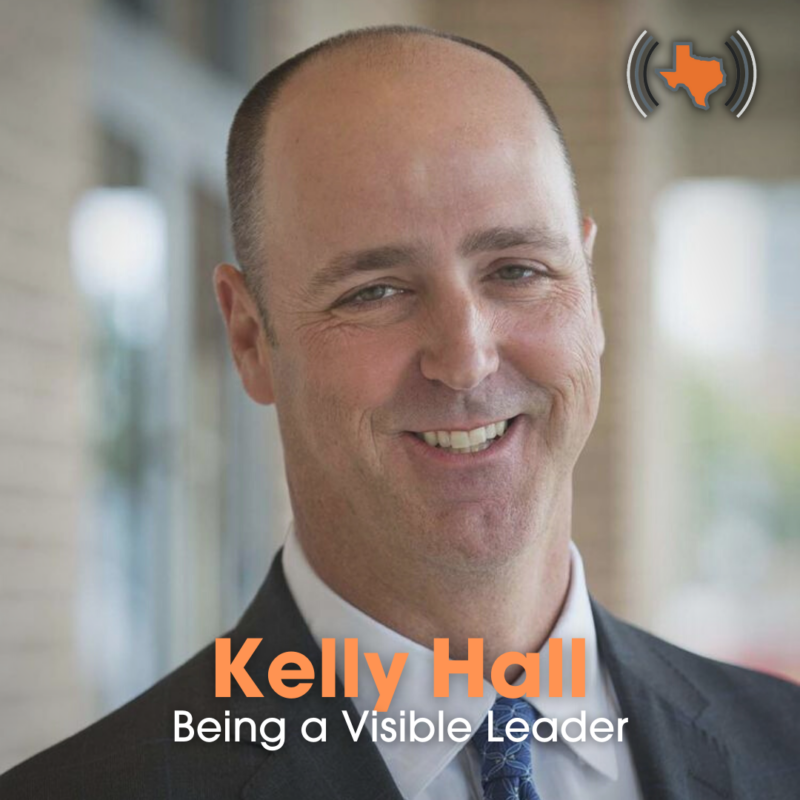
Kelly Hall joins the latest episode of the Building Texas Business podcast. Kelly, CEO of Harvey Builders, a full-service general contractor whose true mission is creating relationships that lead to spaces where great things happen.
Starting as a project manager 29-years ago, Kelly worked his way up to become CEO in 2018. He discusses the importance of leaders being visible, listening to their employees and demonstrate empathy.
This episode is valuable to anyone in a leadership position, and Kelly’s experience and perspective demonstrate why Harvey has a great reputation.
Transcripts are generated by machine learning, so typos may be present.
Chris Hanslik: Kelly, I want to thank you for being here, taking time out of your day. I know you’re busy, but really looking forward to getting to know you better through this podcast interview.
Kelly Hall: Yeah, thanks for having me. I’ve listened to almost all your podcasts and they’re awesome. They’re great.
Chris Hanslik: I mean, you get a lot of good stories. Well, I appreciate that feedback. So tell us a little bit, I guess. You’re the CEO of Harvey Builders. Tell us, what do you believe Harvey Builders is known for?
Kelly Hall: So we’re we are a full service general contractor but and most people we’re a commercial general contractor most people don’t really fully understand that but we’re probably you probably recognize us from a tower crane sticking up in the air with the Harvey sign on it or a blue fence around a construction site with a Harvey sign on it but we’ve been in we’ve been in Houston Texas since 1957 and we have offices three other places in the country and uh We build a little bit of everything. We build commercial office buildings, we build high-rise residential, we build life science buildings, parking garages, hospitals, schools, mostly private schools, some churches, just a little bit of everything. We like to build things and our guys get a kick out of challenges, so that’s what we do. Very good. So how long have you been with the company? I’ve been with the company for, I’m going on year 29 now. I started, I had two other jobs right out of college and I started probably in 1993, so. Okay. And then you became CEO when? 2018 I was named the CEO. I started as an assistant project manager in 1993 and worked my way up, just worked hard and I guess someone took notice along the way and promoted me to CEO.
Chris Hanslik: Yeah, so that’s an incredible journey with a company and proving yourself along the way. What’s been the kind of inspiration for you to be in the construction business, I guess, to start, but more importantly to stay in it for this long and with the same company?
Kelly Hall: So when I came to work for Harvey in 93, I had a good job with a good construction company and I wasn’t looking for a job. A couple of guys talked me into coming over and interviewing and made me an offer and I weighed my options and thought, you know, this company’s been in business for a long time. It’s probably better for my career. It’s a tough business. The commercial construction business is really tough. It’s hard. You’ve got to really want to do it. And you know, the people that I work with, the mentoring, the training, Everything about our company is, in my opinion, is top notch and I couldn’t be at a better place for the construction world.
Chris Hanslik: So are there formal mentor programs or training programs that have been in place at Harvey or that you’ve tried to put in place?
Kelly Hall: We had some formal mentoring, formal training, both in place. We’ve tried to make them more robust. We have a training program for our new hires that lasts all year long. It’s actually a three-year training program. You go every Friday afternoon for the first year of your employment and then thereafter it’s maybe every two or three weeks and we have a formal program that we put in place there four years ago and it’s working great. We get good feedback. We have a what we call foundations and introductory with all the new hires twice a year come in for tour through day, get together, and learn about the company, learn about what we do, how we do it, and all the people that lead the company.
Chris Hanslik: So tell me more about this foundation. Is that the name of the program?
Kelly Hall: Yes, that is the name of the program. We originally called it Boot Camp, but we thought that wasn’t That didn’t sound good. It was a little harsh. So we named it Foundations. And really, it goes along with what we do. We build a lot of foundations for buildings, et cetera. So it’s kind of the starting point for working for Harvey. And we bring people in from all over the country that work for us.
Chris Hanslik: I like that connection to Foundations as a builder and starting as an employee.
Kelly Hall: Exactly.
Chris Hanslik: So you became CEO in 2018. I guess two years or less into it, COVID hits. My understanding is you’ve got over 600 employees across the country. What are some of the things that you’ve implemented in the last two years to help retain your employees?
Kelly Hall: So, if we go back and look at our history, our largest retention rate of employees is from our new hires. Somebody that comes to work to us right out of college or right out of the trades, they get to learn, quote, the Harvey way and they tend to stick around. You know, in our business, it’s a tough business. You got to have what I guess what a lot of people call grit. You got to have a lot of moxie to want to stay in it because sometimes you’re working 40 hours a week, sometimes you’re working 80 hours a week and probably no different than a law firm, right? It could be that way, up and down, right? Right. But some of our guys, they get up at, you know, it’s poor concrete. Some of the guys get up at 1-3. I was with some guys last week. They got up at 1-3 in the morning. to pour a level seven of a concrete structure, and they might be working until five or six o’clock that evening. Wow. So it’s a lot of work, a lot of hard work, but it’s very rewarding. And we try to make it a fun place to work for our employees and give them all the accolades because we’re successful if they’re successful.
Chris Hanslik: That’s the thing I think is so important to communicate as a leader is we need each other to be successful when you’re thinking about being in a company and working together, right, to create that team mentality.
Kelly Hall: Right. I tell young people all the time, when we interviewed them last month, if they ever played any team sports or they’re part of the band in high school or part of the choir, whatever. Because what we do daily in business, whether it’s construction or other companies, it’s a team sport, right? Yeah.
Chris Hanslik: Everybody has to work together to be successful. So when you think about the environment there, there’s lots of people talk about culture in a company. What do you believe or how would you describe the culture at Harvey since you’ve been around and how has it evolved, if it’s evolved or changed?
Kelly Hall: You know, everybody says their culture is kind of like a family, but ours is. It’s a team environment. There’s no politics, so to speak. There’s no back body. There’s people who are working together. There’s no one person that’s ever built a building. It takes everybody working together, whether it’s all of our employees working together or working with the architect, the engineers, the owners, the developers, et cetera. So it’s really a team environment and everybody’s out for the greater good of each other. Everybody wants to succeed and everybody wants others to succeed.
Chris Hanslik: That’s great. I guess you’ve got a leadership team underneath you. Anything that you have implemented in the last two years or since taking over as CEO to really stay connected with them and encourage them to stay connected to their reports?
Kelly Hall: Well, to be honest with you, I have the title as CEO, but we all work together. I may have the the certain title, but our executive team and our directors and some of our senior managers, we all work together. We meet weekly. Sometimes we meet daily and we feed off each other and we help each other. It’s not a dictatorship by any means. Everyone has input and everyone has a say in what we do and we make decisions together. It’s worked out well. When COVID hit, we had a COVID task force that would meet every day for the first, maybe the year. We’d get on a conference card and meet every day about what’s going on, but since then that’s changed to maybe once a week, but everybody worked together and everybody’s looking out for the greater good, making decisions together.
Chris Hanslik: Yeah, and it occurred to me as you were… given that answer that during COVID, excuse me, given the business you’re in, you and your key folks had to keep coming into the office, I assume, to keep your business going, even though you had people out in the field as well. How did that look?
Kelly Hall: I recall how, quote, scary it was up front in the beginning, but we were deemed an essential business and we never stopped. We never stopped building. We have between our people and our subcontractors and trade contractors, we have between 3,000 to 5,000 people on our job sites every day across the country. Because I tallied this up at some point to try to understand what we’re up against. And trying to keep those people safe and the rules and the safety measures we put in place, it all worked. We never trended higher than the COVID trends in the country. As a matter of fact, we were considerably lower. We had our executive team and some of our senior managers that were adamant about coming into the office every day. We did, we came into the office every day. Not everybody, we sent some people home for a couple of months, but our guys in the field continued to work and continued to work safely. I felt compelled that myself and a few other guys would go out to the job sites with them and show our support. Yeah. You had to be proud of your team in that moment. Extremely proud. Our guys did such a great job. Such a great job. I mean, it was tough for a while, but everybody did well. Everybody did well. It was good.
Chris Hanslik: Flourished. You talked a little bit about how things run there, just from a personal perspective. What’s your philosophy on that?
Kelly Hall: There’s a lot of philosophies and I’m more of a simple person. respect, fairness, honesty, integrity, and have a little fun every day at work. You know, you have to, it becomes a grind after a while, but you have to have a little fun. Have fun with your people. Lead by example. We have a saying, Kevin Rogge, our president, and I have a saying, you gotta be willing to get your hands dirty. So you need to be willing to do whatever your employees are gonna do every day. Jump in and help out. I’ve been known to get on a concrete sweeper on job sites at the end of a project. Some of our other executives have been known to, pictures of one of them on his hands and knees scrubbing grout joints in a building trying to get it turned over.
Chris Hanslik: Those images, when your employees see you willing to do that, you can’t put a price on that, right?
Kelly Hall: Yeah. We’re not all perfect, but working hard and having a little fun is always what it’s about.
Chris Hanslik: think it’ll serve you well, seemingly. So we talked a little bit about, I guess, leadership. Along the way, has there been anything where, you know, I’ve talked on this podcast before about failures or mistakes that leaders have made, learned from, and become better? Is there anything for you that comes to mind, one or two examples of where maybe in the moment you’re like, God, really, I fumbled that one, but the recovery and the learning has made you better?
Kelly Hall: Well, I’m in the construction business, so it’s all about problems, right? I mean, one of our big jobs is solving problems and trying to head problems up before they come. But yeah, we’ve made a lot of mistakes, especially me. I’ve made a lot of mistakes over the years. Our goal is to learn from our mistakes and not do it twice, right? Absolutely. I can’t pinpoint any certain one. You know, when I first got out of college and working in the business, I made plenty of mistakes and kind of got my hands slapped for it. But you use it as a learning experience and it made a few mistakes in hiring certain people. Like I said earlier, our best hired practice comes from the youth, the people coming out of college, the interns, the trade professionals. We haven’t had as much luck with the seasoned veterans over the years, for some reason, because we do things a little bit different. But if I was to say, What I’ve learned from mistakes is when you have someone that doesn’t fit in or not cutting the, not doing their, taking care of business like they should, need to cut bait real quick, right?
Chris Hanslik: You know, I think it’s one of the biggest challenges for leaders is that lesson of once you know you’ve got an issue, the faster you move, the better. And I think a lot of times we get stuck in maybe trying to give them a second, third, fourth chance. And it rarely works out. Right.
Kelly Hall: It rarely does work out. But I learned that early on, you know, many years ago. And we’ll give them a second chance if we think they’ll fit in some other role or with some other responsibilities. And sometimes it works out, but usually it doesn’t. You have a gut feel.
Chris Hanslik: You mentioned the better success with the younger hires out of college or out of an intern program versus, I guess, laterals that have been in the… Any indicators as to why that is that you’ve kind of learned over the years or?
Kelly Hall: Like I said, we have a pretty, we have a really good training program and we do our work a little different than our competitors or some of our peers in the industry. And not to say that our way is right and their way is wrong. Just to say we do a little bit different and a lot of the seasoned veterans have learned a different way and they can’t, you can’t untrain them and what they’ve been trained sometimes. Right. That’s really what it is. We think the way we do business is the best, but Our competitors probably think they do the best.
Chris Hanslik: Well, it’s your way, right? So you’re gonna be proud of it. No reason you shouldn’t be. So when we’re talking to business owners and entrepreneurs, I always like to ask, you know, you’ve learned a lot over the years. Some of our listeners are out there starting a business or maybe just took one over. What are two or three tips or points of advice that you would share based on your learning, both, I guess, educationally, but more in the school of hard knocks out there doing it?
Kelly Hall: Well, I think one of the more important things with a business owner, business leader, is come to work every day. You don’t want to be that invisible leader that’s never around. What I’ve learned over the years is if you’re someone’s boss or their leader, people pay attention more to you than you realize they do. They look and watch everything you do. Be seen, be heard. More importantly to that is listen to your people. Listen to what people have to say. People will appreciate that. And I said earlier, be willing to get your hands dirty. Don’t think you’re above any position or any role in your company and be a little empathetic every once in a while. I’ll tell you, when Hurricane Harvey hit back in… Is it 17, I guess? Yeah. We took a poll on all of our employees in Houston, Texas, which is roughly 500 and something. We do, we self-perform work. So we have a lot of hourly employees that are actually carpenters, laborers, iron workers, et cetera. But we took a poll and to see who was affected by the hurricane and the empathy part comes in. We actually paid and used our resources to get people’s houses fixed or get their cars fixed or you know, pay them to pay them while they’re not at work, getting working on their house. But we had put a pool of money together and repaired everybody’s houses and cars, all of our employees. Wow. So, and that goes, that goes a long way. And in the grand scheme of things for our company, it’s nothing. For them, it was great.
Chris Hanslik: It was a meaningful difference in their life. And I think to your point, it’s an incredible demonstration of empathy. And I don’t know if it went into the calculus, but I can see where, hey, if we take time to do this for them, it’s going to make our business better in the long run. One, they won’t be distracted because their houses and homes will be back intact. And you got a lot of goodwill out of that.
Kelly Hall: Right. And on top of that, we have a whole group of carpenters and laborers. We have the manpower to go get it done for them as well.
Chris Hanslik: I love what you said about don’t be an invisible leader and listening. What do you do or what systems do you have in place to elicit the feedback so that you can listen to what they’re saying? Is there anything formal or if not, what are the informal ways that you keep your finger on the pulse?
Kelly Hall: So we do live in a kinder, gentler world these days, right? Especially when it comes to construction. We have a formal mentor program where someone that’s not associated with the employee, they can speak out to talk. We have a hotline, actually. We have a hotline that people can call if they have an issue. We have a very robust HR department that helps in that respect. I’ve actually, in the last couple of years, I’ve started sitting down with the new hires and getting to know them one-on-one or two-on-one really. I usually get to know them, but just so they know me so they know, so I know them and our doors are always open so they don’t feel threatened to come sit on top.
Chris Hanslik: That’s great. I mean, that has to go a long way with these young new hires and you’re taking time to actually get to know them.
Kelly Hall: You know, it’s interesting. I learned a lot of interesting things about people like that. I had one of the young people, their parents were undercover DEA agents in South America running drugs. I get to hear some really interesting stories of one of the young men. He immigrated from Bosnia when he was a young person getting away from the war in Bosnia and Herzegovina. His parents made their way starting in a factory and made their way up. He graduated from college and now he’s got a Great job, working hard, and interesting stuff that I learned from these young people.
Chris Hanslik: Oh, I bet. I think there’s always learning in everything we do, but I agree that there’s a lot of learning we get here when we do things and we engage the younger attorneys we have, and they bring a fresh perspective. Kind of like you were saying, there’s no old ways that they’re locked into necessarily, so they seem to think a little more freer. You can find value once you want to maybe try to apply and it’s a good way to help your company evolve. So staying on the leadership training, I’m always interested to know what are you doing to make sure you continue to hone your leadership skills? books you read, you know, other podcasts you might listen to or seminars. What are you doing in that regard to kind of, you know, stay at the top of your game? Well, number one, I’ve listened to the building Texas business podcast. Yeah, there you go. I didn’t pay for that. Thank you.
Kelly Hall: You know, I’ve Been lucky having great leaders in our organization over the years. Started with Dave Harvey Sr. and a guy named Charlie Brown and Bill Little in turn turned to David Harvey Jr. and Joe Cleary and I get access to those two guys every single day at work. I also read a few books here and there. I can’t really name them all. probably don’t want to name them all. I read some four pleasure books and I read some leadership books, but I just try to grab from every resource I can, whether it’s somebody that’s in a different business, you know, somebody that’s in the insurance business, somebody that’s in the banking business. I just quiz people all the time. You always have to be inquisitive. I tell my kids all the time, ask questions. You don’t know everything, just ask questions. Even if you think you know it, ask questions and see what they say.
Chris Hanslik: what I would describe as being curious. Always be curious. Continue to ask questions. Even if you don’t think you like the answer, you’re going to learn something from it. It sounds like you’ve mentioned four or five gentlemen in your kind of life and career, all those you kind of consider mentors?
Kelly Hall: I consider David Harvey Jr., Joe Cleary, my old boss that hired me at Harvey 29 years ago, who’s now gone, but Bill Little, a gentleman named Ron Murray, who’s retired now. I’ve learned a lot from those guys. And some of our superintendents, some of our guys that run our field, our projects in the field, They may not have a college education or some of them, they’ve had some hard knocks along the way and they’re like, but they have a wealth of knowledge when it comes to construction.
Chris Hanslik: Wealth of knowledge. that you’re speaking to there that people in your company, you want to know, but certainly you mentioned your children. You can learn from everybody. Oh yeah. Right. It’s not just someone above you that you think is a mentor. You can learn from everybody in all walks of life.
Kelly Hall: No doubt.
Chris Hanslik: And I think I tend to agree with you on the not just trying to learn from people in your industry, but outside your industry. And then how can you apply that to your industry? Because they see the world differently. Exactly. Exactly. So when you think about your role as a leader in a company, what’s something that maybe in your professional life you’re the most proud of, something you’ve accomplished that you kind of look around and go, that was a really good thing?
Kelly Hall: In the construction world, we’re lucky because we have something tangible. I grew up in the business as a project manager and doing that, some of the projects, we can still drive around town and see some of the projects we’ve built and that I had a hand in. I tell young people all the time, you’re going to know everything about that building from top to bottom. what plug does what how to turn this breaker off etc and you’re going to be proud of that and you’re going to drive around with your kids one day and your wife and you’re going to say oh i did that back in 2022 and they’re going to roll their eyes because they’re tired of you You talk about the buildings that you’ve built. So I’m very proud of what we’ve done as a company and my career, some of the buildings we’ve built and some of the relationships we’ve made along the way with the owners and the architects and developers, et cetera.
Chris Hanslik: So that leads me to the most obvious next question. What are two or three that you were maybe project manager on buildings that are here in the Houston area that you drove in the wife and kids by and they’ve rolled their eyes
Kelly Hall: So I’d say you probably have had a lot of good projects over the years. We did the Anadarko Towers, which are now Oxy Towers and Woodlands Towers up in the Woodlands. Some of the large buildings downtown, 609 Main, BG Group Place. One of the most fun projects I think I did over the years was Faust Distributing. Okay. Don Faust passed away last year, but his two sons run Faust Distributing. It’s a beer distributorship on the east side of town. And if you’ve ever driven by it, it looks kind of like a Santa Fe style building with palm trees everywhere because Mr. Faust liked palm trees. and they had to be the nicest group of people I’d ever worked with. Mr. Faust himself was just an awesome gentleman and his whole group out of Faust has been great people. They were so appreciative of everything we did every day. As a matter of fact, Mr. Faust used to come out and give our superintendent a case of beer every Friday afternoon.
Chris Hanslik: So that became your superintendent’s favorite project ever as well.
Kelly Hall: When we did additions to his building up there, all the superintendents were fighting over doing the job.
Chris Hanslik: Well, it’s funny you mention that because Don Jr. happens to be a close personal friend of mine. Really? Great guy. you couldn’t have described the character of that family better. So that’s interesting. We’ll tell him he’s gonna have to tune in on this episode. All right, so we’ve talked a lot about business. You talked about the importance of having fun. What are some of the things that you do at work to make sure that people are having fun or there’s some levity to what you’re doing, even though what you do is very serious, right? Building these buildings.
Kelly Hall: Yeah, you know, I try to get around and talk to the people and have a little fun with them. We do, you know, COVID kind of put the squash on everything and everybody was, I don’t want to say they were all depressed, but it was kind of a depressing time for the whole country, right? Sure. And so now that we’ve come out of that, we started doing chili cook off. We did a chili cook off last Thursday at our office, just whoever wanted to join up. bring a pot of chili and we’re gonna have a contest. Different things to grow our culture a little bit more and get everybody to know each other. We’ve tried, you know, we bought lunch for the whole office. We’ve done a lot of different things in the last few months that we were trying to play catch up on the last couple of years.
Chris Hanslik: Yeah. Well, I think you’re no different than most companies. I know we’re doing the same. I talk in terms of finding ways to reestablish connections. Because before COVID, we were together a lot and we did fun things and no one had qualms about it. And we went through almost a two-year period where people were hesitant to do those things. I think my experience is we’re moving beyond that in a good way. I mean, people are gathering in large functions, but here we’re doing the same thing. doing more happy hours and things to where we just gather together. Reconnect.
Kelly Hall: I think our young guys had a paintball competition last Friday. They invited me at the last minute.
Chris Hanslik: Are you politely declined?
Kelly Hall: I declined. I’ve been hit by those before. They don’t feel good.
Chris Hanslik: So on a personal level, what do you do to try to unwind and relax?
Kelly Hall: So my family, my wife and my kids are diehard snow skiers. So we try to go snow skiing as much as possible. I like to do a little bird hunting. I like to do a little fishing, you know, just family time, whatever that might be. My wife and daughter, since my son’s been off of college, my wife and daughter try to get me to Go shopping with them quite a bit. I’ve probably passed on that. Right. But, you know, just outdoors type of activities, anything that we can do.
Chris Hanslik: Shopping you’re happy to pay for, just don’t like to participate in?
Kelly Hall: Most of the time I’m happy to pay for it.
Chris Hanslik: Yeah. So you started in this construction industry at an early age, but what was your first job?
Kelly Hall: Interestingly enough, I’ll tell you what my second job was first. My second job, when I was 15, I went to the grocery store with my mom and I walked up to the counter and asked for a job and told me how to be 16. I said, sure, I’m 16. So I was a sack or a Kroger grocery store to begin with. But prior to that, I guess you could say I was a little entrepreneur. My family or parents’ friends would come over to our house and I would always hit them up and My grandmother would come home and said, you want me to wash your car? Wash and wash your car for $20. So I was constantly hitting up my parents’ relatives and parents’ friends for cleaning their cars to make a little extra money. Plus I could drive it down to the car wash. I get to drive a little bit. Yeah, okay. 14 years old.
Chris Hanslik: I like that. That’s funny. So I bag groceries in College Station, Texas. It’s called Skaggs Alpha Beta.
Kelly Hall: Yeah, I used to shop there.
Chris Hanslik: Yeah, right across from AM. So I did that for a few summers in Texas. And back then, I look at the kids now, they get to wear shorts. We had to wear like black jeans. Black shoes, black jeans. In the summer, it was miserable. But it was a way to make money. So I ask people, you know, this is a Texas-based podcast. You’ve heard some of the episodes, so you know it’s coming. Tex-Mex or barbecue? You know, I’m going to ride the fence.
Kelly Hall: I love them both. But if I truly had to pick, I’d probably pick Tex-Mex.
Chris Hanslik: Maybe with a brisket enchilada or brisket taco or something, right? With all these great restaurants and things here in Houston, now we have so many people combining those, right? So best of both worlds.
Kelly Hall: I was telling someone earlier that I just went down the street over here the other day and had lunch at Great text makes place that. The barbecue place is two doors down, the same ground.
Chris Hanslik: Yeah, yeah, the pit room owns, was it Calin? Tendente. Tendente. It was great.
Kelly Hall: It was great. I don’t know the owners, but I guess that’s a plug for them.
Chris Hanslik: There you go. Well, they’ll take it. No, their food is good. And then, yeah, always curious to know if you could do a sabbatical, take a month sabbatical. Where would you go and what would you do?
Kelly Hall: If I was to have a month sabbatical, that would be great. I’d go to the mountains for a couple of weeks and I’d bounce over to the beach for a couple of weeks. That’s the honest to goodness tree. That’s like a good time to me. Any beaches in particular? Something where I could fish. Something where I could hang out in some place where I could fish. None in particular. I mean, you know, somewhere, Belize, Mexico, you know, Central America, something like that.
Chris Hanslik: All right. Well, they, sorry, Kelly, I want to thank you for coming on. It’s been great to hear your story and what you’re doing at Harvey Builders. I see your signs all around town, so you’re all doing something right, for sure.
Kelly Hall: I appreciate you having me. It’s a great podcast, and I enjoyed talking to you.
Chris Hanslik: Thank you. And there we have it, another great episode. Don’t forget to check out the show notes at boyarmiller.com forward slash podcast. And you can find out more about all the ways our firm can help you at boyarmiller.com. That’s it for this episode. Have a great week and we’ll talk to you next time.
With a deep understanding of your business alongside clear and honest communication, we help clients face challenges fearlessly.
Learn more about our services and how we help clients.