


With a deep understanding of your business alongside clear and honest communication, we help clients face challenges fearlessly.
Learn more about our services and how we help clients.



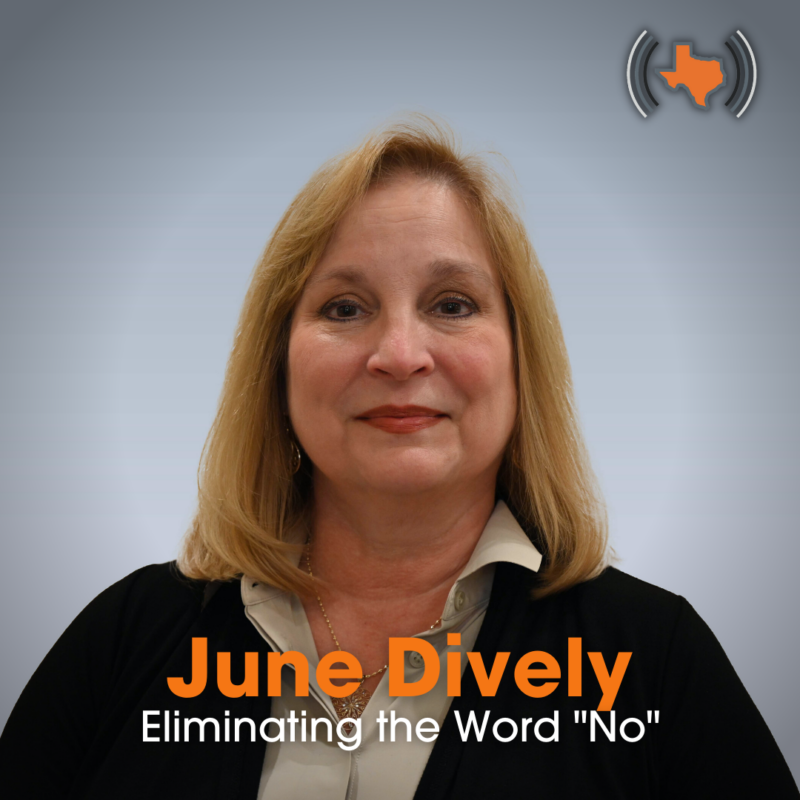
Si Energy are committed to delivering efficient, clean-burning natural gas at reasonable costs, and June has successfully grown the company over the past 10 years by eliminating the word “no” from her vocabulary and building a team that, above all else follows through on their word to the customers.
June Dively, CEO of SiEnergy, a gas utility company based in Austin, Texas, joins the podcast to let us into the mind of a trailblazer and we explore what it means to build a customer focused business that has no use for the word “No”.
Transcripts are generated by machine learning, so typos may be present.
Chris Hanslik: In today’s episode, you will meet June Dively, CEO of C-Energy, a gas utility company based in Austin, Texas. June has successfully grown C Energy over the past 10 years by eliminating the word no from her vocabulary and building a team that above all else follows through on their word to the customers. All right, June, I wanna thank you for coming on the podcast. It’s great to meet you and I appreciate you taking the time to be here.
June Dively: Of course, it’s great to meet you too and I’m very happy to be here and very excited to visit with you.
Chris Hanslik: Well, good. So we’re going to kind of just jump right in. I know that you run a very successful company based out of Austin called C-Energy. And I’d like to start with you just telling our audience, what is C-Energy? What are you known for?
June Dively: Well, C Energy is a natural gas distribution company that started in, of all places, Fort Bend County, just right outside of Houston, Texas. And since I got involved with the company, we’ve taken it from a very small company that serviced exclusively developers in Fort Bend County to a company that has a presence not just in Houston or South Houston, but also in North Houston. in Pflugerville right outside of Austin, Texas, in Fort Worth and in Dallas.
Chris Hanslik: Oh, wow. So you said gas utility. So what exactly, what is the service you provide to your customers?
June Dively: We are actually the gas utility that delivers gas to your home. So not everyone realizes that there are multiple gas utilities in the state of Texas. A lot of people believe that the only utility is the one that services their particular home, but there are multiple gas utilities and we’re one of the largest growing.
Chris Hanslik: Very exciting. So how did you get involved in this industry or specifically with C-Energy?
June Dively: About 20 years ago, when the developer was first starting his community in Fort Bend, I received a phone call because I was a consultant, an independent consultant working in the natural gas business, and they asked me to help them get some tariffs filed, regulatory tariffs with the Railroad Commission so that they could serve gas to some homes that they were building in Sienna Plantation. After that, that went real well. The relationship developed and they were with me for another 10 years. And after that 10-year period, I looked at how we were growing, all the dynamics and how exciting it was down in Fort Bend County and what was going on in Siena Plantation. And I thought, you know, we can really replicate this and make it a much bigger company than what it was at that time.
Chris Hanslik: So you kind of transitioned, I guess, out of that consulting role into taking over the leadership, I guess, CEO role of this gas utility.
June Dively: I did about 10 years ago when I took a strategic plan. to the investors at that time. I said, gentlemen, you know, we have a grand opportunity that we could take this utility and expand it beyond the borders that you have today. And when they saw my plan, they really liked it. And at that point, I became in charge of C Energy and ultimately as CEO and have never looked back.
Chris Hanslik: Sounds like it’s been an incredible, rewarding journey.
June Dively: Very rewarding.
Chris Hanslik: So in the early days, going back to that 10 years ago or more, did you have a team in place to kind of help you see the growth or that gave you the vision that you could actually achieve that opportunity in that strategic plan?
June Dively: When, at that point, Sea Energy was about four field technicians that worked in Sienna Plantation. about four staff of mine, and so we’re about a total of eight people. But, as I mentioned, I’d been in the consulting practice and working with other large utilities during this consulting practice, and I could just see the vision of what we could do with this small utility, and I was very excited about trying to grow it and make it much bigger. So it really wasn’t so much what was going on in that utility at that time, but it’s what I saw in the industry and the opportunities that we had. And I found that exciting and was able to share that with the investors.
Chris Hanslik: That’s great. So eight employees at that time, where are you today with total employee count at C?
June Dively: Right now we’re at 85 employees. And we have employees, as I mentioned before, we have employees here in the Houston area. We also have employees in Austin. Our corporate office is in Austin. And we also have employees up in Dallas-Fort Worth.
Chris Hanslik: Okay. And so based on what you described, the company started in Fort Bend County. What led to the decision to move the headquarters to Austin?
June Dively: That’s actually where I was located.
Chris Hanslik: Okay.
June Dively: My consulting practice was in Austin. I lived in Austin. And so when I was servicing C-Energy, when it was just my client, all the work I did was out of Austin.
Chris Hanslik: So you experienced in the last 10 years some pretty dramatic growth, both in, I guess, the employee count and the customer count. And I guess maybe the customer count drove the necessity to have more employees to make sure you could service them. How have you handled going about hiring employees, hiring a team around you to make sure that they were aligned with your vision for the company?
June Dively: That’s a really good question. I think that as you’re growing, you look at whatever industry you’re growing in and you pretty much chart a path for these are the different types of resources, employee resources that we’re going to need as we get bigger and when we’re going to need them. I think the easiest part of hiring employees is the skills. You can find a lot of employees who have the skills. The more difficult part is finding the employee that you feel is a good cultural match. And so a lot of times when I’m interviewing employees, what I’m looking for is that cultural match. It’s an exciting business. Our business is exciting. Most people wouldn’t think of a utility as exciting, but what we do is very exciting. We’re growing very quickly. And so I’m looking for someone who understands that kind of excitement, or maybe if they don’t totally understand it, they want it, right? And that you know they’re going to really dig in and be a part of the team. And when you’re a small company and you’re growing, sometimes people have to wear multiple hats, and you have to find the person that isn’t so spelled, you know, bound to a job description because they failed to read the part that said other things as a sign. So I’m looking for those individuals that are really excited about the growth in the team and are adaptable to whatever we need at any point in time.
Chris Hanslik: kind of the attitude of whatever it takes for the company to be successful.
June Dively: Absolutely. Whatever it takes, we do.
Chris Hanslik: So you mentioned in that hiring process, you see your role and maybe others as kind of really hiring from culture. How would you describe the culture at C Energy and what are maybe some of those personality characteristics that you’re looking for when you’re interviewing someone to say, okay, this is likely going to be a good fit?
June Dively: That’s a very good question. When I’m interviewing, I’m looking for somebody who is excited about being a member of a team. We’re not looking for somebody who likes to be in a silo and in charge of their silo. At the end of the day, that’s really going to hold us back. Our culture perceives ourselves as one large team rather than individual silos. So we have team events. It’s the entire company. It’s not one aspect of the company versus another. And I think it’s through the team effort that we really are successful. It makes us nimble. It also, I think, really drives home the fact that every single member of the team is equally of value to our success story, okay? We may all get paid different amounts because of the value of our skill set or our function, but our function is equally as necessary to the success of the company.
Chris Hanslik: I like that. There’s a lot that’s been written lately about how people may join a company because they believe in the mission or industry or whatever the company is really the purpose of the company, but they stay because of their connection with the team they’re on within the company.
June Dively: That’s right.
Chris Hanslik: And sounds like that’s kind of what your focus has been is to create this team environment so everyone feels valued and included.
June Dively: Absolutely, valued and inclusive and supportive of one another. So, you know, if we have particular challenges in an area that’s outside of whatever your function is, if there’s some way that you can help them overcome that, we encourage that type of interaction within the team.
Chris Hanslik: I’m curious to know, because you mentioned employees throughout the state of Texas, What are some of the things you do to keep that team mentality? Because it’s easy if you just have one office in one location and have these team events. What are some of the things that you do or you would encourage other leaders that may be listening to do when you got your team members spread across different geographic areas to keep that cohesiveness?
June Dively: Well, that’s a really good question because one of the challenges of any business, you know, like this particular business, when you have people who are geographically dispersed is how do you keep them engaged. We try to have all-hands events at least three times a year. We think that’s very important, and I think that could go on until we have hundreds of employees. Bringing everybody together is crucial so that people have not just a Zoom face, but they actually meet somebody in person, they know their mannerisms, they can interact on levels that aren’t just purely work. So every event that we have, we do try to have Some type of team building that is not a work or educational or training aspect of it that helps a lot of course you know modern technology has helped a lot i mean with team calls and things like that it has been very helpful so we also try to have first Friday leadership meetings where we bring all the leadership and. On a zoom call to discuss whatever is going on in every area we allow every single person to present something in those meetings into to be part of the discussion we also emails that we send from various parts of the company for instance safety are safety. Believe it or not, our safety is located in Dallas. I’d say why isn’t it in Austin? But we found a great safety employee and he’s located in Dallas. So his communications are coming from the Dallas area, but they’re touching every employee. And when he goes out and he’s training every employee, They know, well, we’re connected to that guy who’s up and down.
Chris Hanslik: Gotcha.
June Dively: And that’s really important. And that was one of the challenges during the last two years, right?
Chris Hanslik: Sure.
June Dively: Is the lack of that connection. And so it’s been really great that we’re getting back to it.
Chris Hanslik: So you bring up a great point that every business has faced in the last two years, and that’s that challenge of Keeping the cohesiveness of your organization, the people within your organization, like they’re connected because if they’re at home, you know, they’re isolated in a room looking at a camera, and that’s better than a conference call because you can’t see anybody, but there’s still a lack of human connectivity. What are some of the challenges that you’ve seen over the last two years in really maintaining that employee engagement? What are some of the things you’ve done to try to help promote it, knowing that people couldn’t be together?
June Dively: Right. You know, it was difficult. I’m not going to kid you during the last two years. We did do a lot of team calls, brought the teams together. Rather than having all-employee events where we were in person, we actually had all-employee Zoom activities, happy hours, where we literally sent everyone a care package and we all got together. We had an event where we actually play online competitive games and those types of things to bring people together. And, you know, trying to keep that positive, that focus on the team relationships strong, as strong as we could using Teams and Zoom. Despite you know, all those efforts. I think over time, two years is a long time, and over time you could see it really wear on people that they were isolated, and it was, it’s just a screen, it’s, you know, that type of thing. So that was very hard to overcome. Whenever we saw that, we tried to interact directly with the individual. And of course now we’re getting back together and so we feel like we’ve overcome a lot of that. Like a lot of people as we’re transitioning, you know, into the new 2022 world, you know, we’re having to make some changes as well. And we have not been exempt from the great resignation that we have seen here in Texas. And so we also have like many others, the great challenge of integrating a new set of people into your organization.
Chris Hanslik: You kind of took my next question because I was going to ask about the Great Resignation and how that impacted your business. You’ve already alluded to the fact that it did. I don’t think any business was immune. So how did that impact your business and what are some of the things that you’re doing or trying to do differently to avoid that from lingering or continuing?
June Dively: Well I hate to call it fortunate but one of the fortunate things about the great resignation is it pretty much happened at the end more towards the end of the pandemic so you know we experienced about a 10% turnover. And so we have new people in and we have been able to transition back into a face-to-face environment. We’ve had to be a lot more flexible with how we do that. However, we think it’s really important for going into 2022 because we don’t know if the pandemic will have another surge and we’ll have to go back home that we nurture and work on our team building and our relationships within our staff so that we’re that much stronger if it happens again.
Chris Hanslik: Has it made you rethink how you integrate new employees?
June Dively: Absolutely. We had some employees that we did integrate fully over Zoom. We found that we were successful in doing that, but you never felt that they were 100% fully integrated until you got to meet them in person and bring them into the office. So when we integrate employees today, we’re back to in person. What we try to do is during the pandemic, if we had a individual who was concerned and we were concerned about. COVID. What we did is we tried to bring them and just their supervisor into the office so they could have a one-on-one session that was, you know, with proper social distancing. And so they could see that, yes, there is an office. It’s not just an address, you know, somewhere, but yes, there is an office. There is an organization. So we attempted to do that. That was a good thing for us to do.
Chris Hanslik: Have you made any efforts to reduce the footprint of your office space or office size, thinking that long-term is going to be more of a hybrid of work from home or have you kind of stayed with what you had pre-pandemic?
June Dively: We stayed with what we have pre-pandemic. We probably, because we’re a utility and we’re a gas utility, we probably never can be fully sustainably, you know, virtual.
Chris Hanslik: Sure. I would assume you were always it fell under the definition of essential. So you did, you know, you never had to shut down.
June Dively: Absolutely. And we had a subset of employees, and this was a management challenge, but we had a subset of employees that never could work virtually because they’re, they’re our technicians. And if a customer smells gas or a customer needs a meter set, those things still had to happen. So they were still working.
Chris Hanslik: Well, good. I mean, it sounds like you have navigated the two years and maybe I guess you alluded could be more, but at least the past two years of challenges with your workforce fairly well. I want to ask you about innovation. When you think about innovation, what are some of the things you believe you’ve done at CNRG over the last, say, 10 years that you would kind of view as innovative for your business, maybe your industry?
June Dively: In terms of the industry, what we did that is innovative and now some of our competitors have adopted our philosophy is that we have looked at the entire state as our service area. Prior to Sea energy, the gas utilities looked at their service areas as where their footprint was. But because of the way regulation is in taxes, there are actually no boundaries to where a utility can be. So we were first trailblazers to really come out and say, we don’t have to be just in Houston. We don’t have to be in just Fort Bend County, you see in a plantation area. And we view the entire state of Texas as our service.
Chris Hanslik: That’s great. So do you feel like since you were kind of the pioneer of that’s given you a competitive advantage over your customers to really have adopted that mindset? first and push forward with it?
June Dively: It was a competitive advantage in the beginning and for quite a few years, but I don’t know if you’re familiar with Anthony Robbins, but Anthony Robbins is a great Speaker and one of the things he always said is there’s nothing new it just find something that you know you’re really excited about and find a better way to do it. So we felt we found a better way to do it and, of course, there are other smaller utilities have to look at us and said. Oh, we need to do what they’re doing. So we now see competition doing a very similar type of thing. And, you know, you get a little excited about, oh, my gosh, we’ve got competition now. They’re replicating what we’re doing, but greater compliment is there. And, you know, so we’re going to keep on doing what we do and we’ll continue to look for better ways to do it. So we can always be at the forefront.
Chris Hanslik: I love that mindset because it’s you’re right. It is a great compliment. But then the challenge I would guess for you and your team is OK, but we’re not going to let them do it better than us.
June Dively: Oh, absolutely.
Chris Hanslik: Right.
June Dively: Those are weekly, almost daily meetings.
Chris Hanslik: So keeping with the subject of innovation, have there been any disruptors that you’ve experienced in the company that have made you rethink either innovation or the use of technology at C-Energy?
June Dively: Absolutely. It’s interesting that you should ask. Back in 2019, we had Hurricane Harvey here in Houston. And as a result of Hurricane Harvey, it became really apparent that we needed to be able to function from anywhere in Texas. Particularly, because as you’re aware, I have employees in Dallas and Austin and Houston. So I challenged my IT department to make sure that the entire company could function remotely. And we spent the next year and a half or so working on different aspects of it, making sure that everyone had laptops, not desktops, that everyone had access to internet from wherever their home was. So we took a number of steps to make sure that we could do that. The last piece of the puzzle was making sure that we could take telephone calls from everywhere. And we finally resolved that and we decided that we needed to have a disaster recovery dry run to see what we would do in the event that there was a disaster. So we scheduled it for March 13th of 2020. And we went home on March 13th of 2020, all of us, and we’re instructed with our IT instructions in hand to power up our computers and everyone to get on a Zoom meeting, to make sure the email function, to make sure all the customer service representatives could place calls through their computers. And we did that, and it was successful. And at the end of the day, we all just were celebrating the fact that we were able to do that. That following Sunday, I told everyone that because of the pandemic they needed to work from home. And if we had not done that, I don’t think we would have been completely prepared, but we were prepared.
Chris Hanslik: Wow. Wow, that’s an amazing story.
June Dively: It was a happy accident that, you know, it happened at the same time.
Chris Hanslik: Yeah. Wow. Well, thanks for sharing that. I want to talk a little bit about setbacks or I’d use the word on it with other guest failures, but is there anything that has occurred over these last maybe 10 to 20 years since you’ve been at Sea Energy, whether it’s a company issue or maybe you personally as a leader where something didn’t go as expected? But although it may look like a failure there in the moment, there was learning that came from that actually made either the company better or you as a leader better as a result of that. Anything that comes to mind for you that you could share.
June Dively: I think for any person like myself who sees an opportunity that is sort of the trailblazer in what they’re doing, you have some notion about what’s the best way to attract business. In the beginning, it was a challenge. We did not have a brand. Nobody knew who we were. We knocked on doors for developers and they were like you mean there’s another gas company and so that was very challenging the very first year we didn’t sign anybody. For the very first year and so it was very we felt a little defeated okay and then we got the first one i think it was thirteen months after we started.
Chris Hanslik: I would have to think that it caused some second guessing, right?
June Dively: It did. It caused some second guessing. It really did. But we learned from every interaction, every meeting that we had, what it was that we needed to do better. We talked about, okay, you know, we’re coming in, we’re a small gas utility, and they’re looking at a big utility like Centerpoint. and going why would we do business with you. So you know we spent a lot of time focused on how we solve the pain for our customers and focused on why would you choose us over them and I think ultimately we were very successful and One of the things that we have done and I think it really is why we’re successful is We say what we’re going to do and we do what we say Okay, so we usually follow through on your work every bit of it and that’s partially why it’s so important to have a team I cannot have our development team selling a product If you want to call it a product, a service, and not have our construction team deliver or our operations team perform, the entire team has to perform for the customer every bit of the way.
Chris Hanslik: Right. Any failure in that chain, right? And it’s not going to work.
June Dively: It’s not going to work. Right.
Chris Hanslik: So you just mentioned those first 12, 12 and a half months of not signing any customers. and how it kind of made you second guess or begin to have some maybe some doubt on this strategy you thought was gonna be so successful. When you think back to that, what were some of the things that you did personally to combat that second guessing, to keep moving forward with the plan?
June Dively: I think a real entrepreneur does not, no is not in the vocabulary. You don’t get no, okay? No is just not possible. So we continuously focused on how do we get the yes. We focused on the map and drawing circles of where our service areas could be. We focused on making sure that our sales funnel was full. We focused on the opportunity ahead of us more than the no’s that we got along the way.
Chris Hanslik: Very good. I have to believe that’s invaluable advice for people listening to this as a mindset as an entrepreneur to have if you want your vision for your company to be successful.
June Dively: Absolutely.
Chris Hanslik: So let’s talk a little bit about your leadership style. How would you describe your leadership style or philosophy?
June Dively: My real leadership style is that word team. I believe we’re all a team. All of our voices are important. That doesn’t mean that there are certain matters that need to be taken care of at the executive level. But for our company to be successful, we’re all part of a team. And one of the big training opportunities I had bringing on executives was a couple of executives I brought on were like, we’re team construction or we’re team you know operations and those are just examples by the way for whoever’s listening yeah but they they sort of tried to build their own sub team let’s call it that and they do have a sub team but you know i quickly reminded them we’re all one team right you know we’re the c energy team and so trying to teach people that we all need one another i think is is really important
Chris Hanslik: I like that. I like the idea of the one team mentality, because even though everyone has different roles on a team, it doesn’t mean there’s different teams, right? It’s one team. Everyone has a role to play. If you play your role right, then the team’s successful.
June Dively: That’s exactly right.
Chris Hanslik: So we talked a little bit about the past two years. I want to ask a question to you about the past two years and dealing with the pandemic. What was kind of first and foremost in your mind when you thought about how you needed to show up as a leader? Did it change at all in the last two years versus the time before the pandemic?
June Dively: Not that it changed that much other than it was virtual, but it was very important that I be there on teams every single day. at least by start time and all the way to the end of the day. And I think that I spent a lot of time trying to interact with my staff and their subordinates and making sure that everyone knew that we might be in different locations, but we are still very connected and we all still have the same objectives and goals.
Chris Hanslik: Very good, very good. I think you’re right, that presence even though virtual became very important.
June Dively: It did.
Chris Hanslik: Yeah. So when I think about, you know, leadership and people like you running companies like C Energy and other guests have been on this podcast, everyone seems to have had some positive and good influences along the way that would otherwise be referred to as a mentor. So when you think about your career and your journey, Is there a mentor or two that you could point to to say, yeah, that person or people really made a difference in my life and my development? And if so, could you share kind of who they are and what the learnings and lessons you learned from them?
June Dively: Sure. I think early on in my utility industry career, I had a mentor named Bruce Fairchild, and Bruce had experience working at the PUC. He has a PhD in economics and is very well known in the industry. But industry issues, there was an issue and I thought, I’m not quite certain if I’m going to be approaching this correctly or I’m just dumbfounded. You know, I don’t know what to do here. I would reach out to Bruce and he always, he never failed me. So, you know, I hope he listens to this podcast. The other one that as it relates to CNRG specifically, well, there were two, Charlie Pence and Larry Johnson, who were both investors, the developers of Sienna Plantation. They were always there for me if you know I had any ideas any concerns you know to sort of reach out and say you know what I do with this I also looked at them like I admire them they well into their eighties and still working. And if you listen to their personal stories, I think they didn’t like the word no either. Right. And that they persevered. They went through ups and downs as real estate developers. But I really don’t believe I would be here today absent those two individuals.
Chris Hanslik: Wow. And I’m sure they were like many. these entrepreneurs that love what they do. They worked into their eighties, but they didn’t view it as work.
June Dively: Oh, not at all. I think it was life. Yeah. It was fun for them and it was their life. That’s what they did.
Chris Hanslik: Pursuing a passion.
June Dively: You bet.
Chris Hanslik: So, kind of staying on the topic of leadership for just a little bit longer, anything that kind of self-study that you do, books that you really would recommend to someone on leadership or building team, developing your own leadership style, anything like that that come to mind for you?
June Dively: I was very fond of the noble purpose and so I read through the noble purpose, it really spoke to me, it spoke to my team and I did quite a a few exercises related to establishing not just our vision but our noble purpose because I honestly believe that yes you can get a job and get up and go to work every day but if you have a real purpose for doing what you’re doing, then you’re going to be excited to get up and you’re going to be happy going to work. So we really focused a lot on that. The most recent book that I just picked up is Tillman Fertitta’s book. So he just, I apologize, I can’t think of the title of the book, but it was just handed to me and I thought I’m going to read this and it’s a very interesting read. I think I would recommend it to everyone.
Chris Hanslik: Okay. So when you think about you know, an entrepreneur or business owner out there, someone running a business, one or two things, the words of advice, pointers that you might share with them to say, you know, if you’re gonna do anything, make sure you at least do this and that, or maybe it’s something that you would say, don’t do this thing. Anything like that that you could just pass on to our listening base.
June Dively: I think a lot of times when you’re first starting a business, it’s all about you and your ideas. I think that the first thing you have to realize is you cannot do it alone. You cannot successfully grow a company without other human beings and you’ll need their The best thing you can do is hire people who know how to do something you don’t know how to do, right? And keep expanding. So I think that’s really important is that you need to reach outside of yourself and you need to trust the people that you hire or you shouldn’t be hiring them. So I think that’s really important. The other thing is I really think a really good piece of advice and I’ve learned this the hard way through my career is listen more, talk less.
Chris Hanslik: It’s easier said than done.
June Dively: It really is as we sit here at a podcast. But anyway, I think that’s real important. And lastly, if you’re really starting your business and it’s an entrepreneurial activity on your part. Don’t accept no. No should not be in your vocabulary. It’s always, how can it be done? Okay, well, we have an obstacle. What do we need to do to overcome the obstacle? And there are times when you can’t overcome an obstacle, but you don’t need to say no.
Chris Hanslik: Right. Not without exploring every option.
June Dively: Absolutely.
Chris Hanslik: That’s great. You’ve shared some great insight. Your story is so inspiring. I want to wrap up by doing some less serious, more fun things. Where did you grow up?
June Dively: I grew up in San Antonio, Texas.
Chris Hanslik: Native Texas, that’s great. What was the first job you had?
June Dively: I worked for a company called the House of Jeans when I was 15 years old.
Chris Hanslik: I’m assuming the product was what the name suggests, blue jeans? We’re a Texas-based podcast, and you’re a native Texan, so Tex-Mex or barbecue?
June Dively: Oh, Tex-Mex.
Chris Hanslik: Okay. She didn’t hesitate. I like that. Now, this is one of my favorite questions, and that is, if you could take a sabbatical for 30 days, where would you go and what would you do?
June Dively: Oh my gosh, I would go to the Amalfi Coast. Okay. And I would probably go to Capri and I would get out on the sea, smell the air, and just really relax and enjoy it. It’s beautiful.
Chris Hanslik: Sounds wonderful.
June Dively: It is. So I recommend it.
Chris Hanslik: Well, June, I want to thank you for taking the time to come share your story with us. I know there was a lot of value delivered to our listeners and couldn’t thank you enough for being here.
June Dively: Well, thank you, Chris. I enjoyed it.
Chris Hanslik: All right. Take care. And there we have it, another great episode. Don’t forget to check out the show notes at boyarmiller.com forward slash podcast. And you can find out more about all the ways our firm can help you at boyarmiller.com. That’s it for this episode. Have a great week and we’ll talk to you next time.
With a deep understanding of your business alongside clear and honest communication, we help clients face challenges fearlessly.
Learn more about our services and how we help clients.