


With a deep understanding of your business alongside clear and honest communication, we help clients face challenges fearlessly.
Learn more about our services and how we help clients.



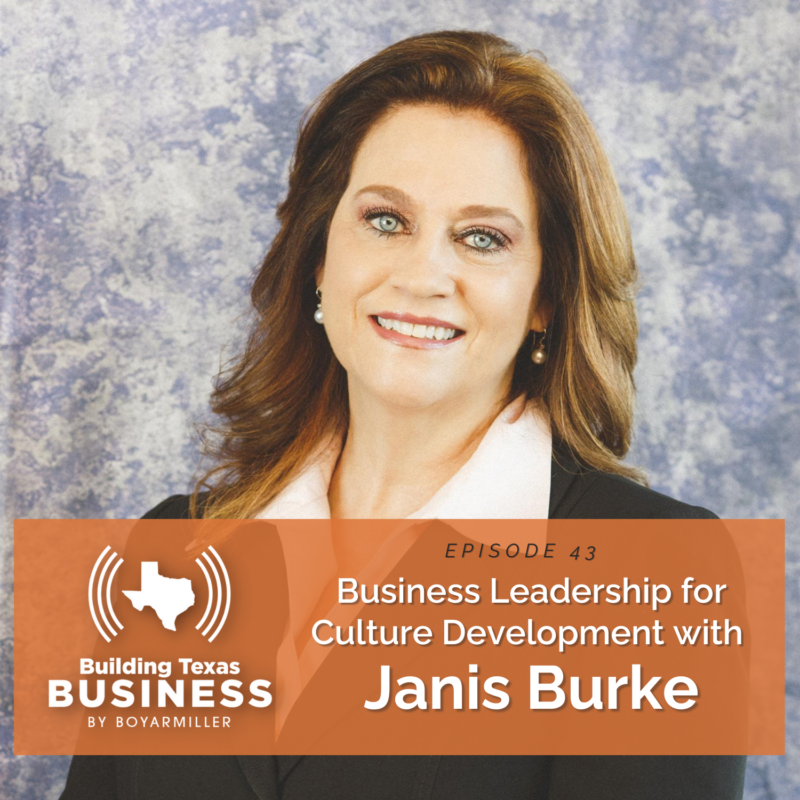
Janis Burke, CEO of the Harris County Houston Sports Authority, an organization charged with attracting major sporting events to Houston, joins the Building Texas Business podcast. Janis shares the importance of leaders clearly articulating a common goal for the members of their organization, and establishing a mindset of showing up every day to give your best effort.
Transcripts are generated by machine learning, so typos may be present.
Chris Hanslik: Jess, thanks for coming today. I want to welcome you onto the show.
Janis Burke: Well, thank you. Thanks for having me. This is, this will be fun.
Chris Hanslik: So you’re the CEO of the Harris Houston Sports Authority, correct?
Janis Burke: Harris County Houston Sports Authority. I know it’s a really long name. And they’re in alpha order because we love both the county and the city, but we didn’t want to… I like that.
Chris Hanslik: Yeah. Easy way to play it. Politically played well. So you’ve been the CEO since 2006. That is a long time.
Janis Burke: It is. And, you know, if someone would have told me that I’d be sitting here 17 years later, I’m not sure I would have believed it. We have such a great opportunity in the city and I’ve always felt that since the day I stepped here, stepped into this position.
Chris Hanslik: So let’s start there. Why don’t you tell our listeners just what the organization is, just high level and kind of the high level things that it’s doing in our community. And then we’ll maybe go into a little more detail on that.
Janis Burke: So if you go back 25 years ago, the Houston Oilers had left town to become the Tennessee Titans. We had two other professional sports teams, the Rockets and the Astros that were also being courted by other cities. And they were saying, look, we, might leave if we can’t figure out how to get new venues built. And so that really was the beginning of the Harris County Houston Sports Authority. We went to the state legislation to create a sports venue district that collects taxes, hotel tax and car rental tax. So basically the visitors that are coming to town are paying for the bonds that we’ve issued on these stadiums. And that’s really how it all started. The state then gave responsibility back to the local community. So half of my board is appointed by the mayor with city council approval and then half is appointed by the county commissioners court. Together they appoint a chairman. Kenny Friedman is our chairman. He’s been chair for quite a while. And the citizens were able to vote on how those tax dollars would be spent. So we couldn’t do any of the stadiums and build any of them without voter approval.
Chris Hanslik: Okay. And so going back those 25 years, and that sounds like that’s how we got to, I guess, what is now Minute Maid Park and Toyota Center and eventually NRG. Is that correct?
Janis Burke: So it started out as Enron Field, if you’ll remember, back in the day. And then before they opened it, it became Minute Maid Park. And the voters voted on Enron Field and NRG, at the time it was Reliant Stadium. We had to go out twice to the Citizens to get Toyota Center. And so it was close. It was a close margin. There was 50% of the people that thought, yes, we should build these and keep our team. There was 50% that said, you know, we can’t be in the business of building stadiums. So it was quite tumultuous time honestly and there was a lot of controversy. Even after I got here and the buildings were fairly new, I was really hired to help. us into the new realm, which is to be the sports marketing agency and put us on the map nationally and internationally as this great sports town because we have these beautiful buildings. But I didn’t realize how much controversy was still lingering over our agency.
Chris Hanslik: And the issue of the bonds, I guess.
Janis Burke: Right, right. And I was new. I moved to Houston, so I didn’t really realize how I guess how divided the community was on that decision to build the stadium.
Chris Hanslik: So let’s go back, I guess, then. You start in 2006 as a CEO. You’re taking over an organization as a leader. What were some of the things that you had to do to start building your own team and implementing some of your own strategies?
Janis Burke: Well, it’s an interesting question because I came from a city that had a huge marketing millions and millions of dollars we spent just marketing and I had moved around the country with convention visitor bureaus helping cities brand and market themselves and they all had really big budgets but this in San Antonio they had a particularly large budget to market their destination and so we had also a big team of people we had a whole public relations team and marketing team and sales team and so when I moved here we had three people and $30,000. Wow.
Chris Hanslik: In the fourth largest city and that’s all we had?
Janis Burke: Right. And in Houston First, which was, you know, our convention visitor bureau falls under Houston First and they were doing a lot of the marketing and so it was okay. I mean, I took the job because I realized that we can still make this work. But at the time, a lot of cities were splintering off and having sports commissions that would focus purely on bringing sporting events. And the reason is it’s very different than a professional meeting planner that is with a corporation or has a team of people with a national association that can do all of that work themselves. We’re talking about second and third tier type of sporting events that really need your marketing expertise. They need people standing behind a merchandise table, helping them sell merchandise and things like that. So very different. That’s why you saw this specialty of sports commissions popping up all over the country.
Chris Hanslik: Okay. So you started with three people. Where are you today?
Janis Burke: We just were looking around because mostly because of all of the events we have. So we have hired a lot of contractors that work specifically on Men’s Final Four, which we’ll be hosting here in less than 60 days. Next year is college football playoffs. So less than a year away, we have another team of about nine people on that. As we would lead into World Cup, we’ll be hiring staff. So we kind of fluctuate up and down depending on the events we have. When we have Junior Olympics in 2025, we usually have about 23 to 24 staff people. And then we have full-time 21 that day in and day out are there and have the knowledge, right? So the contractors come and work under them.
Chris Hanslik: So I always like to ask, you know, leaders, I think one thing that they all agree with is building a healthy culture within your organization is like the key to the kingdom. Has that been your experience? And if so, kind of how would you describe the culture that you’ve built at the sports authority since taking over 17 years ago?
Janis Burke: Yeah, and I think it’s really the culture of the city too, because we’re selling a destination, not just inside of our walls. And we couldn’t do this without partners. When I first got here, we had such a small team and such a small budget. that I realized we had to partner with the stadiums, with the tenants in those buildings, with Houston First and the arts community or whomever and then we had to build a volunteer database and that’s how we got the work done in the early days before we had staff and then with the staff, whether it was bringing interns in. I remember the first Junior Olympic bid, we pitched an intern, help me write it, because I didn’t have any staff to help me write it. And I remember the two, when I first took the job, I said to the board, okay, who writes your press releases? And they’re like, well. That’s what we hired you to do. And I said, okay. And who does your sales calls and who does your, do you have an outside firm that doesn’t? Nope. That’s what we hired you to do. So everything kind of fell on me and it was a fun challenge. I said, okay, we have to build this thing from the ground up and in order to put ourselves on the map like they wanted. And that was kind of my marching orders. We needed to build a whole team of people. And one of the things I think that we’ve always kept was this partnership teamwork. We can get more done. if we all pitch in and, you know, it’s a divide and conquer kind of mindset, right? And so we’ve always kept that. And I think that’s actually helped us. And it’s because of our humble beginnings. And even the interns or our volunteers are treated like staff members because that’s what we had to do in the beginning to get the work done.
Chris Hanslik: That makes sense. I love that. Well, I guess there’s a great analogy there, right? Teamwork and you’re promoting sporting venues and trying to bring sporting things into town. So it makes sense. What are some of the challenges, as you mentioned, the ebbs and flows of bringing in, I guess, these specialty groups that are event-specific. What are some of the things that you try to do to help make that cohesive, right? Because you have these full-time people and then you’re bringing in, I guess, these kind of temporary workers, to lack of a better term.
Janis Burke: Yeah, we really try to onboard everybody, even our volunteers. If you look at a Super Bowl that used 10,000 volunteers, You look at NCAA Men’s Final Four here that’s coming up and we’ll have several thousand volunteer shifts being filled. And so whether you’re bringing in a volunteer to be part of your team or interns or contractors, to me, the onboarding is all the same. We want you to understand what your role is, who you’re working for, and that we’re all in this together to make Houston shine. The other thing is putting our fingerprint on every event that we do. It’s really part of our DNA. And so that innovative push, you will find it runs throughout our entire team, whether it’s the accounting team that’s paying off bonds, whether it’s the sales team or our front desk person. We’re always looking for that innovative touch. How do we do it better, faster, make it bigger, be more impactful to our community with every sporting event we bring to town.
Chris Hanslik: I love talking about innovation. So give me some examples of some things that you’ve done recently or that you’re kind of currently doing that you think have been part of that innovative spirit.
Janis Burke: Okay. So in 2016, the last time we hosted Men’s Final Four, for example, We wanted to get the young people involved. We wanted kids to be able to go into the stadium that normally can’t afford a ticket. Because again, these stadiums were built with tax dollars, and so we’re always thinking about that aspect of it. Our community should all get to experience. You know, things like that for sure. So we started talking to each ISD and said, look, on the practice day, it’s free to the public. Maybe we could help bus the kids. Maybe we could bring them in. Is there a way to get the kids jazzed and excited about this ahead of time? How can we work together? And through that conversation, we learned that a lot of our kids in the HISD system are failing in reading. And the statistics say that by third grade, if kids aren’t reading at third grade level, that they’re going to struggle the rest of their student career. Basically, HSD said, we don’t know how to get them involved in how to make this an official field trip because it’s a sporting event. But if you could help us figure out the reading problem. And that’s really where Read to the Final Four came from. It was really a brainstorming session. So we start in March when the brackets all open up and as the kids log their minutes that they’ve read. the brackets go down so do this each school until you get to the final four schools that have logged the most amount of reading time. And that started pretty simple and it was thrown together in a couple of months and it was very successful. NCA loved it so much that they required every city from that point forward to do a read to the final four program. Now come 2023, And we’re looking at how much that program has grown as it’s moved around the country. And we had to hire a full-time person just to handle that program. We now have 11 school districts involved. We have logged, I think, over 34 million minutes that these kids have read. They’re excited about reading. We do all kinds of programming in the schools. And it’s all based on Final Four and part of the Final Four budget. But we go into the schools to teach about The fact that learning is fun, reading is fun, and it’s going to help them be successful. And then those final four schools get to come out, they get to touch the floor, the winning school gets all kinds of prizes and library books and all kinds of great things. So that’s an innovative way to leave a legacy in your community. It’s tangible.
Chris Hanslik: I didn’t realize it was giving you such a softball. What an amazing story. I had no idea. I mean, I remember the Final Four being here, but I’ve never heard that story till just now. I mean, kudos to you and your team for being such a leader and allowing Houston to get the credit for being such an innovative leader in that area.
Janis Burke: Yeah, and we do that over and over with every event that we bring in. Just amazing stories of how it really leaves a lasting effect in our community.
Chris Hanslik: That’s great. So we talked a little bit about your team and I guess the culture that you’ve got there. How would you describe your leadership style?
Janis Burke: I like to make people accountable and give them the tools they need and the ability to take ownership. Now not everybody can step in and be take ownership because they’re afraid or their personal profile I guess makes them want more oversight and more guess input. And so what we work really hard with every one on our team is to get them to the point where they can feel like, wow, I can own this area and even the interns. And many times the entry interview is very different than their exit interview when they leave. As far as they’ll say when they’re leaving, I was really scared. I was given this piece and I’m thinking, what am I going to do if I drop the ball? We want to stretch them. We want them to take that ownership. We have a lot of young people that have been with us for many years. They stay. And that’s because there is an opportunity for them, even in a smaller environment, a smaller organization, to spread their wings and take leadership. And so that’s really important to me to teach everybody who comes through. You’re not entitled. It’s not about you know, all of your wins that you had three years ago. It’s about every day getting up and taking responsibility and looking at your area. How can you do it better? How can we be more innovative? I don’t care if you are stealing envelopes. How can we do that better? Maybe we shouldn’t be using envelopes at all. I mean, you know, right. And so that kind of is really important to me is making sure that I am preparing everyone and bringing out the best in them that they can rise to the highest level in their career that they want to go.
Chris Hanslik: Love it. Creating opportunity for everyone, right? Are there any tools you use in the interview process, onboarding process that you’ve found to be more successful than others in kind of helping you pick the right teammates to join?
Janis Burke: Yes. So we have a tendency as human beings to hire people that are like us.
Chris Hanslik: Right.
Janis Burke: We like people that are like us, birds of a feather flock together. So one of the things we do is specifically pick out people that are not like us to do team interviews. So if I’m a really outgoing person and I’m a hard charger, I want to pick the brake pedal person in our team that is more quiet and more reserved and sits to themselves. We do these team interviews after, of course, we’ve gone through all the resumes and we kind of pick out those that are qualified. And then we do team interviews to ensure that we are giving the best possible chance to every candidate and looking at it from all angles so that we’re not just hiring a whole team of people that are just like us. That bring different strengths to the table. And so we do that. We also have a profile. It’s a questionnaire. There’s no right or wrong answers. It’s kind of fun. We share the results with every candidate. So it’s not a secret. about here’s your strengths. Here’s where we see how you would fit into this role and do really well. Here’s some areas that might be a challenge for you. Let’s talk about that. And so we do all of that with the final candidates. And then lastly, I would say before anyone has hired it, they come through me. And so these team interviews all happen and all of that happens and I trust my team and I want my leaders to to have people on their team that they trust and that, you know, they feel they can work with. But at the end of the day, they’re still gonna represent our corporation. And so I just ask each of the team leaders before that hire that I get a chance to talk with them.
Chris Hanslik: Makes sense. I like that. I’ve had other CEOs come on the podcast and a couple of said flat out I’m a terrible interviewer because I like everybody right in my head such as I’m always in a sales mode right I just you know and it’s actually really true I think it a lot of people at that level it’s hard and you should I think. rely and build a team to help you vet these candidates and rely on a lot of data sources, I guess, data points.
Janis Burke: Yeah, I have this CEO coach that from time to time we talk and I’ll say, wow, I really love detailed people because I’m such a visionary and high level and looking at always looking at things 30,000 feet up. And he goes, I hope so because you have a whole team of them around you. But that’s a good thing because their strengths are opposite of mine. And so that’s what makes us a great team.
Chris Hanslik: Yeah. So let’s say you’ve been in this role for 17 years. Can you think of a setback or failure based on a bad decision or however that came about in your world that, one, tell us what that is or kind of what the situation was and what did you learn from it and how did it make you a better leader because of it?
Janis Burke: Yeah, I think we have setbacks, all of us as leaders, all the time.
Chris Hanslik: Sure.
Janis Burke: bad hire right even after you do all of that and it’s still not a great fit and they’re still human beings and you want to handle that the right way or a bid that we put a lot of money and time and the community’s depending on us to win that bid and we lose I remember the first two times we bid for college football playoffs we didn’t win and we put our heart and soul into it and we thought for sure we would we would win and I remember after that loss the second law saying, wow, we have to really look and assess why are we not winning when it’s so obvious we’re a football city, you know, all of these things, right?
Chris Hanslik: We have a great, hard setbacks. I mean, just to get that rejection.
Janis Burke: Yeah. So we finally, I called the head of college football playoffs at the time and said, we’re going to be hosting men’s fun for once you come in, I’d like you just to be my guest. I want to take you around, show you, you know, how we set up our fan fest area, what, you know, you can come to the game, but I want you to see how Houston shines when we have these big events. He said, okay, came in. And then the next year we had Super Bowl. I called again because remember they’ve been years out. So all of the years were taken. Right. And so I said, why don’t you come in again? This is a little different event. I want you to see this one too. And it’s football, your football. And so they came in again. This time he brought a couple of people with them. And about two months after we finished with Super Bowl, I received a phone call. And he said, Janice, I want to come to town and I want to do a one sitting negotiation. We’re not going to go out to bed. I want to sit across the table from you and see if we can make this work. If we can’t, then we’ll go out to bed. But if we can make it work, then we’ll just make the announcement. We’re coming to Houston in 2024. And that’s what happened.
Chris Hanslik: Wow. What a great story.
Janis Burke: So I think sometimes those setbacks maybe force us to have a different approach.
Chris Hanslik: Yeah. I mean, when I listen to you tell that story, right? I think the setbacks sound like it made you and your team think, how do we go about this differently? Where we tried it twice the same way. It didn’t work. So what can we do and how do we show up? How do we show our city differently than on paper?
Janis Burke: Right. And I remembered that experience with World Cup because I wasn’t going to get another chance at World Cup, right? It comes every 30 years or whatever. And so in 1994, Houston wasn’t at the table. Dallas was a host city. Houston was not. I knew the United States was going to bid again. It was just a matter of time. They were in the mix when Qatar won and, you know, didn’t even make the finals. And so I knew they were hungry and they were going to go back at it, the first chance that they got. And so about a decade ago, we sat down and Jamie roots, my friend at the time who came from the soccer world, we said, all right, we have to start focusing. to ensure we have a seat at the table, at least when this bid comes out.
Chris Hanslik: Right.
Janis Burke: And that Houston has a real shot at being a host city. And so we took every soccer event, small, large, hard to sell tickets, easy to sell tickets. I mean, Copa de America, gold cups, the NCAA Final Four, for soccer, you know, the college cup. And so we just began to work on every soccer, even soccer friendlies. We, we did soccer friendlies and those, some of those budgets were tough to make work, but we knew we needed to be in the trenches. We also needed to show the world what a great soccer town we were.
Chris Hanslik: Sure.
Janis Burke: And lo and behold, that paid off because we, by the time we got into the bid, the United States was in this bid. We had hosted more international soccer events than any city in the United States by that point.
Chris Hanslik: That’s impressive.
Janis Burke: Now still wasn’t an easy win because people in the beginning said they’re not going to award Houston and Dallas. And Dallas was more well known in Zurich than Houston. And so we worked very hard to I guess teach them that by having both cities, it would actually enhance their attendance. Cause people could get pretty boring. And if you looked at the East coast, a lot of those cities were closer together, even though they were in a different state.
Chris Hanslik: Right.
Janis Burke: And so it didn’t make sense to have this attitude that you can’t allow Houston and Dallas. And so we never went head to head with Dallas. We actually included them and said, we, and Dallas did the same. We think our state can host both and we think we can feed off of each other and it’s going to be a better experience for the fans. And then we, I hired Chris Canetti at the time he was the president with Dynamo and Dash. And he had been there for a while and I wasn’t sure he would leave his post, but to his credit, he saw the vision and I said, look, it could only be a one year job.
Chris Hanslik: Because you don’t get the bid, right?
Janis Burke: If we don’t get the bid, then I don’t have a job for you. But I really think we’re going to get the bid. I think we just have to have I wanted somebody getting up every single day, focusing on it because we have all these other events. We have one point two billion dollars of debt service that we have to oversee. You got to make sure the stadium stay up to date. We have all these things. that I knew I wouldn’t be able to focus on it 100% of my time and I needed somebody that could and that was from the soccer world and so he was perfect.
Chris Hanslik: Makes total sense.
Janis Burke: He came in, he took it to the finish line for us. Just a great job and I look at that and we really became leaders and the rest of the country was saying, Well, hey Houston, how are you handling this or the human trafficking side of it? We have a full-time person in the mayor’s office that handles human trafficking where most cities don’t have that. So she, Manal became a big part of that bid and putting that whole human trafficking, anti-human trafficking piece together. And so there were a lot of things that we could take a leadership role. We were the first city to hire a full-time person at that caliber. We had to go out and raise the money. finished the bid, we thought it was going to be a year. It ended up being three and a half years because of COVID. But we had raised enough to not only cover Chris’s salary and all of the things that you need to do to put into these big bids. You’re doing site visits, you’re flying people in. I mean, there’s just a lot. There’s a whole marketing campaign. We hired a team out of London, a PR team, where most cities were focusing on getting the PR out in their local community. We wanted the world and those in Zurich that pay attention to soccer magazines and different publications than we do here in Houston. We wanted them to hear about Houston, and so that was part of also our strategy.
Chris Hanslik: Sure, that was the decision makers, right? I was going to ask you this, and you kind of covered some of it. I mean, the kinds of things that go into these bids for our city to be able to host these great events. I mean, just kind of high level, what does that look like?
Janis Burke: Yeah, I think sometimes citizens don’t realize how much work is going on behind the scenes. They think, wow, we have great venues. We’re a big soccer or a big sports town, depending on what sport we’re going out. They must just like Houston and pick Houston. And really there’s a lot of work behind the scenes. For instance, with World Cup, you’ve got sponsors that have paid millions of dollars to put their name on those stadiums. But during World Cup, the gets covered up and it’s called World Cup Stadium. And so, you know, we had to go speak with energy and thank goodness, you know, they saw the vision and they were excited. And that’s where corporate partners in every aspect of this or partners at the venue or the team is so important.
Chris Hanslik: Make or break it, right?
Janis Burke: Right, right. There’s spaces in our stadium that belong to the Texans through a lease agreement. And, you know, we had to bring them in as partners to talk about, you know, the various areas. We had to become experts in growing grass. And figuring out how are you going to have grass last for 35 days?
Chris Hanslik: In the stadium.
Janis Burke: In the stadium. And you’ve got venues that are in northern states or northern climates and southern climates, indoor, outdoor. Yet all of this grass, the pitch has to be perfect. The ball has to bounce the same no matter what stadium you are in to make sure it’s fair play for all of the players. We had grass experts trying to help us because one of our issues and challenges was we have the rodeo. So most other stadiums around the country can get their grass in and growing and rooted sooner than we could because we had to wait until after the rodeo. So things like that, you’re working through all of that before you can even put a bit in because you have to be sure you can do it.
Chris Hanslik: Right, amazing. Other thing that I guess occurred to me as you were talking about the World Cup. And I think it’s similar to any CEO is the challenge of managing and dealing with the day-to-day execution of your mission and strategy while also looking out 10 plus years on, you know, what should you be doing? What do you aspire to be doing and balancing all of that? How do you go about that as a CEO of the sports authority?
Janis Burke: Yeah. And I think that is a challenge, especially in our industry and then making sure that we have our eye on the ball for the future that we have at least, you know, one major event coming in each year and filling need times. So it’s one thing to be able to go out and bid for an event, but if all of our hotels are full already and the Convention Center doesn’t need the business, like it doesn’t make sense. So making sure that we’re looking at the whole picture. And there’s been a couple of times we We bid for the table tennis championships. I’ll take that as an example because the USOPC called and said, look, it’s the 50th anniversary of ping pong diplomacy. This event has never been held in the United States ever.
Chris Hanslik: Oh, wow.
Janis Burke: And we think Houston is the only city that could do it. Would you be willing to bid for it? And we’re looking at the calendar going, wow, this is a jam packed year for us. We had junior Olympics, we had men’s regent, we had all these things already on the books. And so. I said, can we go after another year? No, we really think this is the year because of the ping-pong diplomacy. So we fitted into Thanksgiving because the rest of the world doesn’t celebrate our Thanksgiving, that American holiday. And that filled a huge need time for all of our venues and our restaurants and our hotels. And we had 30,000 tickets sold to that event. Our Chinese-American community just loved that sport.
Chris Hanslik: So you bring up a good point there, and I really want the listeners to understand. You can tell from your comments, right, the primary goal is to make Houston shine. But part of that is it drives the events that you’re working on and that your team put on here drive economic benefit to our community. Can you give us some of the examples and dollars that our community benefits from because these events are here?
Janis Burke: Yes. And I would say that without the new stadiums, we would have never been able to bring all these big events.
Chris Hanslik: And so that makes total sense. Right.
Janis Burke: And I don’t think the community questions it anymore. Right.
Chris Hanslik: And they need to keep them up to date.
Janis Burke: Right. Right. And we need to keep them up to date so we can continue to bring them. And the reason that our community embraces the events instead of complaining and saying, oh, it’s more traffic or I can’t get a ticket to the event anyway, is because again, every event we are providing services or touch points for the entire community to get involved, whether it’s through free concerts or busing kids in that wouldn’t normally get to go through corporate sponsors, whatever it is, right? We’re Super Bowl, you know, there were 70 different charities that were able to feed off of that event and the money that drove through our economy. We have $1.2 billion of debt service. And since we have been keeping track, since I arrived, we have brought in over $9 billion worth of economic impact. So it’s more than paid for itself with those stadiums, as well as all of the other halo effects that come from them.
Chris Hanslik: Right. I mean, I’ve heard, I think, correct me if I’m wrong, but at Final Four, this is coming, like you said, in less than 60 days. That’ll be what, close to a hundred million dollars in economic impact just that weekend?
Janis Burke: Yes, and I try to stay away from quoting economic impact versus direct spending because sometimes there’s multipliers and there’s lots of controversy around that. But what kind of tax dollars are we bringing? And that’s mostly what I look at because those tax dollars help fill potholes in the road and they help us hire more police. So the more tax dollars we can bring into the community, it helps all of us. And so I really look at the direct spending and the tax dollars. And that’s really what we focus on. I mean, if you look at it, there is no question that building these venues and keeping them up to date has been a really great thing for Houston. And you look at the rebirth of downtown. I was looking at some old pictures because it was our 25th anniversary. It looked like Toyota Center Minute Maverick next to each other because there was nothing. It was just dust a little, you know, in between there. And you look at now the two convention center hotels attached to the convention center and Discovery Park and Green Street with all of the retail and restaurants. And just as you look at that growth, it’s a really good thing for our downtown.
Chris Hanslik: Yeah, well, it’s really become an event destination where people, it becomes walkable. People wouldn’t think they would say that about Houston. So let’s turn for a minute and talk about things that Houstonians and Houston have to look forward to based on the work that you and your team have been doing because You know, I’m aware of it generally, but I mean, I think when you start laying it out, it’s like, wow, there’s a lot of stuff going on. I mean, I know in the last year or so we’ve had some really neat events and we have some, you know, like I said, right around the corner.
Janis Burke: Yeah. So, you know, of course, Men’s Final Four coming up in 2024, college football playoffs, 2025, Junior Olympics again. We’re on permanent rotation every four or five years. They come because they love Houston. It’s 15,000 kids, about 40,000 people when you count all the parents and grandparents that come. then 26 of course with World Cup. We’re looking at a World BMX Championships coming in 27 or 28 right before the LA Olympic Games. Greg Grissom and I have already been talking about brainstorming what’s that next Super Bowl bid that we should do. And there’s all of these big events that the community knows about and then there’s a smaller ones like BMX Nationals is coming this weekend. Probably people don’t know. Bike park built in the Greens Point area right next to the You’ve got the skate park and bike park and it’s literally the best in the world. Right here in our backyard, we attract nationals and state events and all kinds of things out there. But what I love about that project is we have bikes that have been donated and helmets so that all the kids that are around that park And you got a lot of apartment buildings and a lot of kids that have never ridden a bike. We didn’t want them looking over the fence thinking, gosh, I wish I could ride a bike and I could be part of this. And so we have a system where they can come in and it’s like checking out a library book. They can check out a helmet and a bike and they can ride. And in 2020, we had a goal before the pandemic hit to reach 20,020 kids in Houston and teach them how to ride bikes. We had a trailer. bunch of interns on our team would go out, work with the PE teachers, get these kids on bikes. And before March, when we closed our office, we had already reached over 20,000 20 kids.
Chris Hanslik: Wow.
Janis Burke: And it’s, you know, you hear the stories. There’s one little boy comes from a single home. His mom couldn’t afford a bike and he had never learned how to ride a bike. And he came to the park and he comes out all the time now and he’s a part of that programming. But those are the kinds of things that I love and the sporting events. are just a platform. Yes, we want to put on a great event. We want Houston to shine, but those are the stories that touch me is what we leave behind. And through these events, we bought all these bikes and helmets and kids can come.
Chris Hanslik: I mean, the real takeaway for me is, you know, what you kind of started this, what started with maybe some controversy or whatever and building some amazing venues, sporting venues have allowed community to host these events that drive so much revenue that then you said your ultimate goal is to leave a lasting mark on the community and the stories you shared are just quite amazing and quite frankly need to be told more. I haven’t heard of the reading program or the bike program and I mean that’s changing people’s lives.
Janis Burke: Yeah through sports we believe we can change people’s lives.
Chris Hanslik: Well so as we wrap up I want to kind of get less serious a little more fun. So what was your first job?
Janis Burke: I worked in the hotel business. I came up the ranks through hotel and loved it. I loved servicing people. People that are coming to our hotel are excited. They’re going to have, they’re there for an event or they’re there for, you know, family fun and building memories. And so I really loved that. And then the convention visitors bureau called, I was involved in a lot of committees and whatnot. And they called me and said, we’d love for you to come and help us sell this three county region. So I made the change there. And really my forte is really just helping. whether it’s a city, an entity, a hotel, whatever brand and market yourself. How do you stand out? What makes you different? And that’s really what I love to do. And when I saw Houston, when I first came here and I saw the opportunity, I just thought, wow, this is amazing. They have three venue. Who’s built three brand new venues in that amount of time in any city. And just loved the whole vibe here. I love the philanthropic, and energy that comes from that in this community. I love the diversity. And so I thought, I can sell this. This is a package I can sell all over the world.
Chris Hanslik: Yeah, I agree. I think once you get here and get to know it, Houston’s a city of can do and will do. For sure. And as it comes to business and community.
Janis Burke: Yeah, and I didn’t really know much about Houston. And so when I got here, that was refreshing. I loved it. And it’s just been super fun. I don’t ever want to leave. I’ll retire here, probably.
Chris Hanslik: Good. So you’ve been in Texas a long time. So I always ask my guests, do you prefer Tex-Mex or barbecue?
Janis Burke: I think Tex-Mex.
Chris Hanslik: OK. Very good. And last, if you could take a 30-day sabbatical, where would you go and what would you do?
Janis Burke: Oh, that’s a good question. So we have a little place in Michigan. I was born and raised in Michigan. Some people might hear that my twang still and my grandkids are up there. And so I like to go up there and spend as much time as possible. It’s on a little lake, private lake. We put the boat in the water. And it sits there, and I pop back and forth on the weekends in the summer. And so I probably just go up there and hang out. Nice.
Chris Hanslik: A little bit of getaway and downtime.
Janis Burke: Yeah.
Chris Hanslik: Which you need to every now and again, right?
Janis Burke: Yeah, for sure.
Chris Hanslik: Well, Janice, it has been wonderful having you on the show. I’ve loved learning more about what you and everyone at the Sports Authority are doing. And yeah, whatever we can do to help promote all the good you’re doing in our community, just let us know.
Janis Burke: Well, thank you. Thanks for having me.
Chris Hanslik: Of course. And there we have it, another great episode. Don’t forget to check out the show notes at boyarmiller.com forward slash podcast. And you can find out more about all the ways our firm can help you at boyarmiller.com. That’s it for this episode. Have a great week and we’ll talk to you next time.
With a deep understanding of your business alongside clear and honest communication, we help clients face challenges fearlessly.
Learn more about our services and how we help clients.