


With a deep understanding of your business alongside clear and honest communication, we help clients face challenges fearlessly.
Learn more about our services and how we help clients.



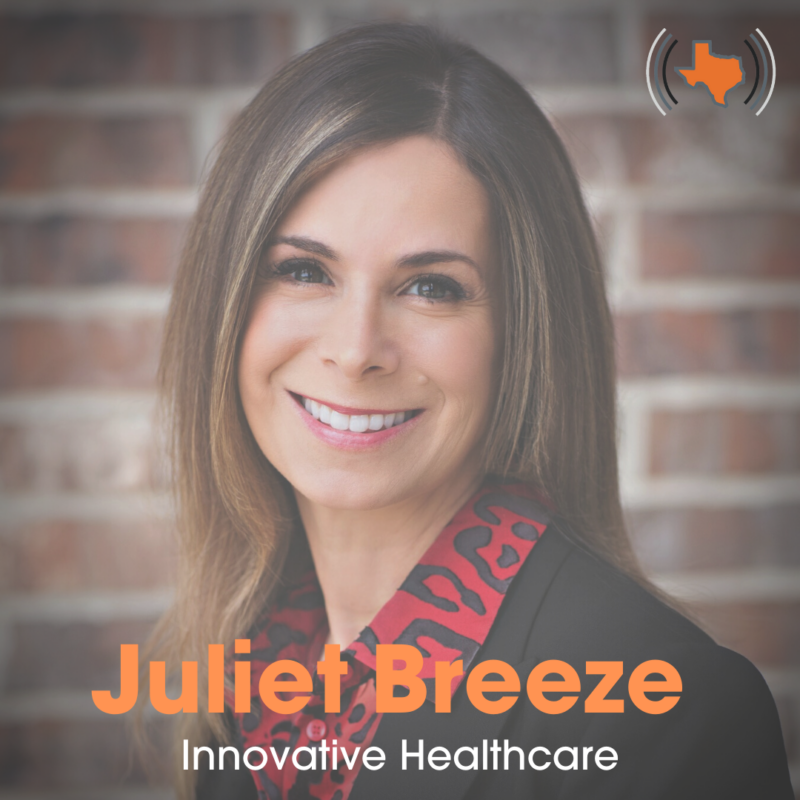
The latest episode features Dr. Juliet Breeze, Founder and CEO of Next Level Urgent Care, a healthcare provider in the Houston area, founded on the belief that it’s possible to provide high-quality, cost-effective medical care for all who need immediate attention for non-life-threatening illnesses and injuries.
Learn how Juliet is bringing innovative thoughts to the practice of medicine, including focusing on customer service from a retail mindset and how they deliver healthcare at her company. She passionately believes in the mission of Next Level, and has many insights into the journey from inspiration to now having multiple locations.
Transcripts are generated by machine learning, so typos may be present.
Chris Hanslik: Hello, everyone. My name is Chris Hanslik and I’m the chairman of BoyarMiller, a mid-size law firm in Houston, Texas. I want to welcome you to Building Texas Business, a podcast about corporate innovation, entrepreneurship, and business leadership in the Lone Star State. The goal of this podcast is to learn from some of the best business leaders in Texas in hopes that their stories of growth, challenges, and success will inspire our listeners in their own journey to building a successful business. Today’s guest is Juliet Breeze, founder and CEO of Next Level Urgent Care, an affordable alternative to high-cost emergency room services. Providing accessible affordable healthcare became a mission at Next Level, and the company has continued to expand its offerings, which now include telemedicine, work injury care, preventative care, and primary care. Next Level has grown to over 20 locations in the Houston area. Juliet has been named a Gulf Coast finalist for EY’s Entrepreneur of the Year, as well as a most admired CEO of Houston Business Journal. Welcome to the podcast, Juliet. Thank you very much for having me, Chris. I’m really excited to be here. Well, I’m excited to hear more about your company and how you’ve grown it. And so let’s start maybe just telling everyone, what is Next Level Urgent Care known for?
Juliet Breeze: Well, actually, that Response keeps evolving. So initially we were known as, like you said, an alternative to high-priced emergency rooms. That was the initial mission of the company was, you know, I had had an experience where I went into a freestanding emergency room that was in a strip center thinking that it was going to be a fairly affordable option for weekend care, but it turned out that it was incredibly expensive. And I realized that there was an issue that especially in Houston, we had with the proliferation of these freestanding emergency rooms that were just charging an arm and a leg for very simple healthcare issues. So that was the original goal of the company. But what has happened is that because we really sort of broadened our mission to really address how can we provide cost-effective care, healthcare in Houston and elsewhere now, how can we keep quality while lowering the prices, because as we all know, healthcare has become increasingly unaffordable to many. And it is, I think, the single greatest reason why people declare personal bankruptcy now is healthcare bills. So I think it’s a mission worth.
Chris Hanslik: Well, no question about that. So it sounds like the inspiration then came to you kind of as your own bad experience.
Juliet Breeze: Well, yeah, I mean, I always tell people that I start companies when I want to solve a problem, you know, when I when I get mad about something, I start a company. And so I got mad about my high bill and I realized that, you know, there had to be something better. So what I did was I used my experience and background. I had been a primary care doctor right out of med school. But then I had sort of slipped into the business of medicine for many years. So I had the appropriate skill set. and what I did was created sort of economies of scale. I put nine clinics in 10 months so that we could use basically, you know, great IT systems, great management, great marketing, and share those costs across multiple clinics and thereby driving the price down for all of them, or the costs down for all of them. Once we had that platform of urgent cares, We realized that there were other things that we could do to reduce the cost of healthcare in other areas. One of the biggest things that has come to light is the fact, and especially since the pandemic, is the fact that a lot of Americans are forgoing primary care. And, you know, if we’re looking at the broader picture of the cost of healthcare in this country, we have to look at where we’re spending the money and we end up spending it on a lot of sickness, a lot of end of life and a lot of critical care and hospitalizations. There have been a lot of great studies that show that if we can just focus on well care, if we can just focus on taking care of people and finding disease states earlier, then we can avoid some of those really large expenses at the end of the road.
Chris Hanslik: You kind of have to catch it sooner before it’s catastrophic.
Juliet Breeze: Exactly. So when we start thinking about that, we say, well, there’s more that we can do. We don’t, instead of just being an urgent care, which is really, you know, you have an immediate need, you broke your ankle or you’ve got a cough or a cold or pink eye, you know, those are the things that we were treating. And now we’ve moved into Can we go to employer groups and offer a more comprehensive package where we address the two biggest barriers that people are coming up against when they’re looking at their healthcare? One is the cost and the other is the access. Right now we have a lot of people out there that don’t want to take time off of work for taking care of their chronic illnesses. They don’t want to take time off of work to get a physical exam for sure. So what we have done is sort of capitalized on the fact that we had centers already open that were open from 9 a.m. to 9 p.m. seven days a week and we said how can we use those to expand the access, the ability for people to get taken care of hours outside of work time. So there was that. And then the second big barrier, of course, is cost. As employers are faced with rising health care costs, what they’ve generally done to stave off the expense is to increase deductibles. And that thereby they’re pushing more of the healthcare bill, the healthcare cost to the actual employee. And that makes people real gun shy about going and getting treatment when they need it. So we created this membership model where employers would basically pay a very, very low flat fee per employee. And for that, the employee and their family never take their wallet out and they can access any of our centers and they can get their preventive care, their physicals on a Sunday. They can get their diabetes taken care of on a Thursday night. They can come in for any manner of injury or illness anytime. And we, on top of that, added telemedicine so that we really covered 24 hours of the day. And now you’re talking about a real benefit, and employers are able to give their employees not just, okay, you have insurance, but it doesn’t really mean anything because you still have to pay for everything. I’ve given you a benefit and you never took your wallet out.
Chris Hanslik: Oh, that’s amazing. So you said you went open nine locations in 10 months?
Juliet Breeze: Yeah, most people would think that was crazy. And actually, I think it might have been. It certainly forced me to get really creative with how we got business in the door and how lean we ran for those early years. I don’t know if I would recommend that anyone do that again, but actually it really worked well for us because the distribution of facilities across Houston really got us noticed by some employers that are really enjoying using our services. Now we have 20 clinics in Metro Houston and that really gives us very strong coverage of the area.
Chris Hanslik: What were some of the key building blocks or fundamentals that you focused on to get that nine stores or nine locations off the ground in 10 months?
Juliet Breeze: So the big things were, you know, the IT infrastructure is really, really important. Making sure that we have systems. Because the idea was, you know, let’s provide a consistent service across these nine facilities. So of course the platform had to be really good. But then there’s the big thing, the most important thing about any of these running healthcare businesses is the people. So that has always been a really big deal for us, trying to find the right people. We wanted people who made our patients happy that they came in. We understand that healthcare, especially the kind of healthcare we do, has more in common with retail than it does with sort of the traditional view of the patient can wait in the waiting room I’ll get to him when I get to him or, you know, the patient can come in the hours that I’m available and if I have a golf game on Wednesday then my office is closed. That was sort of the way that doctors, you know, sort of ran their businesses. Well, it’s a different day and age. And people are really looking for great service. They want their time to be respected so they want to be able to come in and get out quickly. One of the things we did very early was create an app for our patients where they would basically put themselves in line from their cell phone and they get a text when an exam room is ready so they don’t have to wait in our waiting room. They can wait in the comfort of their own home. or they can run errands if they’re not too sick, and then we let them know when they can walk right in and get into an exam room. And so those are the kind of things that we did to try to make the experience great, but more than anything, people make the difference. So we spent a lot of time interviewing and hiring.
Chris Hanslik: Sounds like you’re doing a number of things that are innovative, not just to healthcare, but to any industry. with the membership, the app.
Juliet Breeze: Yes. We’re actually really, really trying to rethink this. You know, I’ve been in healthcare for a long time and I remember when I first became a doctor, I was blown away how we got paid as physicians because, you know, you go to medical school and you don’t, you don’t learn one minute of the business of medicine. You don’t understand how doctors get paid. You don’t really even learn coding, nothing. And you get out and then they tell you, well, this is what happens. You see a patient, if you see a lot of patients, you can make more money, of course, but the idea is that if you do more things for a patient, you get paid more. Whether they need it or not. And so then, you are really trusting that these people who have gone into healthcare don’t have a big bill to pay, don’t have any, you know, things nagging at them that might incentivize them to, you know, just get that extra test. And by the way, sometimes it’s not that people are bad people. It’s just that, you know, if I saw you and I was pretty sure that you had a meniscal tear in your knee, but I have an MRI, I could get you that MRI and I would know for certain But did I really need that MRI? Was I going to do, you know, an exploratory arthroscopic procedure anyway? I mean, what goes into that? And so, you know, it’s just those things like, do we want to just only use our clinical judgment or do we want to use a test? What I love about membership is that it allows us to make good decisions and not have money play into it. We’ve been paid. And so now, it’s what does the patient actually need? At next level, we don’t have physical therapy on site, so we’re not gonna over-utilize physical therapy. We don’t have CT or MRI on site, so we don’t over-utilize those testing. We use it when we really need it to make a diagnosis. So I think that those things are really important, and I just really think that helping the whole country move away from the fee-for-service model is something that I’m passionate about, obviously. I really enjoy what we’re doing because I think it’s going to make sense. Ultimately, it’s going to be the way that we go as a country.
Chris Hanslik: It seems like we don’t have a choice. The current model is not that sustainable.
Juliet Breeze: It’s not sustainable. What’s interesting for me is that I have a very unique perspective because I’m not only a provider of healthcare, but I’m actually an employer of 600 plus employees in Houston and so it matters to me greatly how I spend my money on those employees and I would much rather spend several million dollars and have that be valued and understood by my employees than to pay some insurance company and they don’t really even feel any of that and I’ve, you know, it’s just, It’s just where would you like that money spent? Would you like it spent on actual healthcare or would you like to spend it on the avoidance of great risk, which is what we’re doing right now?
Chris Hanslik: Right, right, makes sense. So thinking about when you started the business, always like to hear stories of setbacks or failures that you overcome. We tend to learn more then, but anything that comes to mind that you could share, you know, what it was, how you grew and learned from it and how it’s made you a better leader, the company stronger. Yeah.
Juliet Breeze: I mean, you know, I have a lot of these stories, but actually my favorite setback, challenge, almost failure really happened at this onset of COVID. And what happened was that, you know, I fully expected that all the people that worked for me who knew they were healthcare providers and knew they worked in healthcare would rise to the occasion when COVID hit. I think just sort of akin to, you know, a fireman when, when a fire breaks out, the fireman runs to put out the fire. And so when COVID first became a thing in Houston, I expected my staff to rise to the occasion and to help me to figure out how to, you know, do whatever we could to prevent, treat, diagnose, but they were scared. And I didn’t fully appreciate how scared they were until I started hearing that my staff were locking my clinics from the inside, trying to keep patients out at the very, this is the very onset of COVID. And I said, we are going to test because the only way to get on top of COVID is to understand who has it and who does not have it. So we need to get out there and be testing early. And the response that I got was, we’re not doing it.
Chris Hanslik: Really?
Juliet Breeze: Yes. That, and here’s the thing, these are good people. They are caring, wonderful, loving, professional people, but they were scared. And what I had to do, I think there were a couple things. One is that I had to make them trust me that I wasn’t putting them in harm’s way. We made huge Herculean efforts to get them protective equipment. But I think the most important thing that I did was actually use a little bit of problem solving, creative problem solving. My daughter at the time was in her fourth year of medical school and was complaining because they had closed the medical school because COVID broke out. They didn’t, they felt like it was too much of a risk to have the medical students. And she said, I’m so mad. I want to be in there helping. And they won’t even let us come in the hospitals. And I said, wait, you want to be in there helping? And so I said, how many of them, how many of you are there in your class? And she said, we all want to be involved. So we actually recruited an entire class of medical students to come out and help test that we ran testing centers in the parking lots of several of our locations. And my staff stayed inside and watched the medical students and their PPE testing, you know, hundreds and hundreds of patients. And over a few weeks, my staff started saying, well, I don’t mind helping them. And they started getting out there and helping. And so I think the thing is that sometimes, you know, I could have just said, oh, well, I guess we’re just not going to stay on the sidelines because what can I do? But, you know, you find ways of working around problems and turning them around. And what ended up happening was that the staff saw what we were doing for the community. They saw the grateful patients. We got letters. We got pictures that kids drew for us that was really, really nice. It felt great. You know, there was a lot of healthcare heroes, people dropping off meals, and all of a sudden it became something that they wanted to do. And I just, you know, it was great that I didn’t have to force it, that it came, that I was able to give them the time to get over their own fears and join the fight.
Chris Hanslik: That’s a wonderful story, very inspiring. You think about that, one, from your perspective as a leader, you didn’t give up. You showed resilience. Two, respected your employees’ views, but showed them there’s a different way. That’s right. My sense is that probably has brought you a lot closer. and maybe enhance the culture you have at the company.
Juliet Breeze: I have to say as much as you know we are so you know our lives have been turned upside down by COVID as have everyone’s there are certain things that have been you know really big benefits to to basically being in a foxhole with a whole group of people. I think it has brought our team together. They’re fighting the good fight. They’re doing a great job. We were first out there with vaccination clinics. We were first out there with testing. We continue to test to this day. We have centers that all they do is test all day long because of Delta. We’ve got some new business that way, but it has been very interesting to see what else has all evolved. I mean, one of the other big things that happened to us during COVID was I was trying to figure out other ways that we could be valuable to our community during that time. And I started contacting people that I knew in the clinical research world, because what I did know is that I had a lot of people testing and a lot of positive COVIDs. And I thought, maybe I can help with, you know, vaccine trials or, you know, any kind of treatment trials. And we did end up getting chosen for the Regeneron trial and the Eli Lilly trial for monoclonal antibody. That was an incredible opportunity for us to be part of, you know, helping science. And both of those medications ended up being remarkably successful at treating mild and to moderate COVID-19 and keeping people out of the hospital. So we felt like we really played a part.
Chris Hanslik: That is neat. So when you think about the culture that you’ve built, you know, how would you describe it and what are some of the key things you think you’ve done to help create it?
Juliet Breeze: Well, like I said, I think we’re a tight-knit team, but we talk all the time about the fact that our people, our staff, will not be able to do the best job they could do for patients if they feel like they’re not supported and they’re not appreciated. So we spend a lot of time supporting and appreciating the people who work at our company. We have spent a lot of effort in trying to come up with ways of just letting them know how important they are. Certainly things like, you know, we give them tickets to concerts and Rockets tickets and Texans tickets and those kind of things that are special and fun events that they can bring their family to, but also just in the clinics bringing in lunch or bringing in a special treat or, you know, little gifts because, you know, everybody needs a pick me up. Everyone, especially this kind of work, it’s stressful and there’s a lot of everybody who comes in to see us is either injured or ill and they’re usually not in the greatest mood of their lives. We don’t get to see people at their finest hour and so our people have to continually recharge to be able to kind of, you know, provide that extra care to people who really need it.
Chris Hanslik: Well, I mean, you haven’t really thought about it. It makes total sense, right? I mean, it’s very… angry, upset, hurt, frustrated with their insurance.
Juliet Breeze: Exactly, right, exactly. It’s not ideal. Now our prime patients, they’re really, that’s the membership model patients. The prime patients, they don’t have as much reason to be upset because they’re not taking their wallet out at all and they’re just getting all kinds of care. But definitely our regular urgent care patients are sometimes in pretty bad mood.
Chris Hanslik: So let’s talk a little bit about leadership and your style. How would you describe it and what have you done over the years to kind of do you feel like to build your leadership style?
Juliet Breeze: Well, so maybe I’ll answer the second part first. I do a lot of reading. I’m an avid reader of all kinds of books. Generally, I love biographies and autobiographies of people who have led anything or just people who have had really unique experiences because you can learn a lot. I also really like business books. I think that I pick up little tidbits from every book that I read. So that’s how I’ve kind of grown. I’ve also recently gotten to work with some phenomenal people who have really become incredible mentors to me. I’ve had the opportunity and what’s interesting is like earlier in my career I was having a hard time finding those kind of people and now because we’re growing our company and I have had a lot more interest in people reaching out to me about what we’re doing, I’ve been able to expand my network and really learn and grow from people who I’m contacting. I would describe my style. I’m not formal and that’s a good thing sometimes and a really bad thing sometimes. I definitely need to surround myself with people who are a little bit more systematic because I’m kind of more of an intuitive leader. And so I love really building great relationships with my leadership team and I think my fun comes in in the innovation, in the creative problem solving, and so the days that I’m most excited is when I’m deep in something that I think could potentially change the world. That’s what brings me a lot of joy. I think people would say I’m a pretty energetic leader and very tenacious, but as far as some of the more formal processes that people put in, that’s not really my style.
Chris Hanslik: you surround yourself or build that in the rest of your team.
Juliet Breeze: I have really incredible leadership team that are just bright and run their business units really well. And so that’s kind of who I rely on for making sure that operations, they understand the vision. They have just as much passion as I have for what we’re trying to do. And so I’m really, you know, out there trying to just make sure that we’re all growing in the same direction.
Chris Hanslik: What are one or two of your favorite books that you reference, stuff you read a lot?
Juliet Breeze: Yeah, so Principles by Ray Dalio was a really, I thought it was a really interesting read. I love all the Jim Collins books. They’re just good. They’re kind of your Business 101, you should really definitely read all of them. And then of course lately I’ve gotten into the business of medicine books and there’s a fabulous book that nobody should read unless they want to be really depressed about American medicine. It’s called An American Sickness and it’s by Elizabeth Rosenthal and that was a tough read because it really points out all of the incredible flaws of what we’ve created and why is specifically hard for our country to fix the problems. Because we have a certain mindset, and it’s not a bad mindset, it’s just that it’s very difficult to get people off of. It’s a very capitalistic system, and sometimes healthcare is one of those touchy things where we all feel like maybe that should be something that everyone has a bit of a right to. So that’s tough.
Chris Hanslik: Along the way, and you referenced maybe recently, connecting with a mentor, someone that’s been an inspiration or a mentor that’s really, you feel like kind of changed or enhanced your abilities to run the company or even had maybe the guts to start it to begin with.
Juliet Breeze: Well, you know, it’s funny, the guts to begin with is definitely, I have to give all the credit to my husband. He is the guy that, you know, says, you should really do this. And then I’m like, yeah, and I run with it. He’s really a super supporter and a very bright and competent doctor. But I have also had the opportunity to be coached by a woman named Gina Luna. And she has the Luna strategies. She has been just incredibly supportive and really has taught me a lot about really good business practices, you know, sort of self-taught, so it was really nice to have somebody that could kind of show me, well, this is more the way that, you know, you might do it in a more corporate setting. And now recently I’ve just been working with a gentleman named Ron Nixon who runs the Catalyst Group and just a fantastic wealth of information and an incredible resource and so I think I’m going to learn a lot from him.
Chris Hanslik: So you know most of our listeners I think out there are business owners either currently maybe thinking about starting one. Are there two or three things you would share with them about things either that you thought were very valuable to your success or maybe you wish you’d have known when you’re starting out that someone you’d want to make them aware of.
Juliet Breeze: I think number one on my list is think really hard about who your partners are. So that’s one of those ones where if it goes well, it can be the best thing in the world, just like a marriage. When you get into business, you really want to make sure that you have chosen wisely on the people who are either co-founders or or large investors in what you do. I think the other thing that, you know, I tell a lot of people, I always see people get really caught up in the analysis of things and I’ve really found sometimes that you just don’t know what you don’t know and you have to just go for it and then be ready to quickly think yourself out of whatever you just got yourself into. So, you know, I work with a lot of entrepreneurs because I love to coach and mentor myself And that’s the thing that I usually have to try to give them kind of a kick in the pants and say, you know, we can’t think through this enough to make you 100% comfortable at a certain point. You just have to own that discomfort and go for it.
Chris Hanslik: Right. No analysis paralysis.
Juliet Breeze: Yes, no analysis paralysis.
Chris Hanslik: And I think you mentioned something that’s very important. Not only how important it is to make the decision, and move forward, but then to learn as you go so you can adjust.
Juliet Breeze: Exactly. I think people don’t, don’t give themselves enough credit for how good of a decision maker we can be when we’re under the gun. So I’ve been in, you know, some pretty bad situations and I get amazingly creative when I’m pinned to the wall. So I think most people do. So I think, you know, we all try to, you know, make, try to, try to make every decision, you know, risk free. And that’s just not possible.
Chris Hanslik: That exists. You might find a unicorn quicker. So that’s really helpful information, I think, that make the decision act, adjust and keep moving forward is so, I think, key to really leadership and trying to grow a business in any environment.
Juliet Breeze: Yes.
Chris Hanslik: So that’s been great. I want to now get a little less serious and ask you, what was your first job?
Juliet Breeze: My first job was a, I was a, and this is really sad because now I sound so old, but I ran, I was in the photo shop at a local grocery store and so people brought their film in and we processed the film and I gave them their pictures and I wasn’t allowed to give any pictures back if they had naked, if anyone was naked in the picture. So I actually had to sort the pictures and only give back the ones that were family friendly. It was a really weird 15-year-old job to have, but it taught me a lot about life. I got the inside scoop on a lot of things.
Chris Hanslik: Oh my goodness. I bet some people were embarrassed.
Juliet Breeze: Yeah, they were looking for their pictures and I was like, I’m sorry we’re not allowed to give you those.
Chris Hanslik: So being a Texas podcast, I want to know, do you prefer barbecue or Tex-Mex?
Juliet Breeze: Barbecue all the way. I came down to Texas. I’m actually from upstate New York and I hadn’t really had experienced barbecue or Mexican. And so it’s been really fun over the years just getting to really get myself into that, but I love barbecue.
Chris Hanslik: Okay. So you’ve already spoken about some of your favorite books. I’m going to ask you if you could take a sabbatical, where would you go and what would you do?
Juliet Breeze: Well actually this one is an interesting one because I really have this on my mind. I really want to learn how to be fluent in Spanish and I’ve tried a million times to take lessons and learn but I think that I would love to do an immersion where I just was somewhere where I could not speak English because I tend to fall back on it all the time. So I think I’d take my month and go to Costa Rica or you know Spain or Argentina or somewhere and just immerse myself.
Chris Hanslik: Very good. Any other hobbies or interests when you’re not doing all these things?
Juliet Breeze: Yeah, I love to hike and I love the outdoors. I’m a skier and a hiker, so I know that that’s weird because I live in the flattest place ever, but I do have my happy place in Colorado and I spend a lot of time in the mountains when I’m not here.
Chris Hanslik: Very good. Well, Julia, thank you so much for coming on the podcast. Love hearing your story and I know our listeners got a lot of benefit out of it, so thank you.
Juliet Breeze: Thank you very much for having me.
Chris Hanslik: And there we have it, another great episode. Don’t forget to check out the show notes at boyarmiller.com forward slash podcast. And you can find out more about all the ways our firm can help you at boyarmiller.com. That’s it for this episode. Have a great week and we’ll talk to you next time.
With a deep understanding of your business alongside clear and honest communication, we help clients face challenges fearlessly.
Learn more about our services and how we help clients.