


With a deep understanding of your business alongside clear and honest communication, we help clients face challenges fearlessly.
Learn more about our services and how we help clients.



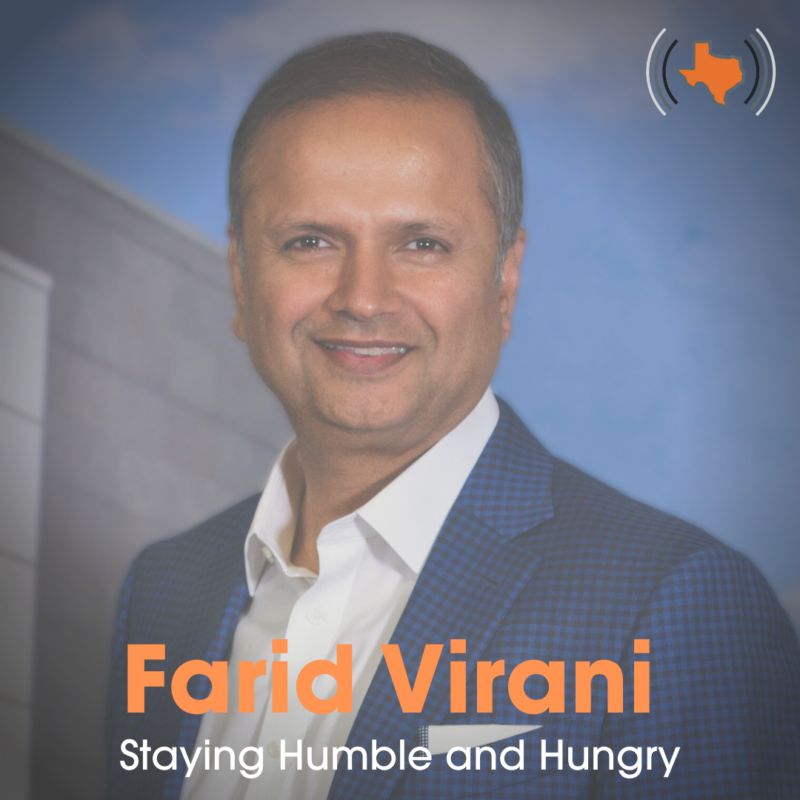
Farid Virani, Founder and CEO of Prime Communication, the largest AT&T Authorized Retailer in the United States shares how he started in 1999 with one kiosk store in Baybrook Mall and by staying humble, hungry, and scrappy, built Prime to over 2000 AT&T retail stores across North America.
Transcripts are generated by machine learning, so typos may be present.
Chris Hanslik: In today’s episode, you will hear from Fareed Varani, founder and CEO of Prime Communication, and learn how he started in 1999 with one kiosk store in Baybrook Mall and by staying humble, hungry, and scrappy, he has built Prime to over 2,000 AT&T retail stores across North America. Farid, thanks for being here. I wanted to kind of jump right in and tell us a little bit about what your company is known for.
Farid Virani: Well, what we do, Chris, is we operate AT&T wireless stores nationwide. We basically think of us as an authorized retailer of AT&T stores, AT&T products, wireless, broadband. all sorts of stuff that you would expect in an AT&T store or AT&T. One of the AT&T services we sell, we look and feel like AT&T store, that’s what we do.
Chris Hanslik: Okay, so like the stores we would see in a shopping center. Right, right. Tell us, given that is where you are today, how did you get there? What inspired you or how did you get started in this business?
Farid Virani: Totally by serendipity. I saw an operator in California that was literally selling wireless from a mall kiosk store. And I saw that and I was inspired. And that’s kind of how I came back home and started exact same business with one store in Baybrook Mall back in 1999.
Chris Hanslik: Wow, so you actually started with just a kiosk?
Farid Virani: Just one store, one kiosk, yeah.
Chris Hanslik: And what, do you mind sharing, what have you grown Prime to now?
Farid Virani: Oh, so today, Prime with all of its stores and all the distribution we have, we’re more than 2,000 stores across North America. So yeah, we have grown quite a bit.
Chris Hanslik: Wow, that’s remarkable. Congratulations.
Farid Virani: Thank you, thank you.
Chris Hanslik: 22, I guess going on 22 years now? Yes. When you think about that journey, what have been some of the key principles or fundamentals that you’ve built in the business to kind of help grow it to that size?
Farid Virani: I think most of the stuff, Chris, is pretty standard with most businesses that they would require. I think of prime as a platform now that we have built over, let’s call it 10, 15 years where we have brought in good people. Obviously it’s the key ingredient, good processes and technology. And we have found a way to marry all three of them into a platform that on which we operate from coast to coast. And we can operate these stores efficiently and still be profitable.
Chris Hanslik: Okay and is there anything you incorporated into the hiring process to try to help you identify the right type of people to bring in or?
Farid Virani: No, I mean obviously I try to hire people much more smarter than I am and but also people that like to work, want to work, workaholics, you know, whatever you want to call it. People who enjoy what they do, people who are up to a challenge, people who can problem solve, people who can see a big picture and can execute, are hyper-connected. have the empathy for the team members and are available 24-7. That’s one of the key, I guess, difference between what we believe we have at prime and what we see in a lot of other businesses that struggle.
Chris Hanslik: Okay. So when you think about the things you all are doing or that you have done in the last 10 or 15 years at Prime, is there anything that you would describe or believe to be innovative, either specific to your industry or maybe just in general? Sure.
Farid Virani: No, I think we have quite a few things we have done. But one key thing that I think we have developed over the years is we developed what we call our internal portal. Think of it like a dashboard that has a bunch of KPIs and what have you. But we started building that 15 years ago when cloud computing and dashboards and all of them were very, very new. And we did it in-house. We have a team that has a bunch of smart people on it. They took a concept And now that concept, because it’s dynamic, they keep changing it, making it better day in and day out. And today, I believe, looking back at it, I would basically say that’s our secret sauce.
Chris Hanslik: Interesting. So that allows you to track what’s going on across the company.
Farid Virani: At every level. So it’s hierarchy based. So depending on whether you’re a store manager, whether you are a district manager, it doesn’t matter. You have your own profile and you have access to that. In the morning somebody comes at a store, they clock in using the portal, their sales performance, their their entire work life, it’s there. And the same thing for a market director that has 45 stores. And let’s say South Florida has the same tool, same tool that whether he’s on the phone or an iPad or a desktop, he has very, very good details about his business or her business. He has very, very good analytics. live data, sales data, employee data, performance, KPIs, everything put together, and it continues to evolve.
Chris Hanslik: That’s impressive.
Farid Virani: If I have to say one thing that is unique, I would say that’s one of the things we did, and we did it years ago.
Chris Hanslik: Sure, that’s what it sounds like, and it sounds internally developed and continued to manage it.
Farid Virani: Yes, absolutely. We have a very small team that owns it, runs it with a great, great leader.
Chris Hanslik: So that’s clearly been a success or a key part of your success. When you think about that’s 20, almost 22 year journey, what are maybe one or two of the major setbacks that you recall that were a challenge to get through, but you look back and maybe thankful for the learning that you got and what did you do to overcome?
Farid Virani: You know, Let me answer it differently. I don’t remember having one major setback in business that comes to mind, but it’s a long journey. So a lot of times, Working with a large corporation like we do with AT&T, it has this tremendous strengths and benefits, but also has challenges and limitations. Working a scrappy entrepreneurial company to work with a Fortune 10 company, at times it’s difficult for us, but you know, getting over that. Managing growth. What is too much? And what is the right amount of growth? How do you fund things? How do you grow and acquire stores? How do you invest in building stores? So a whole bunch of obstacles, but we’ve been fortunate that in the beginning in younger years, earlier years, we did not We didn’t go for any home runs. I’ve always believed in singles and doubles, not to code baseball right now.
Chris Hanslik: Well, it’s a good time to be called baseball.
Farid Virani: Good time for baseball. Singles and doubles has been the strategy. And in the early years, of course, I literally believe that one of the key things we did well is that we didn’t aim for, we didn’t go for home runs. We just did singles and doubles for a while until we built capacity. and then brought in some good people. And then we were able to aggressively grow and acquire and move on.
Chris Hanslik: I think that’s really sound advice because as you were talking then about how to grow, when to grow, there’s this whole concept of not growing too fast, right? You can have all the success, grow too fast, and it can cause you to fail.
Farid Virani: Right, right.
Chris Hanslik: Sounds like you resisted that and stayed within yourself.
Farid Virani: Yes, I absolutely have. And, you know, one of the key things that I believe and as a team, we believe that there is no deal we got to have. There is nothing we have to do or prove it to someone. So that has helped us by by by not making a lot of mistakes and just go after something that’s Not a good sound business, not a prudent business, but you fall in love with it and you’re just kind of in deal fever and trying to do something that perhaps is not a good fit for you. So that’s kind of what’s been some of the things that we have dealt with, struggled with.
Chris Hanslik: So don’t get too emotional in the deal.
Farid Virani: Oh yeah. That I think that has served us well. Yes.
Chris Hanslik: Very good. So you touched on it a little bit. So I want to ask more specifically, as you’ve grown, you’ve resisted certain growth at a certain pace, you’ve developed a culture at prime. How would you describe that culture? What are some of the elements that you think make it up?
Farid Virani: So there is a, we have a little, not a model, but kind of like the key things that values, you can call it. And I’ll say to you, it’s be humble, or I should say stay humble, Stay hungry and stay scrappy. Okay. And all three of these things, I believe that, that I talk about it all the time. I believe when you, when you’re humble and you have humility, you’re open to ideas, you’re open, you’re open to listening to people. And I think that goes a long way. And when you’re hungry, and I mean intellectually hungry, you’re driven. And when you’re driven, you wake up in the morning thinking of ideas and things you want to do, and it helps you. And when you’re scrappy, that means you are a scrappy entrepreneur. You do more with less. So you can outrun your competition. And I think those are three values that has served us well.
Chris Hanslik: I like those. Humble is one I obviously hear a lot of. Hungry too, maybe in different words. But Scrappy maybe my new favorite.
Farid Virani: That’s one of my favorite words because it means so much. to so many different people. I mean, it means, to me, it means entrepreneurship. And I tell my team this all the time. I mean, there is a joke. What would Fareed do, WWFD? What would Fareed do? And the idea isn’t that, hey, look how smart I am. The idea is that that’s how I think. Yeah. You know, and we, we have all these one, you know, all these sayings, you know, run it like you want it, you know, run it like you on it. So when we talk to store managers and district managers, we’ll say, what would you do if this was your business? And what, whatever that is, do it.
Chris Hanslik: So autonomy, right?
Farid Virani: Yes. Well, I would say prudent autonomy.
Chris Hanslik: Yeah.
Farid Virani: You know, a sandbox in which a, a district manager can run their business so long, you know, it’s sound business.
Chris Hanslik: Sure, there’s some guardrails.
Farid Virani: Yes, guardrails. That’s a good way to put it.
Chris Hanslik: Yeah, for Scrappy, when I think of Scrappy, I think of resourceful.
Farid Virani: Exactly. That’s exactly what it means. Resourceful, resilient, you know, and be able to think and problem solve. To me, that’s what it means.
Chris Hanslik: Yeah. Well, then that’s the culture. Looking more personally at you, how would you describe your leadership style? And given that it may have evolved over time, how has it evolved?
Farid Virani: That’s a tricky question. I think it has evolved over the years. And if you ask my coworkers, maybe they’ll say, that’s not true, but I’ll give you my… Well, if they listen and provide comments, I’ll let you know. No, I joke about myself that I think of myself as an operator. and I see things, which is both my strength and my weakness, because I see things. I notice things that perhaps I shouldn’t, but I do. I can’t help it. So because of that, my In the beginning, I was literally in everything, every aspect of the business. I mean, I’ve done everything from shipping boxes to the stores, to literally balance our QuickBooks in the early days, to pretty much do everything, help build stores and negotiate leases, done it all. But over the years, I think I have gotten much more comfortable with letting the key leaders of the business run the business. And I have become, I like to think and I hope it’s true, more of a, I’ve learned how to delegate trust in power and yet hold accountable. So that’s kind of how, and having KPIs, it’s been helpful.
Chris Hanslik: That’s a tough thing to do when you kind of have come up through the ranks as a one-man show, right?
Farid Virani: Absolutely, yeah, 100%, yeah, 100%.
Chris Hanslik: I think it sounds like, speaking for myself, I think, but hearing you talk about it, the key here is trust, right? Hiring the people that you know you trust.
Farid Virani: Right, people in the, you know, like they say, put the good people, I mean, what is it? First two, then what?
Chris Hanslik: That’s right, Jim Collins.
Farid Virani: Jim Collins, yeah, good to great. First two, then what? Get good people on board. The bus, the bus, get good people on the bus and then put the right and then let one of the best things if you look at today primes leadership most. Most of the people that have come, I’m talking about leadership in our back office, in the field, because field is just way too many people. But in the back office, most of the people have come through personal relationships, like knowing somebody for 10 years, and then they come over or knowing somebody for five years or whatever and they come in. So you have comfort. You have what I call trust, confidence. Okay.
Chris Hanslik: Makes sense. Makes sense. So talked about your style. What are some of the, and maybe you said this, but the qualities of leadership that you think are important. Is that kind of the trust?
Farid Virani: Yeah. I mean, like I said, just to be able to, I believe the best thing I can do for prime or best thing I’ve ever done for Prime is to bring in good people and people who can come and lead and do a better job than I can ever do. And I absolutely believe in that and I think I’ve been fortunate to be able to do that, to find and meet people that kind of fit that mold.
Chris Hanslik: What has helped you develop that leadership style and the evolution? Is there a mentor or two that you’ve had along the way? Are there seminars or books that you’ve read? Obviously you mentioned Jim Collins and Good to Great is one. Anything like that that comes to mind?
Farid Virani: Dumb luck, I guess. I don’t know. Or School of Hard Knocks, whatever you want to call it. I think it’s just how I’m wired. I’ve tried to be more accessible and I take interest and, you know, I travel, I meet people and that has given us this opportunity. I don’t think there is a one thing or two things. I think it’s several little things that kind of help, you know, help with this, with recruiting people, bringing people.
Chris Hanslik: Accumulate over time.
Farid Virani: Exactly. Yeah. I mean, that’s what I would say.
Chris Hanslik: So the last 18 months or so have been, you know, a little bit unorthodoxed. Yeah. How has the pandemic affected your business and or changed how you’ve had to operate, if it has, what’s been the learning for you in crying through this?
Farid Virani: I think for me, I’d like to say that I am so proud and so humbled by the fact that how resilient our team is, especially in the stores, in the field. Chris, we never closed. We never closed any of our stores unless there was a citywide, like New York City, San Francisco, when we had to close. But everywhere else, we adjusted, we implemented all the things that we needed to do to keep social distance, to prudently operate stores. But, and we obviously you know, buy online, pick up at stores, some of the technology help. But more than that, I think it’s our team that… It’s their resiliency. To me, it’s the reason we never closed. So we never closed. We went remote in our back office because people are comfortable working remotely, but stores had to be open. And throughout that entire journey, we learned to be even more scrappy than before. You can imagine that. And we basically were able to prune some of the stores that were underperforming. and we picked up some stores that were hyper-performing. So in a way, our store mix looks better today than it did 18 months ago. Throughout this entire journey, we improved our processes more. AT&T absolutely helped us in many, many ways by improving their processes, aligning better, aligning their processes with us. That helped. frankly I mean they were there AT&T was there to help us and with the retail with people more and more people were buying stuff online so that in the beginning of all of this hurt us a little bit, but then we recovered quickly when people kind of felt comfortable enough that they can come to our stores, park outside, go in there, or basically be in the car and will come out. So it was an easier transition for people, and basically we sell a very addictive product, right? So people are not People are willing to come to the stores and transact, yes.
Chris Hanslik: Yeah, I think there’s something on the news this week about the addictive nature of the smartphone. Yeah, absolutely. It doesn’t surprise me. Most good businesses, you go through a time like the last 18 months and you found a way to focus on the positive and make your company better.
Farid Virani: I would think so. I think my team, our team, From the back office all the way to the front of the store, everybody stepped up. And yes, we had our shares of difficulties. Imagine our employees that have kids and parents and they themselves are struggling and all of that stuff across the board. I mean, that was very disruptive, but our team, our HR team in this case, really stepped up.
Chris Hanslik: That’s good. So the listening base for this podcast are business owners, entrepreneurs, or people aspiring to be. What one or two things would you, kind of words of wisdom, if you will, impart to them in the context of, here are things, if you’re thinking about doing this or you’ve started a company you want to grow, here are one or two things that I think you should know or maybe something that you wish you had known that you’ve learned along the way.
Farid Virani: Well, here’s what I would answer with that. Here’s how I believe. And I’ll share my experiences and the listeners can, you know, pick, partake in whatever they want, right? So one of the things that I said earlier is that in the beginning, especially when we were starting, one of the good things I was fortunate enough to do is just to go for singles and doubles, right? We did not grow. We only operated in Houston. And then we went to Dallas and then we went to San Antonio and Austin. We grew what I would call very prudently. So that helped. We brought in or I worked hard on bringing in key people, good people. My prime employee number one, prime employee number two are still with the company. They’re going to retire this year, but they’re still with the company. So that should tell you that bringing in right people helps, right? And treating them well. And of course, absolutely. And you know, and earning their confidence throughout the process. So that helped, right? And for me, the principle of no deal you got to have. So if you, the day you convince yourself that you don’t have to have this deal, you It’s a state of mind.
Chris Hanslik: Liberating.
Farid Virani: Very liberating. Very liberating. And also it avoids a lot of pitfalls, especially in the early days. See, what you want to do, in my opinion, in the early days, you want to kind of steady eddy. And once you have your sea legs as they say, then you can lean forward. Then you can be aggressive. And then you can take a little bit more risk. So those would be some of the things that I would share with whoever would listen. And again, I don’t think there is any magic out there. There’s no secret sauce. There’s no do A, B, and C. No, it’s just different. And again, A little bit of pixie dust goes a long way. I mean, we ended up getting involved in a business that I never knew that was gonna be, that iPhones are gonna come and everybody’s gonna, whether they’re eight or 18 or 80, we’ll be hooked on it.
Chris Hanslik: Sure. Yeah, 99.
Farid Virani: I never thought that.
Chris Hanslik: 99 you wouldn’t know.
Farid Virani: Exactly, yeah.
Chris Hanslik: That was what? Was that eight, 10 years before the iPhone even came out?
Farid Virani: Yeah, absolutely. We were selling these candy bar phones or flip phones.
Chris Hanslik: Candy bar phones, haven’t heard that before.
Farid Virani: Yeah, you know what I mean. The Nokia phone that wouldn’t fold. So your flip phone and your candy bar phone. Think of a sneakers. No, you’re right. It’d look like an old candy bar.
Chris Hanslik: Some of the young people listening have no idea what we’re talking about. Well, I think those three things are wonderful advice that anyone should follow. So switching to a lighter side, what was your first job? A busboy. In a restaurant, busboy, yeah. Very good. So you’re texting as they come. So Tex-Mex or barbecue, what’s your favorite? Tex-Mex. Okay. And any books you’ve read lately or are currently reading that you would recommend?
Farid Virani: Yeah, I listen to books, right? So right now I’m reading this book called Americana. It is a fabulous book. It reads like a novel. It’s basically 400-year histories of American capitalism going all the way back to Mayflower.
Chris Hanslik: Really?
Farid Virani: Absolutely. Highly, highly recommended. It is amazing.
Chris Hanslik: Okay. Last thing I’ll ask you is if you could take a one month sabbatical, where would you go? What would you do?
Farid Virani: That’s easy. I would go to Orange County, California and not do anything. Go to the beach every day, eat, walk around, sit on a patio.
Chris Hanslik: Enjoy the weather?
Farid Virani: Enjoy the weather. Yes. That’s what I would do.
Chris Hanslik: Very good. Fareed, thank you so much for coming on and sharing these thoughts and views. Your stories are, you know, to me, amazing and congratulations. Thank you so much for having me.
Farid Virani: Thank you.
With a deep understanding of your business alongside clear and honest communication, we help clients face challenges fearlessly.
Learn more about our services and how we help clients.