


With a deep understanding of your business alongside clear and honest communication, we help clients face challenges fearlessly.
Learn more about our services and how we help clients.



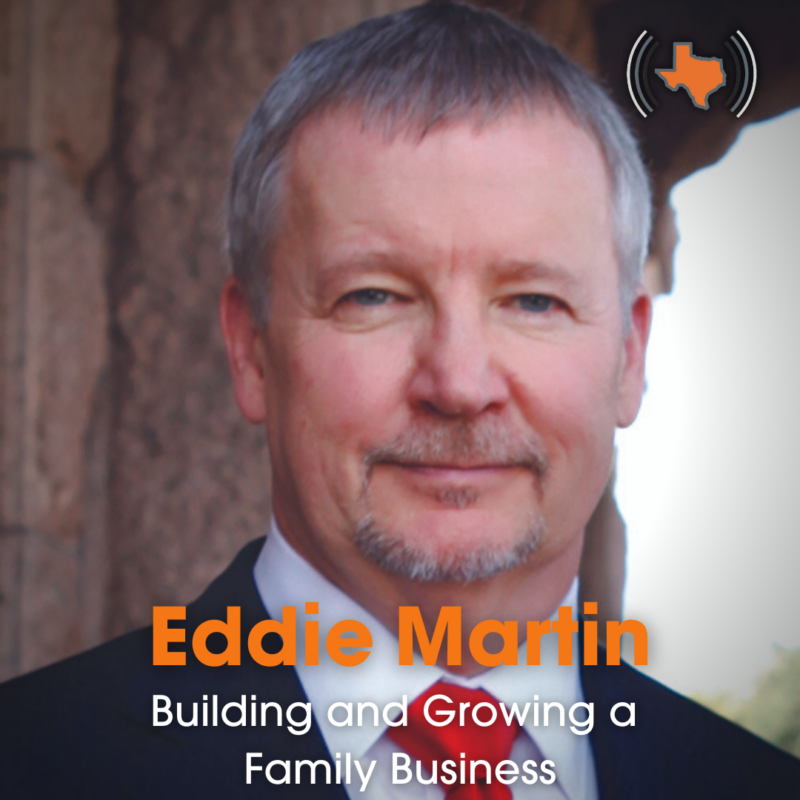
Eddie Martin, President and CEO of Tilson Homes, joins the podcast to discuss the dynamics involved in taking over a leadership of a family business and priming it for growth and positive culture. Tilson Homes is one of the oldest family owned and operated home builders in Texas and is currently celebrating its 90th Anniversary.
Transcripts are generated by machine learning, so typos may be present.
Chris Hanslik: In today’s episode, you will meet Eddie Martin, President and CEO of Tilson Homes. Tilson is one of the oldest family-owned and operated home builders in Texas, celebrating its 90th anniversary this year. Eddie, thanks for being here today with me and appreciate you taking the time. I can’t wait to hear more about you and Tilson Homes. Oh, I can’t wait to tell it. Okay. Let’s start right there. So you’re the president and CEO of Tilson Homes. Tell the listeners what Tilson Homes is. What is it known for as a company?
Eddie Martin: So Tilson Homes is a home builder. We’re a residential home builder. Our specialty and what we not only are we known for, but the only thing we do is build on people’s property. In most people’s property, because inner city’s properties are expensive, is out in unincorporated areas. So about 90% of our homes that we build are in unincorporated areas on acreage. So it may be an acre. It could be two acres. We build on thousand acre farms. You know, we do a lot of our houses are normally in the about three hundred four hundred thousand dollar range. So we do a lot of ranch. Foreman houses, you know the big ranches where they have the 10,000 square foot homes We do the 2,000 square foot ranch foreman’s home and we do a lot of that We do a lot of especially in the hill country and north of Houston. There are these residential Acreage subdivisions that will be two to five acres sure we do a lot of those kind of homes, you know, and we have The way we do it is we have 12 model home parks that are scattered throughout Texas and we drive traffic to there. We have 40 models, excuse me, plans and then each plan has custom options, has different elevations. Then we’ll customize them for a customer. They give us a deposit and then we go off and build the house on their property with our money. And so we don’t use any, we don’t require them to get any construction financing, which is another thing that we’re known for and that’s very rare. But we do help them. It’s kind of like a package. We help them to get everything they need to move in the house, including the permanent mortgage. So we have a couple of companies that are mortgage companies that specialize in build on your lot rule mortgages because it’s a different kind of business in the mortgage side of it too. A lot of our homeowners actually live on the property so we have a lot of homeowners that will literally tell us we’re going to watch every nail that goes into this house and they literally do. You can drive up on a piece of property and there’ll be two chairs and a table and an umbrella and they’ll be sitting there. Direct supervision.
Chris Hanslik: A lot. So it sounds kind of highly specialized but carved out a niche in the market to really kind of be the go-to for that.
Eddie Martin: Right. So like most of our competition are local builders that may build three or four, five houses a year. There are a number of, there’s probably a good five or six statewide type builders like us that do kind of the same thing, but again, Claim to Fame is what we call our easy finance program, which is you give us a deposit, like $1,500, and we’ll build your house with our
Chris Hanslik: funds because we’ve been in business for 90 years. That’s a good segue because y’all are celebrating the 90th anniversary of the company, correct? This year, yes. Congratulations. Thank you. I know from our discussions and looking at your website, one of the unique things about Tilson is it’s a family-owned and operated company. Can you tell us a little more about the history of the company just to give us a little context for that?
Eddie Martin: Yeah. So the company was started by my father-in-law’s uncles, and they were in the rig building business, oil rig building. And they went all over Mexico, New Mexico, and Texas building rigs when rigs were built out of wood. And when they started fabricating them out of metal, their jobs went away and so they moved here to Houston and worked for Jesse Jones in his lumber yard when he had one and did odd jobs and Jesse found out that they were really good at framing and Judge Roy Hoffins asked him to build the KPRC tower but nobody knew how to do it but The Tilsen brothers, Horace and Jack. And so they built the KPRC, first KPRC tower like a Derek.
Chris Hanslik: Yeah. How about that?
Eddie Martin: Yeah. And so as they got more and more of those kinds of jobs, you know, they went out on their own form, Tilsen construction. This is prior to 32. And then in 32, they, they started Tilsen home. Custom home, I think is what they called it at the time. And they did that. Not much is known during that 1932 to 44, but in 44 when people started coming home from the war. there was a ton of demand for housing, and that’s when they really started building housing totally. And in about 55, my father-in-law became a framer for them. He framed houses, ended up running their construction department, And in 1960, he bought out Horace Tilson’s 50% share and made a deal with Jack Tilson, who was a horrible businessman, according to legend, and told Jack Tilson, to go to his farm in Louisiana and do chickens, and Jack Allred, his name’s Jack Tilson Allred, would run the company and send him his 50% share of the profits. So Jack, with his brother-in-law, started the company. configured the company into the way it’s structured now and started, you know, started doing his leadership with his brother-in-law and they, you know, were building two and three hundred houses every year for from then until 91 when I came in and took over as president in 93.
Chris Hanslik: Okay, great. So what are some of the challenges that you would tell people if you’re involved in a family business? What are some of the challenges that you would tell people to look out for?
Eddie Martin: So the thing about a family business when it’s really a family business is this the family’s ever-changing. So you have, like when I first started, I had a father-in-law, a brother-in-law, two brother-in-laws, and a wife. And the wife has a child, my child, Brandon, and she quits to raise him. And so without her there, the dynamics of the two brothers of change and also at that time my father-in-law kind of started backing away from the business too. So your dynamics of the people that are running the company can change like constantly and you’re having to you’re having to kind of navigate They’re different. The way my brother-in-law acted or my two brother-in-laws acted with their dad there is different when they’re acting with me alone and he’s not president anymore. So when I became president, the dynamics of the brother-in-laws, because it was me coming in for a couple of years and they weren’t there all their lives. And then I become president, and Jack literally stepped away and quit coming to work. So when that year happened, the dynamics changed, and I had to navigate between that That would be a challenging time for you as the new leader of the organization. Yes, it was. And the other thing is that not only is Tilson a family-owned company, it has several families in it. So on our executive team, There was, so my brother-in-law, there was a man named Jimmy Caldwell whose dad was the senior vice president before, you know, before him. So there was, so his family, his grandfather worked for the Hittilsons, his father worked for my father-in-law, and then he was there. And then, you know, so he had been there for 20 years working since he was, who was almost 40, and he worked right out of the University of Texas. So he was kind of part of the family. His family was working there all the time. So he was part of the family too, so I came into that. He was on the board of directors. So he also didn’t get the presidency, and he had been a builder and all that kind of stuff. And I think the reason why I was elected, and they all elected me, was that they were all builders and had been builders at the company. I was the only CPA lawyer. So it’s like, well, we’re all kind of the same, he’s different. So that was kind of different.
Chris Hanslik: It makes sense. What were some of the things you did then to start maybe, I don’t know if it was building the culture or maybe changing the culture within the organization so that everyone knew or was reminded we’re on the same team, trying to achieve the same goals, and dealing with that kind of dynamic.
Eddie Martin: So, one of the things you can’t do when you come into a company like that, in my mind, is you certainly can’t dictate things. First of all, I didn’t have the knowledge base for how to build a house. or even how to even sell a house. So I have to convince people that I’m on your side, I just wanna help you, you know? And I’m not here to make waves, I’m here to make your life easier. And so I try very hard, even today, to just talk to people, try to listen to them about what they’re really trying to achieve, ask questions. And if I can help them, I will help them. And if I can’t, I’ll just ask more questions so that they can be thinking what they should be thinking about in solving a problem. especially if it’s a problem. Like yesterday, we were on a job site with my senior vice president of construction and we had a problem and I just kept asking him questions and he’s like, oh yeah, that’s it. And he figured it out himself. And I didn’t have to dictate anything or order anything. It’s just not in my nature in the first place, but I think it works really well in this kind of situation where, especially earlier in my career at Tilson, when I didn’t really know too much about how it worked. I mean, I knew how to do the accounting and I knew the legal issues and all that kind of stuff, but nobody in the company did that because that was all kind of, it was all farmed out. All the accounting was all done by a CPA. We wrote the checks and we sent them all to a CPA and he did the financials. So we had no internal accounting department. We had no internal legal department or anybody. We just called the lawyer that we used that Jack asked. And so I brought that to the table, but nobody ever used it because they weren’t used to it. And it just, you know, I just brought it in as I could.
Chris Hanslik: So when you think about your leadership style and how it was when you started back in 93, 94, and how it’s evolved, how would you describe that leadership style?
Eddie Martin: Well, it evolved because, again, we’re talking about family company, the members of the family who, all the members of the family who are in Jimmy Caldwell, that were on the board or on the executive management team that were there when I came have either retired or passed. All their sons are working for us, including my own son. And they all grew up in the business too, except for my son. My son is our CFO, because he got an accounting degree kind of like me, and he worked at Eckert’s. But the other two sons, who are my nephews, they worked at Tilson doing framing, doing warranty work. working in the sales parks. So they’re, you know, one of them knows construction really well. The other one knows how to sell, you know, residential homes our way. Right. And he’s our, you know, he runs our sales and the other one runs our cost management group. And so again, they have an expertise that I don’t have even today. I mean, I know a lot about it. Sure. But I don’t have that minute detail how to talk to a customer to get him to come and put his name on the bottom line. So again, I can’t dictate to him what he needs to be doing to sell or to get people in to sell them my house. So again, what I do is try to bring them along by questioning and listening to them about what their problems are and how we can figure out a solution to that problem. And so it’s to a real degree, it’s the same mentality, which again, fits my personality, I think.
Chris Hanslik: Okay. When you think about things that Tilson has done under your leadership, what are some of the things that you would describe as being innovative for your industry?
Eddie Martin: Innovative for our industry. Well, again, and I didn’t do this, but our easy buy program, which is a financing technique, is there are builders who have done it, but they haven’t done it to the extent that we can do it. That’s basically building the house. So the customer only puts a very small amount, $1,500, basically a deposit down, then we build the entire house. without them having to get a construction loan and then we have already procured for them or helped them procure a permanent loan that we would close into and that’s how we get paid. Okay. And so that’s kind of one thing that we’ve done we’ve created an ability, because we build in over 100 counties, we created, we didn’t have this before me, a county-based pricing system for every house that we sell or custom option. And so what we can do is you tell me where your land is, what county your land is, I can give you a price upfront Other than if your house is on an unlevel piece of property, I can give you a price for that house and within a week I can send someone out there, shoot grades on it and tell you what kind of foundation you’re going to need and you know the price of the house. And we stick to that.
Chris Hanslik: Wow. That sounds unique because you’re giving your customers a lot of certainty up front. Right, exactly.
Eddie Martin: Unless they make a change, obviously. It hurts sometimes when limber triples, but we’ve stuck to that.
Chris Hanslik: That’s a good point. Let’s talk to me. Obviously, the last couple of years have been kind of crazy on a number of levels. Certainly, you keep up in the news, the construction industry has had some difficulties because of things like the price of lumber just going through the roof, concrete and other things. What are you and your team doing to combat that, account for it, hedge for it? What are some of the things you’re trying to do to survive through it?
Eddie Martin: Yeah, so one of the things we stay really on top of cost And we have major relationships with some very large vendors. Also, our main vendor is McCoy’s Building Supply that started in Galveston 95 years ago. And they’re a family-owned and operated business too. They have, I think, 80 stores around Texas. Their footprint is about where our footprint is. And we were the first builder that kind of came to them and said, will you supply us? And they started supplying us with framing and materials. And what they would do is they would, they weren’t used to this, but we would send them a PO for a particular house, tell them where the house is. They would look to see where the house is, figure out their closest store, send that PO to that store, and the store would cut the PO. So we did that with lumber as our relationship grew and they started learning about us and we started learning about them. We went to shingles, we went to trim, doors, windows. So they provide Quite a few of our things in in that relationship and they just their fortune or I think their fourth generation. President CEO just retired last month and their fifth generation just started she’s just a great person but. we have this relationship. So for instance, when lumber was going up, if it would go, and I don’t know exactly what their pricing was, but let’s say if it went up in a month, we do monthly pricing. If it went up a month, in one month, 6%, they might only charge us a three or four percent increase instead of the six. Okay. And then on the way down, back down, it’d be the other way around. Okay. So we’d kind of partner where they take part of the increase and we’d take the other part and then we’d pay on the other side, we’d take more of the decrease and they would take less of the decrease and we would partner and that would soften the blow of increases.
Chris Hanslik: Well, that’s, you know, to me it’s a great lesson in the value of partnering with your vendors because you’re all going to fall in hard times. So if you stick together, they’ll be there to help you and you’ll be reciprocating when it’s your turn.
Eddie Martin: My father-in-law used to famously say that when you’re 50 miles from home, you need a friend, not a contractor. Yeah, you know, and that’s the other thing is, you know, our contractors, you know, they’re, you know, they’re saying, you know, we need increases and we say lumber’s too high. We can’t increase it. Can you wait? And they would wait. Okay. And so, but we have those kinds of relationships, not just with McCoy’s, but with electricians and HVAC companies and just you know a large number of the large number of the subcontractors and vendors because because we can provide them with constant work and they don’t have to, and we do almost what we call an instant pay where whenever they finish the job, our superintendent has an iPad that he presses a button and says, this job’s finished, and we’ll pay them within three days. And most other builders, it’s a two week thing.
Chris Hanslik: I’m sure that gets positive reviews from the customers. It helps, again, it helps. Let’s talk a little more about inside the business of Tilson. Looking at your employees, your hiring, your firing, starting with the hiring process, what processes do you have in place to adequately or make sure you’re doing your best to screen applicants and decide on whether to make offers or not or not and then what do you do once they’re there to integrate them?
Eddie Martin: Yeah, so we kind of do it two ways. We have a really good HR department. We have a HR person that all she does is screen customers and she’s got a list depending on the department because there’s so many different kinds of things that we have to do. So our drafting person is totally different. There’s a big skill set on drafting is totally different than an estimator who’s totally different than a builder who’s totally different than a salesperson, right? And then you have your normal, you know, accounting, administrative type people. So our managers, have pretty extensive job description list, depending on the level that they’re using. And we have a very regimented, for instance, in construction, we have a very regimented construction job description for each level of person we’re trying to hire. So sometimes we like to hire, not sometimes, we really like to hire new people who haven’t been working for other builders. And the reason why is most of the builders are production builders. And production builders, you know, I love them to death. You know, I was the president of Texas Builders Association and the Houston Builders Association, and they’re key to our industry and making things work. But they build homes one after another. We build homes one here, one 30 miles from there, another 35 miles. And so our guys are traveling 300 miles a day, every day to make their jobs. We want them to be carrying 15 to 18 jobs. We want them to make seven of those jobs to eight of those jobs a day. And then the other eight the next day. So we want and then do it every other day so they can keep up with what’s going on. A production builder who’s not used to driving 300 miles a day doesn’t always work out very well just because he’s never done it before.
Chris Hanslik: Well, I assume that helps the hiring process because you know the questions to ask to get the right answers or hopefully honest answers and make decisions on whether the candidate can do the job.
Eddie Martin: And that’s exactly right. And that’s where the screening starts. So like in construction, we have an extensive screening checklist. from the, that the HR will talk to the candidate and then she will pass on, you know, because we want, we want to know a number of things. One, would they be the kind of person that could do that? Because it does take like, you know, if you have back problems or things like that, you know, you can make adjustments, but you know, with the seats and stuff like that. But it can be hard on you. So we want to know if they’re the kind of person that would be willing to do that. And we also need to know what their skill set is. Because again, in the production world, you might be called a builder. But really what you are is the person who’s going out to say, yes, the frame’s done. The project manager can now come check it to make sure it’s done right. Okay. You know, and so he’s sitting in the field. We can’t use that person. We need a person who already, who’s the production manager who can look at a frame or, you know, a trim job or a shingle job and tell that it’s done according to code. in the right way and done economically. And so we need someone a lot more skilled at that than a normal production builder who has been, you know, if you’ve been a production builder for three to five years, you can’t work for us. You can be trained, but he’s already been trained in a way that we might as well get someone who’s coming out of college who’s never done it. Then we can train them as a level 1 builder and we’ll train him so that he’ll go around with our regional construction manager and we will train him. You know on a hands-on way and usually what we’ll do is that regional construction manager will spend six months in the truck with the builder. Then we’ll give him his own truck and he’ll help those whatever jobs he’s working on and he’ll go in and kind of start looking at these jobs and telling the regional construction manager you know, what, you know, what he’s seeing on job sites. And the regional construction manager will then go check that. And then we have a checklist on kind of like a test, if you will, to say this level one builder has now learned the skills of a level two builder. And so now you’re a level two builder. Now you’re making your own jobs on your own. And then our regional construction manager will check it instead of checking it every week. or twice a week, he’ll check his jobs once a month. And then when you get to a level three, the regional construction manager doesn’t need to check it, but every once in a while, because you know what you’re doing. And you’ve been with this for probably four years by then. Right.
Chris Hanslik: Gains of trust and knowledge. Yeah. So lots being discussed everywhere about hybrid work remote. seems pretty clear to me and evident that a large portion of your workforce can’t work remote because they got to build a house. They got to build a house. So how are you handling that? Because I also assume there are some functions maybe where hybrid work is feasible. So how are you addressing that and the split Between the two.
Eddie Martin: Yeah. So yes, the field personnel, they got to be in the field. You know, the warranty guys, they’re going to fix houses. The builders are building houses. The sales staff are in the sales locations. They have to be in the sales locations. We did, you know, residential construction. We got designated as an essential industry so we could stay. We worked all during COVID and we sent everybody home. that were administrative. So all the administrative people, the drafting people, the estimators, it’s all electronic. It’s all in computers. They all can work from home. The accounting department can work from home except for two people who are getting invoices. The invoices in the office, we had two people in the office. They would scan the invoices, send them to the accounting people who were working from home. We’re still doing that actually right now. and we had we need office at least one officer in the office who signs mechanic liens so we can get them recorded. So taking a practical approach, it sounds like exactly. Yeah. And, you know, the thing that we heard from our staff, from the administrative staff that are getting paid either hourly or salary is, you know, in Houston, that’s saving two hours. Sure. Right. You know, in these days, a lot of money on gas, a lot of money on gas. Yeah. And they’re in and they’re Uh, you know, we do, we have a surveying system that we survey our employees on about every two months or so. And we do a six month survey. We do, you know, a six month and one year survey. And then we do a, if someone leaves, we do a. you know, a termination survey. We don’t call it, I don’t think we call it a termination survey, but it’s a, you know, whether we fire them or they leave, we ask them to do a survey and we get good response because this company helps us do it. But getting those surveys about this COVID and working from home is, you know, there are a lot of people that will basically say, especially on these six month and one year surveys, we wouldn’t be working at Tilson if they wouldn’t allow us to do this.
Chris Hanslik: Yeah, I don’t think you’re alone in that. Yeah. And it looks like that the hybrid model is going to be around. I think so. Not going anywhere anytime soon for sure.
Eddie Martin: And they, you know, I’ve read and I read a lot of articles in the Harvard Business Journal and other journals like that. I mean, I actually take that. So there were a whole bunch of articles and I did some research on it. And there was, it wasn’t in the Harvard one. I can’t remember what article it was, but it was a lady out of California who specializes before COVID in these hybrid type deals. And she said that companies are moving to this anyway. They were moving to this hybrid working environment anyway, and COVID just accelerated it exactly. And that the people that are trying to get it back to all office, no hybrid are the people that are gonna be missing the boat.
Chris Hanslik: I think that’s right. I think, you know, as a company, you have to change and evolve at the time. So, okay, so you got kind of, Sounds like a good mix of the hybrid work. It’s working for your workforce. What about, you’ve been in, what, almost 30 years now, the president.
Eddie Martin: This year. Not as president, 30 years as an employee.
Chris Hanslik: When you think about your career at Tilson, are there any failures or setbacks that you’ve encountered? If so, what were they? How did you respond? How did it make you better? How did it make the company better? What was the learning?
Eddie Martin: So the biggest problem that we have experienced is outselling our capacity. That’s a good problem. It sounds like a good problem. It sounds like a good problem. But when, and when you do it incrementally, so it’s, you know, you outsell, you know, let’s say just to throw out numbers, let’s say you normally sell 30 houses a month and you start selling 35 houses a month. That’s kind of an incremental problem. And you kind of blow it off because you’re like, Oh, that’s really good. And yeah, this is all good. And then you throw it to construction and they can’t handle 35 houses. They can only handle 30, but it takes an extra 30 days. It’s not that big a deal. And you kind of blow it off and you don’t really think about it. sell it when you were if you’re selling let’s say 40 houses or 45 houses and now you’re selling 100 houses And you sell a hundred houses in one month, which we’ve done, uh, you know, in the past before COVID. And we’re like, well, that’s okay. Cause the next month we sold 45. Oh, that’s good. We just had a kind of a blip. We had a price increase. Everybody came in, bought the house before the price increase. Averaged out.
Chris Hanslik: Okay.
Eddie Martin: And then went out and averaged out. Okay. So you’re thinking, OK, well, I sold 100 in June. OK, well, it’ll probably go down. Then you sell 120 in July. And then you sell 150 in August. And then you sell another 100. And then another 100. And another 100. And you’re only building 35. That’s a problem. That’s a problem. It’s angry customers, I would bet. You can manage expectations, especially during this COVID, and we’ve done a really good job. We do every Tuesday at two, we do a Facebook Live. where we say, ask us any questions and my nephews and our marketing director ask these questions or answers all these questions. And if there’s a real problem, they don’t bring it up, but they call them back later. That helps manage expectations. If we’re making sure our our customers know what they’re getting into. We’re saying, okay, it’s taking 18 months from start to finish now. It’s not an eight month period anymore. And part of the problem is that in the news is you’ve got the supply chain problems, which is big in the construction industry. and they hear about the labor shortages. And so they understand all that to a certain degree, but yeah, there is a problem there. And the other thing is in our business, because it’s built on your lot and we’re building on a person’s property, they have to do a lot of work too. And so we have to wait on them a lot of times. And so you’re asking about how we kind of manage pricing. And I didn’t completely finish answering. But we have in our contract what we call a price protection. So if you do all that you have to do, and we’ve got a list of it on this price protection document, that if you get all that done within 180 days, your price is locked in. If you don’t, we’re going to raise your price 6.5%. Okay. And if you don’t miss, and then if you don’t get it all done the next 60 days, we’re going to raise it another 3%. And if you don’t get it done the next 60 days, we’re going to terminate your contract.
Chris Hanslik: And that’s one of the ways we… Yeah, some built-in protection and incentive for the landowner, gonna-be-homeowner, customer, I guess, to do what they’re supposed to do.
Eddie Martin: Right. And they have the ability to pay us to go do it because we have what we call professional property services, which is our kind of development thing. We do the septic and the road and the well and the clearing and all that kind of stuff, we can price that into the house too. People who are coming from the suburbs like that because they don’t know the road guy and they don’t know the septic guy and they don’t know the well guy. But people who already live out in Willis or past Conroe or Madisonville or wherever, if you’re going to I-45, And they’ve been living there for 10, 15 years. They know all those guys and they can get that done faster than we can usually.
Chris Hanslik: Well, it makes sense. So let’s turn to the lighter side of things. Where are you originally from? Where’d you grow up?
Eddie Martin: Well, I grew up in Houston. I was born in Pecos, lived about eight years in Lubbock, six months in Corpus Christi, then back to Lubbock, and then we moved to Houston. My dad had, we figured, 22 different distinct jobs, went broke 22 times, and so we moved around. Never went bankrupt, but he went broke. But we settled here when I was in third grade in Houston. I went to Springwoods High School and then Northbrook High School when they built it in Spring Branch and did a lot of the buildings around here. I did the U of H air conditioning, did the HVAC. a lot of commercial buildings in Houston that I like to point out.
Chris Hanslik: Yeah. Well, it’s kind of neat to drive around and be able to point to those things, right?
Eddie Martin: Yeah. And I do that. People get tired of it.
Chris Hanslik: So clearly have a mentality for hard work and ethic for hard work. What was your first job, though, growing up?
Eddie Martin: My first job was mechanical contracting. Okay. So I did the actual first job I did. I was hired by a mechanical contractor company who was friends. I didn’t know this at the time, but he was best friends with my wife’s dad. Okay. So my father-in-law, they lived two streets apart and he lived on Tilson Way. which was the subdivision that the Tilson Brothers built back in the 50s that my father-in-law and my wife was born in and actually my son was born in the same house and this man lived one street over on Tilson Way but he hired me. We went to church together when I was 15 and he put me in his shop to build him an office. And so I built them in two offices, air conditioning it, wired it, did all that kind of stuff with his direction, because I was 15. And the next year I started fabricating sheet metal duct work, which is what is in most buildings, either the sheet metal or duct board. And from there, you know, that was 15, so 16. And I did that all the way until I was a junior in college. And by the time I was 18, I was running my own crew. I had six guys that I ran that were all older than me.
Chris Hanslik: That’s a good story. All right, so we’re a Texas-based podcast, so I ask all my guests, Tex-Mex or barbecue, all right? Franklin’s barbecue. Franklin’s barbecue. In Austin, Texas on East 11th. I’ve been there, you go there enough where you don’t have to wait in line, or you always have to wait in line?
Eddie Martin: No, you know what, we do, we do, we do the, now you can go, you email, or you go online, and as long as you buy, I think it’s five pounds, you get a slot. You tell them what time you want to be there and you go there at that time and they point you to the parking lot. It’s numbered and you go to that number and within 20 minutes they’ll chop it up and bring it out to you and put it in your car. How about that? And you head out.
Chris Hanslik: There you go everybody. There’s a pros tip if you want to go to Franklin’s. All right, so let me ask you though. So if you could take a 30-day sabbatical, where would you go? What would you do? So we went to our 40th
Eddie Martin: wedding anniversary was in 2019. We spent three weeks headed to and on the way back from South Africa. So we spent a week in London to kind of acclimate ourselves to the time change, because there’s only one hour difference. Then we flew to South Africa, did a safari. And so I would tell you that would have been it, because that was my wife’s deal. We did the safari, we did the wine lands, we went to Cape Horn, and that would have been it. Now our big sabbatical is going to either Norway, Sweden, Finland, or Iceland to see the Northern Lights. All great options. We’ve been to Norway and Sweden. We’ve never been to Finland, but there’s a neat place near the border of Russia that kind of caters to… you know, these kind of trips. And I’d like to go there, but, you know, with the war going on, Brenda’s like, no way.
Chris Hanslik: A little too close to Russia. Exactly. Well, Eddie, I want to thank you for taking the time to come be on the podcast, to share the story, not only your story, but the story of Tilson Holmes. Thank you. I appreciate it. It was nice meeting you. Likewise. And I know our listeners will enjoy it as well. So take care. Good. Thanks. And there we have it, another great episode. Don’t forget to check out the show notes at boyarmiller.com forward slash podcast. And you can find out more about all the ways our firm can help you at boyarmiller.com. That’s it for this episode. Have a great week and we’ll talk to you next time.
With a deep understanding of your business alongside clear and honest communication, we help clients face challenges fearlessly.
Learn more about our services and how we help clients.