


With a deep understanding of your business alongside clear and honest communication, we help clients face challenges fearlessly.
Learn more about our services and how we help clients.



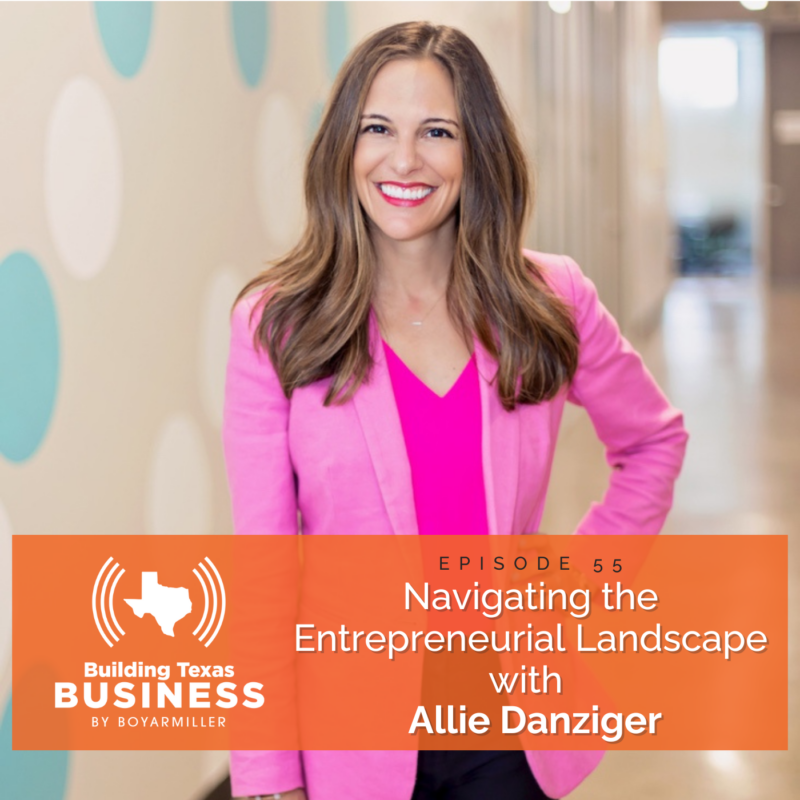
In this episode, you’ll meet Allie Danziger, who has founded and sold two startup businesses in her career. Allie shares many great tips on how to be successful in business, but one of the best is to focus on your own self-care, to build good habits that will translate into your professional life.
Transcripts are generated by machine learning, so typos may be present.
Chris Hanslik: In this episode, you’ll meet Allie Danziger, who has founded and sold two startup businesses in her career. Allie shares many great tips on how to be successful in business, but one of the best is to focus on your own self-care to build good habits that will translate into your professional life. Okay, Allie, I want to thank you for being here today. I really appreciate your time.
Allie Danziger: Thank you so much. I’m excited to do this video.
Chris Hanslik: So there’s a lot that we could cover and talk about with you and I hope we get to touch on everything. But I want to start with current business, tell us what it is and what it’s known for.
Allie Danziger: So Ampersand Business is a training platform that helps early career professionals learn the skills they need to succeed in their careers.
Chris Hanslik: So what was your inspiration for starting Ampersand?
Allie Danziger: So, well, Ampersand is, I mean, in a little bit more detail, it’s a training platform. So we have 250 different lessons in there that students or early career professionals never learn, not in college, oftentimes not through college or high school jobs that they may have of really how to succeed, how to send a calendar invite, how to attend a meeting, when to raise your hand in a meeting, how to ask your boss for a vacation the right way. Don’t book the flight and then ask for the vacation. Ask them first, have a plan, here’s the agenda, what to do when you meet with your team before you go on that vacation, how to come back, what to do if your boss texts you while you’re on vacation. So all these unwritten rules. And all of that came from my experience in my previous business where we hired over 250 interns and entry level employees and I was constantly frustrated that they just didn’t know these things. And so we built pretty robust training at that other company called Integrate for our interns and entry level employees. When COVID hit, I was spending a lot of time talking to young professionals who had lost their jobs or internships, I realized I was saying the same things over and over again, and looked around for resources for them for podcasts to listen to or books to read or whatever, and there was nothing that could teach all of those just I call it the unwritten rules of the workplace, soft skills, power skills, durable skills, like there’s a ton of buzzwords for it.
Chris Hanslik: Social intelligence, right?
Allie Danziger: How do you grow it up?
Chris Hanslik: There’s a book, right, social intelligence, kind of that.
Allie Danziger: Yeah, it is. And so that was the impetus to start a quick pilot as a nights and weekends project to test the concept and then launch this.
Chris Hanslik: That’s amazing. And definitely serving. I mean, I think what I find interesting about all of my guests is usually the inspiration is experiencing some gap in whatever industry they’re in and then taking advantage of it. It sounds exactly what you’ve done with Ampersand.
Allie Danziger: Yeah, exactly. I mean, they’re still, and I just cannot believe it, that there still is nothing that we have yet to find that is interesting and engaging training that Gen Z or young professionals actually want to go through and participate in. that teaches these really important skills. There’s a lot of boot camps out there, there’s a lot of schools out there, there’s a lot of workforce development programs that are trying different things, but I believe we’ve created something that works at scale to keep young adults really engaged.
Chris Hanslik: That’s great. So I know just, you know, from knowing you that you’ve recently kind of taken ampersand to a new level. Yeah. Kind of maybe to see if you can share that. I mean, what’s transpired and how is that going to help take the company to the next level?
Allie Danziger: Absolutely. So just two weeks ago, we were acquired by a student lending company called Ascent Funding. So actually now I am the SVP and GM of the success platform at Ascent Funding. And what Why that made sense is they have always offered every single borrower, hundreds of thousands of borrowers, career coaching because they believe that their job as a lender is not just to give them money and then ask for money back upon graduation knowing that colleges don’t necessarily adequately prepare you to go get that job. but that they want to really ensure the success of every student they give money to. They were one of the good guys.
Chris Hanslik: Yeah, so your values aligned.
Allie Danziger: Our values were very aligned and so we were out raising money and meeting with lots of different VCs and different companies out there and I met the Ascent folks and we realized that this is just one of those situations where one plus one equals five and we could really use it as an opportunity to grow their business. while giving ampersand the resources that we needed from dev support, leadership, etc. Additional coaches to really grow our platform in the existing way that we always have to the businesses and to colleges and, you know, simultaneously help their business too.
Chris Hanslik: That’s great. Well, congratulations on that. I’m very excited. We don’t always start, that’s not necessarily the end, but we’ll go back more to the beginning. What you’re doing is innovative to say the least. So what is it that you try to do at Ampersand that fosters creativity, innovation in order to kind of propel the business?
Allie Danziger: So for me personally, and for my team, I mean, we are, we’re a learning and development platform, but I think it’s super important for us to constantly be learning and developing ourselves as well. And so it’s just by taking time to stay up to date with what’s happening in the market, knowing that what we’ve created doesn’t exist. And so it is white paper, which is sometimes very scary for me and the team, right? Like we’re not making something better, cheaper or faster than someone else. We are, truly creating something that has never existed before, which is good and bad.
Chris Hanslik: It’s going to be inspirational.
Allie Danziger: It’s exciting. It’s certainly great for recruiting and it’s certainly great for just like seeing something in a totally different market and thinking about how that can apply to Ampersand and applying some of the problems in the industry, in the ed tech space, in the fintech space, in the Workforce development space and saying well guys. This is really broken. I’ll be doing the same thing the same way for 25 years Let’s come in and I’m allowed to ask some questions because I’m new to the space and we’re creating something different Which I think get the brain working with my previous business with integrate I was really focused on just like serving our clients We’re a marketing agency worked with over 600 businesses in my area 12 year tenure, but we were busy all the time and I never really took the time or I didn’t take enough time to develop my own professional development skills, my own leadership skills until about halfway through that experience and then realized how much that work is actually the work. That’s the work that matters. But I used to think that it wasn’t, and so I think it’s just about structuring your days, and again, myself and my team, structuring our days so that we have the time and space to think, to create, to brainstorm. And it’s unstructured. It’s not through a meeting or like a time block on your calendar to do work so that you can innovate.
Chris Hanslik: What are some of the things getting a little granular on that point that you do or that you recommend a listener that’s a business owner trying to grow due to structure so they can find that time?
Allie Danziger: Yeah. So I, well I work out and when I work out, I usually, when I run, I listen to business books. And your brain wanders while you’re on a run listening to a business book, but it’s like every single book that I read, I change my way of thinking about something or come up with some different idea. Same with podcasts too, so hopefully this will inspire the listeners. That’s the goal. Yeah, constantly like learning different opinions and just different ways of doing things is what opens up my mind. If I do that in a really structured setting, I get really bored, right? Like if I do it, I have to sit at my desk and have to learn something in that moment. But for me personally, it’s while I’m on a run or while I’m in my car and I’m like, half listening, when I don’t really need to learn something, but really just be inspired, that’s when it works for me to come up with those ideas. I also do a lot of yoga, and so then that is when the ideas then like formulate more. But my team always knows that in March-ish, when the weather starts to get better, at around 5 a.m. is when they’ll start getting these emails from me, because I will have, 6 a.m. sorry, because I will have just gotten back from a run, and like the ideas just are flowing, and they get super annoyed.
Chris Hanslik: I love that. Well, I’m an early morning workout person myself, and I know exactly what you’re talking about. The challenge is capturing them, right? Because you can’t write it down or whatever.
Allie Danziger: In my yoga class, I try to remember to take a notepad and pen because they want to let your phones in. And then that way, just as the ideas come, I can write them down and hopefully remember what they mean later. I try doing it in my Apple Watch, but then it’s just gibberish and I have no idea what it means. And on the run, yeah, I’ll send myself emails with just no subject line as every item pops into my head.
Chris Hanslik: I love it.
Allie Danziger: Good.
Chris Hanslik: So you mentioned Integrate. First company you started, maybe you mentioned a little bit about what it was, maybe give the listeners a little more background on that company, what it was doing and kind of what your inspiration was there and how that company evolved into being sold.
Allie Danziger: For sure. So I started that company when I was 23. I was working in New York for a PR agency that was just a traditional PR. There was no social media or anything like that at the time. And the real estate market crashed six months into my first job out of college. And so they laid off half the staff. I assumed that I would be laid off because, you know, last one in, first one out is what you normally heard.
Chris Hanslik: Sure.
Allie Danziger: That boss took a totally different approach to the 2008 recession and she kept the junior level employees and the like most executive team. So all the like middle level everything is what is who was laid off. I started looking around though because I assumed that in some time it was a real estate focused PR firm. So I started looking around and saw that most of the PR agencies were starting social media departments and so I went to my boss against my parents suggestion and said in the next round of layoffs you can lay me off because I’m actually more interested in the social media side of things and I think that’s the future of marketing. And she said, why don’t you start that at our firm? And so I was 22, six months out of college, or probably eight months out of college at the time. And she gave me an opportunity that completely changed my life. And I was, within two months of that conversation, running a P&L, going to my own new business meetings, hiring a team, all under her guidance and leadership. But I was speaking all over the country about social media and real estate and how social media was going to really change the way that real estate marketing was done. So I was on all these panels and as I was doing that I was getting business opportunities. But they were too small for the agency to take on so I started taking freelance opportunities on. that my boss actually helped me write the contracts for and learn how to do freelance work because it was a recession and she couldn’t pay us, her employees, very much more. So she said, as long as this doesn’t get in the way of what you’re doing for the firm, all good. what a great it was amazing yeah great opportunity great person to have in your corner and all of that gave me the entrepreneurial bug so after about a year of that experience and learning under her guidance and having all these different freelance opportunities i did the math that i think a lot of budding entrepreneurs do where i said well if i had full time i used up all my second vacation days there was no remote work or anything like there is today gig economy like none of them existed and i did the math of if i had my normal 60 hours a week to do all this freelance work. How much money, how much more money I could possibly make? So quit my job, gave myself a month living in New York to see, am I really the type of person who will wake up early and get the work done? Or do I need a, I didn’t know myself well enough. Do I need a bot to help guide me through a normal work day? And quickly realized that when I was working for myself, I was much more of a hustler and would wake up even earlier and work even harder. And so after that month came to Houston, and started in a great, I’m from Houston, so came home, I couldn’t really afford to, the risky, the risk in the New York rent and expenses. So he came to Houston August 2009 and started to integrate. We were the first social media PR agency, I think in all of Texas. Wow. And so it was something different. Businesses just like believed me talking about social media more so than companies who were adding social media into their portfolio. the agencies who have been around for 20, 30 years and we’re now starting to talk about social media, we could come in just with a different lens, even though I was 23, 24 years old and just talk about it a little bit differently. So that was the start of Integrate. Over the years we grew, evolved, added other services in, but I never could quite get a handle on digital marketing. It’s just not my skill set. Tried to hire for that skill set, tried to acquire for that skill set. and just never could break, we were never the best digital marketing agency where I really do believe we were the best PR and social media agency. And so, long story long, in 2017 I ended up meeting my business partner who had the same business idea as I did. He came from a digital marketing background, had already raised money to go buy other agencies and he needed PR support. Just like I needed digital support. And so, ended up buying the company and it was a really quick process. It was not really the, way that I had structured the business from day one. It was not my original goal to sell that business. I thought I’d be running Integrate my entire life. My kids would work there one day, but then when that opportunity presented itself, it just made sense. Like all of a sudden it clicked. They’re like, oh, maybe there’s other things that the agency could be. Maybe there’s other things that I could do. It ended up being a great outcome for me, for my team, for my clients, for the agency as a whole. It just was again, like a life-changing experience that wasn’t exactly the plan, but sometimes you just have to go with it when those opportunities are presented to you.
Chris Hanslik: One thing about a plan, right, is once you write it down and implement it, you take it a step or two and it’s done, right? But at least there’s a kind of a foundation, but yeah, you’re right. You never know what the world is going to bring you.
Allie Danziger: Right, yeah. And so that’s how that ended up going. I stayed on board for three and a half years running our sales and growth and continuing to like blend the services of PR and social media that we were bringing to the table, as well as the digital SEO website, everything that their experience was, all still under the same name of Integrate now, and still thriving agency.
Chris Hanslik: Well, that’s one thing that’s kind of cool about the story, I think, is you get quote acquired, but they kept your name.
Allie Danziger: Yeah, I mean we had really strong brand loyalty, brand legacy, and had worked really hard on that in Houston. So since the agency was going to have a big presence in Houston, it just made more sense to keep the name.
Chris Hanslik: Well, let’s go back, whether it’s integrate or ampersand and share some of the learnings of what it’s like to just step out on your own. What are some of the pitfalls you encountered, how you grew from them, what you learned that kind of helped make the company better as a result of going through that rough kind of starting a business kind of time.
Allie Danziger: Yeah, and both businesses definitely have lessons learned, mistakes made, and moments where you look around and you’re like, what did I just do? I should just go get a job at a company. Why am I doing this to myself, making life so hard? But it’s also, it’s so rewarding being able to bring something that you believe into the world. Sure. Sorry, your question was what
Chris Hanslik: Some of the lessons learned of like whether it was a you know a misstep or mistake or God I wish I’d have known that if I only knew that now when I’d started right so just kind of thinking through every entrepreneur I know is like you know getting it off the ground is just Sometimes you don’t know what you don’t know right but so one one thing that I think is a lesson learned and something that I have
Allie Danziger: done pretty well, I believe, is just, sometimes you just have to get started. While there is research and work that has to be done, sometimes you just have to start testing, start learning, see if there’s, even if you don’t know what the product is, see if there’s product market fit, and if anybody cares. Because if you wait until it’s perfect, if you wait until you have the best website to launch, or you have the product completely defined, or the pricing model completely defined, you may never do it, and then somebody else will, and you’ll be kicking yourself later. So that’s something that, maybe too fast, but I have tried to do that and give other entrepreneurs that same guidance. That said, with Ampersand, I did not do enough market research when I got started. I was very passionate about what we were doing, still am, and I believed that this needed to be in the market. But I didn’t look around to see why it isn’t in the market. Again, it still does not exist. There’s no training out there that teaches young professionals how to be grownups. And there’s just still an issue with who’s the stakeholder? Who’s going to pay for that? And I think there’s other parties that have maybe tried and also couldn’t find that same answer. And I didn’t do enough of that research in the beginning to really understand How do colleges actually work with their students? What do they actually care about at the end of the day, even though they say all these things? What’s their real motivation? Who’s really paying their dollars? And what are the struggles that they’re, or what are the problems they’re trying to solve for? And then same thing on the workforce side. Like, why doesn’t this exist? Where are the engagement issues? Where are the employee issues? Where the manager struggles? And not just my own biases and not the, like, I did talk to 200 business owners before launching this, but, you know, stepping outside of my bubble, stepping outside of my community to get their input, just to really understand what else exists. That’s a mistake that I certainly made. And then also your team. You have to really think diligently, think about who you’re adding both to your cap table. Right.
Chris Hanslik: For sure.
Allie Danziger: Big time. And to your founding team to make sure that not just for the problem that you’re trying to solve in that moment today, but also where you want the company to go. What are you going to need at the table? Advisory boards were really helpful for me in that to add some expertise where I couldn’t afford to hire and I couldn’t fundraise from these different verticals or industries. So that is a way that I kind of solved that a little bit. But being really careful about who you’re giving equity to is a big lesson learned from this experience too.
Chris Hanslik: For sure, right.
Allie Danziger: And sometimes when you need the money, like you need the money or you need the support and so you take it, but next time around I will be much more diligent and listen to all of the tales that are out there. And like, why, there’s a reason people say don’t raise money from friends and family. There’s a reason people say don’t. you know, work with family or people you know intimately. So all those things have a reason.
Chris Hanslik: Yeah, they absolutely do. We tell clients all the time just before you bring on partners, make sure you know who that is, whether it’s friends and family or someone else. As soon as you bring them in, you can’t really get rid of them absent writing a check. So it can be an expensive lesson to learn.
Allie Danziger: Yeah. And for us, everything luckily worked out in the end, but it caused extra heartache or work along the way.
Chris Hanslik: Right. So let’s talk a little bit about just managing through uncertainty whether that be economic times like we’ve seen here obviously in the recent times with the kind of ups and downs in the market and what’s going on and other types of just uncertainty as you’re starting and running a business. How do you manage through that? What are some of the maybe things you’ve learned that you could pass on and the things that have helped you keep both of these businesses going and thriving?
Allie Danziger: Yeah, so on a personal level, I got this advice once years ago from someone in my EO forum was to work on your own self-care. in times of not stress so that when you are stressed they’re your natural habits. So there are times over the past 10 years or so that I’ve looked around and realized that things are kind of slow and instead of Trust me, I’ve added chaos in those moments too because I’m bored, but I also try to up my meditation, increase my water, you know, like work out more, take the time with my kids or build good habits with them so that because I know that it’s all, it’s only a season and it’s only going to last a few months. And then something else is going to get crazy. And so as long as I like have that foundation, it helps me again with the reading different business books or self-help books or listening to different podcasts so that it’s somewhere in my brain there when I need it most. Right. That is something that has really helped me again throughout the past decade, probably.
Chris Hanslik: Okay.
Allie Danziger: And then professionally, I think, you know, when having some of these having to make difficult decisions or having tough conversations with employees, I go back to a lot of Brene Brown’s work of kind of, what’s the, to edit this out. Empathy. Yeah, empathy, vulnerability, but then also honesty is kind. Being upfront with your employees, with your family members, with your friends, about the things that you are struggling with, or frustrated with them about, being clearness is kind.
Chris Hanslik: Clearness is kind.
Allie Danziger: I knew she had something that sounded better. As long as you are upfront with them about your expectations and you are super clear with them, and then confirm one, two, three times that you are clear with them, that I think is something that has helped me really significantly. Again, the vulnerability when you’re not having that crisis moment or that moment where you are in stress mode so that they have that trusting relationship with you and know that you are gonna be honest with them and that you have their best interests in heart, that’s when I think you’ve built that foundation in a relationship, whether that’s a client, an investor, a customer, an employee, you’re then able to use that foundation to get through the hard times together.
Chris Hanslik: That’s good stuff. couldn’t agree more. I think there’s lots of good learning that Brene offers to businesses, business owners, employees, as well as personal. But to me, fundamentally, recognizing it’s a relationship at work, no different than your personal relationship. So that is being honest, being clear. Everyone benefits from that, even when it’s bad news, because you may be dealing with an employee that, as times evolved, is no longer a good fit for either your company and they’re going to be happier somewhere else. But they’re only going to realize that if you have honest conversations in a respectful way. Right. And then everybody wins, everybody can move on.
Allie Danziger: One of the things we teach in our training to early career professionals, because again, a lot of people don’t teach this to someone right out of school, is what that dynamic between a manager and employee really is. And like, they complain about micromanaging. Why are they micromanaging? Why is your manager or this employer talking to you this way? And what kind of questions do you need to ask to clear the air or to ask for more information and really make sure that everyone’s clear on expectations? And so since what we do, we’re not always in touch with the managers. We put a lot of that on us on the early career professional and also teach them, hey, your boss’s job is to make you look good. They need you to be looking good for them to succeed. Because they’ve got a boss that they have to answer to. And so explaining that dynamic also helps an entry level employer and intern go into those types of conversations with the manager with just a clear understanding of why they’re having that conversation. And so I think more of that training and just teaching that impact to the young professionals helps to also set up that trusting relationship in a two-way relationship so that, again, when things get tough or there’s uncertainty or something that has to happen, the young professional understands it a little bit more because it’s a stressful moment. You’re not necessarily listening to every single word someone’s saying to you in that stressful conversation. But again, when things are good, similar to what I said I do personally, taking the time to do some of that training and foundation-laying.
Chris Hanslik: That’s good. So I guess thinking about, I want to ask, what are some of the things that maybe that you do that you become part of the teaching that Ampersand now offers about how to go about building relationships internally or externally with stakeholders or customers? What are some of the tips that you’ve offered in the past or you’re now offering through Ampersand on that?
Allie Danziger: So again, to build the, it’s hard in a Zoom world where we can’t have as many in-person relationships. It’s so much more effective. I have three times as many meetings in a day than I could have four years ago. So I get a lot done, but I’m not building those same type of super important relationships that I know will stay with us, me far after that business relationship is over. So some of the ways I like to do it is by taking time just for relationship building. knowing that not everyone’s going to put the same emphasis or like take the same time for that but like I’ve sent gift cards Starbucks gift cards and said hey I’m buying you a coffee can we hop on zoom for 15 minutes I also take really extensive notes of people’s the details that they say at the beginning of the meeting, like your five daughters and your five girls and two of them are 21 going to college and like all of that stuff. I make note of that so that I can remember it later and bring it up in the next conversation. I use a tool called Otter that records all of my conversations. Then he emails me a transcript following the Zoom call or Teams call or whatever. And so that entire transcript is then saved in each customer HubSpot file, and so it allows me then to go back to my teaching. Yeah.
Chris Hanslik: Everyone’s got it, right? You can’t keep it all in your head.
Allie Danziger: Right. And it lets me go back in, you know, in my notes two minutes before the meeting to say, oh, yeah, ask him about his vacation or if he just got, she just got done with an MBA program. make sure you follow up on that and I’ll highlight those notes so that I can easily find them later and again it’s like my cheat sheet but it helps to build more meaningful relationships because that just speaks to the trusting relationship that we have even though I’m using like technology to do it.
Chris Hanslik: I think the beauty of that is breaking down the barrier for people right because people fight that don’t know that about you now they do if they listen to this but they may think God Ali’s just got this great memory she remembers everything and it’s like no I’m intentional about it I use tools to help me be intentional and they’re Look, you can record it, but if you don’t go look at it afterwards, there’s no value in that. So if you’re diligent about the follow-up, and to me that’s the learning, use tools around you to help you be better and be diligent about the follow-up.
Allie Danziger: All right, I’ll give you another tool. All right. So, Microsoft. Gmail, they all have it like the snooze tool, you know, if you’ve seen it. Yeah. And so I will have my, I go to bed every night with a clean inbox, not one email in my inbox. And so then I’ll have the email come back to me at the time that I need to respond to it or at a time that I want to follow up on it. So if you tell me I’m a follow up with me, you know, mid September, I’m really busy. I’m traveling here. I will actually snooze that email to come back to me September 15th so that on that day I can reply back to you and say, Hey, hope your trip was great. Hope your summer has been wonderful. Let’s set up that call. And people always seem to be like, wow, thanks so much for staying on top of this. I really appreciate it. And it’s like, no, we use it. You have the same tool on your computer, too. That’s right. It’s been super. I’ve been using that for years, even when you had to pay for the tool. Now it’s free and standard in all of these different emails.
Chris Hanslik: OK, I love it. No, I mean, again, I think it obviously helps you be successful, as you have been. But if you’re teaching that to these young professionals, oh my gosh, what value.
Allie Danziger: Yeah, of all these kinds of. where to stand at a happy hour. You know, what do you say if someone offers you a third drink and you actually don’t want the third drink, but you want to stay there and you want to stay engaged in conversation.
Chris Hanslik: All kinds of stuff. As you’re talking, I’m thinking I cannot believe that no one’s thought of this before now because it is so obvious. The frustration inside of companies dealing with young professionals that don’t know and they expect them to know. And all it does has been years and years of just pent up frustration, you know, year after year, right?
Allie Danziger: And frustration, you’ve got manager, you know, there’s so much out there like managers turnover, they leave, and so much of it goes back to this frustration that they have to teach the professionals the same things over and over again. And frankly, in this environment where so many people are hybrid and not in the office together, young professionals are learning less skills than they were by osmosis before. It used to be that I’m sitting at my desk, I see what’s happening around me, and I’m learning it even when I’m doing my work. Or my person sitting next to me in the cube makes 5,000 copies instead of 50. comes over and is like, oh my gosh, I can’t believe I did this. And we problem solved it together. They make the decision of what to do, but still they’re commiserating with their colleagues that go to them. And then they either handle it the right way or they don’t. And I, as the person sitting next to them, see the outcome of that. And so I learned that lesson. If I ever make 5,000 copies again or do something, here’s how I handle it. But no one’s going to slack and saying, oh my gosh, I just made this huge mistake. Here’s how I handled it. What do you guys think? That’s just not the way that psychology works. We’re not going to do that. And so because of that, every individual has to learn every single lesson every time, which makes the managers even more frustrated.
Chris Hanslik: Sure. I mean, there’s just so much loss in the hybrid world of learning social norms. And every office has them, right? Just in general, but every office has that. And you’re right. Before the work from home in hybrid, you were in the office and you hopefully got to train some, but then you just, yeah, by existing, you just figured it out. So let’s talk a little bit about you. As a leader, how would you describe kind of your leadership style? How has that evolved since starting your own company at 23? Yeah.
Allie Danziger: So at 23, I had, I mean, I had a hard time transitioning into that leadership role, as you can imagine. I’m sure a 23 year old does. And that’s actually how Ampersand’s ideas all started is I never felt comfortable at first hiring people older than me. So I was only hiring interns and people right out of college or people within my network in those early days because I just didn’t have the confidence to lead people much older than me. So that became part of our culture of hiring interns and entry level employees. I at first, I really wanted to be my employee’s friend.
Chris Hanslik: It’s natural.
Allie Danziger: Yeah. And it took a while for me to understand that they didn’t want to be my friend either. I didn’t really want to be their friend and they didn’t want to be my friend. And there’s benefit to that separation of the relationship. But I think at first I was really trying to have this mentality like we’re all in it together. Let’s, you know, get in the foxhole and solve these problems. As a whole team, I didn’t believe in titles and structure, and there’s a reason that this has existed for however many decades or hundreds of years. about the last decade or so, I started doing more of that professional development. It started with Patrick Linciani, you know, the first book, which I think is always like very easy business read, written in a fiction type of style, just to understand the ways to company, more companies are run, because I’ve only seen one for about a year before I started my own company, to then get my own, find my own self as a leader. And I take a very friendly tone still as a leader, but I’m often quiet in meetings and let other people talk and hear the perspective of others and then like to gather people around me to help solve problems together. I’m a visionary in the whole rocket fuel EOS model and so I move very fast and I like to, I’m a salesperson by nature so I like to sell, get people on board for my ideas, and then again, like give them the power on autonomy, bring the right people to the table to then go do what needs to be done. And I’m in a situation right now where my company was just acquired and I’m coming into a new company and coming into a new team and kind of finding my way as a leader as a lot of new people are in my team now that have been in other people’s leadership for a while. And so that’s what I’m doing is I’m trying to really just hear what is everyone’s vision for this and then put it all together and then strongly communicate what my vision is and what the vision of this department will be, our vertical will be, and then get the right people on the bus in the right seats so that we can all do it.
Chris Hanslik: Very good, very good. So any mentors along the way that kind of helped you as you’ve grown as an entrepreneur and a leader?
Allie Danziger: Yeah, so I mean my parents for sure. They have just been mentors in the sense of just encouraging me to fly as big and as high as the world will take me. I love it. Which I think is really important. EO has as a whole been just an incredible organization for me to be a part of, to not just have my husband to talk to about some of these business struggles, but to collectively use a group around me of mentors of people who have been in similar situations or not, but at least understand what I’m going through as a founder and as a leader. And then I’ve had an incredible advice in this company had an incredible advisory board of leaders in different industries who have mentored me in different ways, whether that’s fintech or hiring employees or fundraising. And so they’re a little bit more vertical and specific into specific things that I needed to solve for technology when it’s like, okay, I’m a service provider as a PR agency owner. I’m building a product through software and have to figure out SaaS pricing. I have no idea where I’m starting. And so yeah, getting the right people there has been really helpful.
Chris Hanslik: I think that surrounding yourself with the right people, especially in the areas that you aren’t strong in, is maybe the single best thing anyone out there that’s wanting to do what you’ve done now twice can do.
Allie Danziger: Absolutely. There’s no way. And again, when I was young, I had this mentality that I needed to figure it all out myself. I had everything, and I was just focused on getting the to-do list done every day, and now it’s much more about, okay, really all I have is ideas and vision, and I know how to get people excited about my ideas and vision, and then I need to bring the right people so that I’m making the right decisions at the right times, and yeah, putting the right people in those seats.
Chris Hanslik: So one or two things with the listeners out here that you would say, if you’re thinking about stepping out or you just kind of started a new business, here’s one or two things that I would implore you to do or consider.
Allie Danziger: So first is just to do it. start with a messy pilot, start with an Excel spreadsheet, a Word document, you do not need a business plan, just like start talking about it, socializing it, and testing it as quickly as possible. You’ll get opinions from every single person that you tell the idea to, And most of them will be terrible opinions that you should just bucket away into like an Evernote document or something. Keep track of them because you might need it later, but just start talking about it. Don’t wait till it’s perfect. Don’t wait till it’s fully fleshed out. And each time you talk about it, your pitch or your idea will change a little bit. And that’s okay. That’s what’s supposed to happen so that you get what it’s supposed to be out there. So that’s one. And then the second is, as we were just talking, to surround yourself with people. Expand your network. Go to take advantage of it. the events around Houston. There’s so many around Houston, every city, but like every city is trying to bring together innovators and so those are great places to go to, again, like start networking the idea, start meeting new people you never know who you’re going to run into, especially if you get out there and talk about it and if you are more of an introvert and not ready, if you’re not comfortable in that environment, do it through Zoom, do it through one-on-one, so you can have a little bit of a script or notes in front of you to practice on and build up your confidence.
Chris Hanslik: Gotcha. And the snooze feature on Gmail.
Allie Danziger: That one, I mean, if Gmail ever got rid of the snooze feature, it would take away all of my productivity. I have no idea what I would do.
Chris Hanslik: I love it. All right, so on the personal side, what was your first job?
Allie Danziger: I worked at a kids book store when I turned 16. And yeah, I worked like the checkout. It was a very small mom and pop store. And then I guess my first part of entrepreneurship actually started there where I started running their birthday parties. So I saw kind of an opportunity that people were coming in for presents all the time. And I heard about all the different parties that people were doing. And so we started doing birthday parties where I would dress up as like a princess or a dinosaur or whatever. I would read a couple of stories. Then we would do cake and arts activity and then the party would be over and the party favor was a book. And so it was like really good revenue for the store.
Chris Hanslik: That’s awesome. I love it. So obviously from Houston native Houstonian, Tex-Mex or barbecue, what do you prefer?
Allie Danziger: Oh, good Tex-Mex, bad Tex-Mex.
Chris Hanslik: Okay. Okay. And I’m going to put you on a spot to name any names on the good or bad list, but good Tex-Mex. Okay. Favorite type of wine?
Allie Danziger: Like type or brand. Sauvignon Blanc in the summer and Pinot Noir in the winter. My taste buds actually change when the season changes.
Chris Hanslik: Okay, so what’s your favorite Sauvignon B?
Allie Danziger: For both, I just like Duck Horn. Okay. I used to belong or I belonged to them. club out there and yeah it shows up at my house so that also that helps that helps well i read how you drank through your wine fridge during covid so we did yes that is true but still like the basics my husband traveled to san francisco for seven years back and forth and so we got to go a lot of different ways gotcha okay last question if you could do a 30-day sabbatical where would you go what would you do In my current stage of life with my kids, it would be Colorado in the summer. We’ve been fortunate to do that a little bit. Not at the medical, we’re not working, but I love it there in the summer. We go to a small town outside of Breckenridge that has no more than a thousand people that live there and we can bike, we can boat, we can hike. everything, yoga, all the things. And I am just a much happier person there as is my husband and my kids.
Chris Hanslik: That’s great.
Allie Danziger: Maybe like later when I have older kids, I’d say somewhere much more fabulous like Spain or South America. Right.
Chris Hanslik: But for now that’s it. Okay. That’s good. That’s good. We would take you where you are.
Allie Danziger: Great.
Chris Hanslik: So, Allie, this has been amazing. Thank you for taking the time, sharing your story. What an impressive career you’ve had so far. I know it’s only going to get better.
Allie Danziger: Thank you so much. This was fun. I appreciate the time.
Chris Hanslik: Thanks for tuning in to Building Texas Business. For more information, episodes, and summaries, head over to boyarmiller.com forward slash podcast. If you enjoyed this episode and found it informative, please take a moment to rate, review, and share it with friends and colleagues. It really helps others find our podcast. As always, we appreciate the support and feedback of our podcast community. More episodes are coming soon, so be sure to check back.
With a deep understanding of your business alongside clear and honest communication, we help clients face challenges fearlessly.
Learn more about our services and how we help clients.