


With a deep understanding of your business alongside clear and honest communication, we help clients face challenges fearlessly.
Learn more about our services and how we help clients.



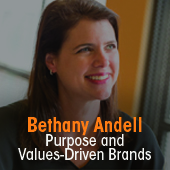
Bethany is President of Savage Brands, a Houston-based branding, culture building, and marketing agency. In this episode, we talk about how she employs a servant/leadership mentality to her company and how her passion drives success at Savage and her client’s business.
This is a great conversation with a company building deep relationships across Texas.
.
Transcripts are generated by machine learning, so typos may be present.
Chris Hanslik: In this episode of Building Texas Business, you will hear from my friend, Bethany Andell, and how she employs a servant leadership mentality to her company, and how passion drives success, not only in her own business, but the business of her clients. Hello, everyone. My name is Chris Hanslik, and I’m the chairman of BoyarMiller, a midsize law firm in Houston, Texas. I want to welcome you to Building Texas Business, a podcast about corporate innovation, entrepreneurship, and business leadership in the Lone Star State. The goal of this podcast is to learn from some of the best business leaders in Texas in hopes that their stories of growth, challenges, and success will inspire our listeners in their own journey to building a successful business. Today’s guest is Bethany Andell, president of Savage Brands, based in Houston, Texas. Savage helps organizations uncover who they are and what they stand for, and uses this foundation to craft compelling brands, marketing strategies, and engaged employees. As a second generation leader of Savage, Bethany is passionate about connecting leaders to their purpose, ensuring that companies live their values, and that their brands have lasting meaning. Welcome to the podcast, Bethany.
Bethany Andell: Thanks, Chris. I’m so glad to be here.
Chris Hanslik: Well, we’re glad you took the time out of your day to join us. Let me ask you to start with the fact that you are a second generation leader. Tell me what inspired you to stay in and continue the business that your mother founded.
Bethany Andell: Sure. Well, the reality is I never wanted to be in the business. So it was never my intention growing up. I did not, you know, go through college thinking I’d ever be a part of it. But, you know, reality hit, which was my mom as an entrepreneur that a lot of people face is what’s my exit strategy. And she contacted me. I wasn’t even living in Houston and said, please come to Houston and see if this works for you and if you like it and, you know, et cetera, et cetera. That was 22 years ago. So, I found pretty quickly that I fit right in and that I loved the opportunity. to build upon what she had done that was very successful. And I think a lot of people can relate to this, which is you really have to reinvent your business every, I’ll say six to seven years, because we’re trying to outpace commoditization at all times. And so it really feels like my business. I mean, I came in at a time where, you know, you could buy a logo for $40 online. So we’re being commoditized. And I kind of with this inflection point of I could be the McDonald’s of you know, design or I can really change and shape the company directionally in a different way, which is what I obviously did by creating a strategy company. So I love it and I’m just building on her legacy and hopefully creating my own along the way.
Chris Hanslik: That’s great. I’m sure it had to be special to be able to work alongside her in the early days and learn from her.
Bethany Andell: She’s amazing. I got that opportunity. I love that opportunity and you know, that could get tricky in some family businesses, but she really allowed me to, you know, have a vision and create that as a leader and kind of really moved out of the way, enabling me to do that, let me fail, even make some decisions that she probably knew were bad decisions at the time, but not catastrophic, thank God. And so here I am today. So it’s really been a pleasure to work with her.
Chris Hanslik: That’s great. So what do you believe is the key to building the type of business that you’re in?
Bethany Andell: Well, you know, when I came into the business, you think you tend to think of things like sales, you know, increase the revenue or, you know, cost containment and those the stuff you learn in business school. And what I’ve come to know is really it’s all about the people that I can’t be successful without coaching and developing my people so that they thrive and become their best selves, whether they’re inside the company or going home to be parents or siblings or daughters and sons or friends. And the other piece is our customers. So really looking at our clients and becoming very intimate with them and understanding their business. So I’ve really learned that the key to building our business is to not have a templated approach. So if we don’t take the time to really understand our clients and their industries and what’s unique to them, then we can’t do our jobs very successfully.
Chris Hanslik: That’s great. I mean, focusing on your people is so important, but also finding that balance between focusing internally on your people, but as well as ultimately externally on your clients. So you have a business that can grow.
Bethany Andell: Well, absolutely. And I think one begets the other, right? I think it was Herb Kelleher that said, you know, if you’re good to your employees or good to your customers, be good to your customers, it’s good for the investors in that order. And I’ve really come to subscribe to that, which I didn’t learn growing up, it’s not your typical curriculum in school, but through experience, you can really see if you’re good to your employees and they’re thriving, they’re engaged and they wanna do more for your clients. And so I’ve really taken that to heart, I believe.
Chris Hanslik: So you mentioned a minute ago that your mom lets you fail. So what were some of the setbacks?
Bethany Andell: So many setbacks.
Chris Hanslik: Tell us about some setbacks or challenges that you’ve overcome or faced and overcome along the way.
Bethany Andell: Well, it’s interesting because, you know, through my journey at the company, you know, we were in Houston and so there’s a lot of cyclicality in our market due to oil and gas. So it’s like just when you think you’re getting over the tipping point. something some external factor happens that kind of knocks you down a peg so hence hence the need to reinvent um and so there’s kind of this external factor piece that continues to be a setback but it’s kind of like how you view a one-time expense it’s actually never a one-time expense it happens every six or seven years you can kind of predict it and so what i’ve had to really Learn to do is to say stay steadfast on what we’re trying to accomplish what we stand for our purpose and if I can really commit to that and show up that way and make decisions in service to advancing our purpose versus making short term decisions that are more survival based. then over the long term, my company is more sustainable. It bounces back a lot quicker. So it’s easy as a leader, as a business owner, to really kind of make decisions that are about you or about immediate returns or whatever it’s gonna be. And it’s a lot harder to put it through this filter of what do we wanna be in 10 years and keeping really focused on that vision and making decisions that way. So that’s what really kind of comes to mind you know, when you say that. I think it addresses any setback or challenge I’ve seen. I could apply that same thinking to that.
Chris Hanslik: That’s great. So what, with that in mind, what are you doing today in your business that you would describe as innovative?
Bethany Andell: OK, so I’m super excited. You know me. I’ve got to get on my platform here. So we’re a branding and communications company. And a lot of times you think of branding as more around positioning. What’s our unique value proposition? What do we look like? What’s our name? What’s our logo? Design some communications materials. We’ve come to discover in our work, especially because we work with a lot of B2B companies, is that your brand is really actually the experience that people have when they interact with your company or believe they’re going to have. And when those experiences don’t go their way, don’t meet their expectations, that becomes your reputation. That becomes what your brand is. And so we’ve evolved our company, A, and you mentioned it in your introduction, which is what do you want to stand for? What does BoyarMiller want to stand for? What are the values of the company and how do we want to show up? And then once you know that, what does the experience look like? So the innovation that we’ve seen in our company and what we deliver out is we’re about experience design. You typically think you hear of UX or experience design related to websites, but when was the last time you really looked at the customer journey or the employee journey inside your company and said, you know, how do we have the opportunity to improve the experiences that these stakeholders are having that match the values that we say we embrace as a brand. And when you do that, then you’re real to me, you’re really brand building. That’s lasting and powerful versus here are values and we put them on a poster and stuck them in the break room or wrote them down on the website. So I think the innovation and branding is that it’s becoming way more experiential and I am at the forefront of that and I want to continue to be at the forefront of that. I think it’s changing, it’s just changing the face of companies altogether.
Chris Hanslik: Well, here at Bordermiller, I can certainly vouch for the value Savage has brought to us in that regard, helping us identify who we are, what we stand for, and how we communicate and share that experience and make sure our clients experience what we say we stand for.
Bethany Andell: Right. Somebody said the other day, does the audio match the video? So if somebody, like a secret shopper, came into Borah Miller, do those, do your values show up? I know they do from personal experience, but that’s, I don’t, I just don’t know if people think of branding in that way yet, and it’s coming.
Chris Hanslik: So what trends are you seeing in your industry?
Bethany Andell: The big trend that we’re seeing, and not even in our industry, let’s just take the business landscape, I’m sure you’re hearing it from your clients as well, is this notion of ESG, which is environmental, social, and governance. I’ll say it’s a trend because it’s talked about right now and you’re seeing a lot of action around it and communication around it, but I don’t think it’s a trend. I think it is here to stay. And so when you think about, we just had a conversation around values, right? You couldn’t ask for a better implementation of values to how a company is thinking about how they’re treating community relations, how they’re treating the environment or improving environmental, how they’re showing up environmentally, benefits and governance, how they’re structuring their company. and mitigating any risks. So the trend for us is all of that culminates into reporting, so actual reporting of ESG metrics, but also packaging. So thinking of branding, how do we weave what we’re doing in the aspects of environmental, social, and governance into our brand narrative, how we talk about ourselves? It’s not a set of corporate values and then a set of ESG values. ESG should be Falling out of or anchored into what the company is so that’s that to me is one of the bigger trends and then the other obvious trend no one will be surprised is just this. Shift to digital almost all digital. I think COVID really perpetuated that where people were resisting in some ways, and then COVID forced them to be thinking more about their digital presence and how they’re, again, experiential, not just marketing, but how they’re delivering services and products online. And that’s another trend that our industry is facing is trying to figure that out for our clients.
Chris Hanslik: Yeah, again, we’ve certainly seen that in our business and how much digital content we’ve been pushing out over the last 14, 15 months.
Bethany Andell: Well, even when you’ve been conducting business. on online too instead of personal meetings.
Chris Hanslik: Absolutely. So when you take into account a set of values, a trend or something that’s here to stay in ESG, how does that formulate for you, your philosophy on company culture?
Bethany Andell: Sure. Well, I like to say that we’re a purpose and values driven company that builds brands and cultures in service to those. If I am saying that we do that for others, we best be doing it for ourselves. If I’m going to revolutionize corporate America, as I have declared, I really want people to come to work on Mondays excited to be there. Something like the heart attack rate on Monday mornings is up by 40% because people have so much anxiety about going to work. And if you think about how much people give you by coming to work, that’s just really scary that that many people don’t like it enough that it’s impacting their health.
Chris Hanslik: It is sad.
Bethany Andell: So can I be a part of that solution for my own company and then for others? And I think that all of that is driven through purpose and clarity around values and then living those. My corporate philosophy is that, you know, you don’t have to listen to everybody else’s opinion about what they want you to be. You know who you want to be as a business owner, entrepreneur, especially in a private company. You can say, this is who we are. This is what we stand for. This is the impact we want to have on the world. And this is how we’re going to go about doing that. And then you attract your tribe. to that. So that is my fundamental philosophy. And then I think the other significant piece to that is we tend to think we’re single-minded about stakeholders. So the public company would probably put the investor first or a private company might put the customer. The customer is always right. The customer comes first. The reality is they’re all interdependent. not one stakeholder is successful without the other one being successful. So I think that that really drives some of how I think about my company. It showed up again in COVID as an example. We had a client that went bankrupt and they were unable to pay their bill to us. But half of that bill was actually owed to a printer. So we were financially on the hook for $20,000. I’ll just be very clear, 20 grand. That’s a lot of money in my world. So if we had not built a great relationship with our supplier, with our printer, we could have been in a lot of trouble. But instead, because we’ve established trust and loyalty and we have a shared sense of values, they’ve worked with us through that until we were able to get paid. So it’s things like that you don’t necessarily think about in the short term, but build over time. And if I can be really intentional about how I build value for my stakeholders, not just for myself, at the end of the day, I think it will be a multiplier of my profit and growth.
Chris Hanslik: You said something a minute ago about having passion and if you are selling something and you don’t do it yourself. I think it’s so true, right? If you don’t believe in what you’re doing and have passion about it, people are going to see through it. Your customers, your people, and whatever you’re trying to promote is destined for failure. The second piece of that is that Every decision you make in a company has multiple stakeholders, right? And when the issues typically, my experience has been when they show up, it comes from one stakeholder. But as you work to resolve that, you’ve got to find a way to bring in all the stakeholders to find the resolution that will work holistically for your organization. Have you experienced the same thing?
Bethany Andell: Absolutely. And it’s really hard to do because that takes time. I mean, you know what I’m saying? You’ve got to step back from yourself because, I mean, I’ll speak for myself, but I know a lot of other entrepreneurs should be this way. We are running and gunning. We are making decisions quickly, but to sit back and take in input from multiple stakeholders in order to make it is like, that’s just a totally different ball game for a lot of people. So yes. And what comes to mind is we had a, I had a, I had a client call me with what they, deemed as an issue on a project we were working on. And the typical me would have just kind of catered to that and said, I will fix it and no worries and I’ll cover it, et cetera, et cetera, et cetera. The new me, the person that has gone, the leader that has kind of evolved with Savage as we’ve started working this way and with this philosophy says, can I please get back to you? It slows down and goes and talks to the team and third parties at some times and gets all of the information and we can develop a win-win. And so it’s made a huge impact, not just with better decision-making and being less reactionary, but by having a little more inclusivity and showing, you know, grace and patience, I get better solutions. I get better answers. I get people that take care of things themselves. instead of relying on me. I think that that’s really a dream come true.
Chris Hanslik: Sounds like it. So we’re talking kind of around it. So I’m going to ask you, how would you describe your leadership style?
Bethany Andell: Well, let’s see. Good or bad, I am highly collaborative and I like consensus not at the risk of not getting things done or not making the decisions, but I do like the bring along. I’m kind of that style of leader that likes to float theory, float ideas, get a lot of different inputs to make decisions. And I do that because I am a servant leader and I view myself as a servant leader. And I guess that’s kind of what you’re asking me is, is my style or philosophy is, Can you think about what you want for people, not from people? And if I think about how I lead that way, and I’ve been an employee many times, I like to be asked. I like to be sought out for my expertise. I like those things. That gives me fulfillment in the role. And so I’ve started, that is my kind of leadership style then is to work that way.
Chris Hanslik: That’s interesting. So I think that’s great. How do you then, because if you ask employees what they think, you don’t necessarily adopt all the inputs you get. How do you go about letting them know they’ve been heard so that they’re willing to continue to contribute the next time you come when it seems like from their perspective, maybe you didn’t listen to them. So how do you tackle that one?
Bethany Andell: Which happens to you. I’m a member of Vistage and some listeners may also be in Vistage or have heard of it, but we’ve got a lot of speakers. So this is one thing that I think addresses this and I’ve adopted, which is I’m not asking them to make the decision. I’m asking for inputs that they may play a black hat. Where am I being blindsided and what am I not seeing? And so I ask it that way. Here’s my assumption, or here’s my theory, or here’s my idea, directionally what I’m thinking. Now, please poke holes in it so that I can come back and make a better, more informed decision. Because I’m afraid if I don’t, if you just stand in a room with employees and you float something, the agreeers are likely to raise their, oh yeah, that’s a great idea. And then the naysayers go to the water cooler and they talk about the six reasons why that was a really bad idea. And you never find out about it. So I’d rather know in the room. And then I’m pretty clear that this is not a consensus decision, this is my decision, but I really want your input. So I’m pretty clear about what I’m gonna be making the decision on, and it is gonna be what it is. And I haven’t had any problems to date.
Chris Hanslik: That’s great. So if you had to say, thinking about qualities of a leader. What do you think is the most important quality of an effective leader?
Bethany Andell: I think that one of the most important qualities of an effective leader is one that can motivate others to do what should be done. So your role, your grand role as a leader is to communicate vision. and bring people along in that. Or recognize that some people shouldn’t or don’t belong as part of that vision. And so that’s where the real decision making starts happening.
Chris Hanslik: Make the hard decisions fast.
Bethany Andell: Yeah, but the second part of that is knowing what must be done. So you have to communicate what you want and motivate and inspire them, but you also can’t be waffling on what must be done to reach that vision. And so I think that’s really critical uh, piece of leadership. And then the other piece is, um, you know, values aren’t created for other people. Like when you have values, you’re saying that those are also your values that you will embody. And too many times I have seen leadership teams or leaders that create these values for their company as if that’s what everybody else should do. And somehow they’re off the hook or they’ve got a different set of values and My friend said, you are what you tolerate. And I love that because, you know, why do we think we’re any different or better than anyone that we’re working with or for? And so I think that’s really important and it’s easy to miss or gloss over. But everybody’s watching you as the leader of the company.
Chris Hanslik: Absolutely.
Bethany Andell: In and out.
Chris Hanslik: I love that quote. You are what you tolerate.
Bethany Andell: You are what you tolerate.
Chris Hanslik: Lovely.
Bethany Andell: I’ve left the office because I got in a bad mood because I just I know that people there’s a mood contagion, right? So if you’re in a bad mood, I think it’s it infects like 10 people is what I’ve heard. And so I don’t need my people in a bad mood. I’m better off just going to just going to step out. You know, if you’re not smiling and it’s not saying don’t be authentic. But, you know, I wear, I’m a type of person that wears all of it, outwardly. So, yeah.
Chris Hanslik: Very good. So, you talked about some challenges earlier, just in general, how you handle that, but more specifically, I mean, can you tell us about a failure you’ve encountered and what you learned from it?
Bethany Andell: You’re so mean.
Chris Hanslik: You said you would be authentic.
Bethany Andell: Failure.
Chris Hanslik: No one fails, right?
Bethany Andell: No, I fail all the time. Uh, you know, this one’s actually kind of hard for me. Um, I failed. I feel big, which is I failed one of my employees and it’s kind of related to everything we’ve talked about. I had a client that was mistreating an employee of mine and admittedly I didn’t do anything about it. And. It’s just ridiculous. It’s so countered what our values, it’s just countered everything, right?
Chris Hanslik: Was it a big client?
Bethany Andell: Well, that’s the problem.
Chris Hanslik: Right?
Bethany Andell: This is the challenge, the setback, right, which is it represented a very significant portion of our revenue at the time, this client. And I didn’t want to upset the apple cart. And she came to my office several times, like we’re talking It was bad. To the point where she quit.
Chris Hanslik: That was my question. Do you still have that employee?
Bethany Andell: No.
Chris Hanslik: Do you still have the client?
Bethany Andell: No. But I don’t have the client because it took her quitting for me to wake up and fire the client. But it was too late. It was too late. And it was terrible.
Chris Hanslik: It was terrible. But at a big cost.
Bethany Andell: Huge cost. And let’s go back to you are what you tolerate. So it wasn’t just this employee. 15 other employees at the company that are watching me stand by and let this happen to one of my employees. I still feel terrible about it.
Chris Hanslik: How did you, or what did you do to repair with the people that stayed at the company?
Bethany Andell: Well, one is, like I’m telling you, I was very open about my mistake, my failure. So there was an apology to the employee and to my company. for what happened. There was a commitment that I would not abide by that anymore with future clients, and I’ve stuck to that. And then the third is kind of what I mentioned earlier, which is not to jump to assumptions that the client’s always right, or the client’s in the right, and to test things and check things out before I go off and react in service just to the client. I’ve got to think about everybody involved. You can see it on me right now. I think my tone changed.
Chris Hanslik: It did. You concerned because I’d like, the one thing I don’t have here is some Kleenex.
Bethany Andell: Or wine.
Chris Hanslik: Or wine. Actually there’s wine around the corner.
Bethany Andell: So I consider that like one of my great personal failures in business. Not a failure of the business.
Chris Hanslik: Well, I really appreciate you sharing that because I know it wasn’t easy. So how about on the mentor side? Is there someone that’s made a significant impact in your career and or just life as a mentor? And what made that person such a good mentor?
Bethany Andell: So can I share three?
Chris Hanslik: I think we have time for that.
Bethany Andell: Yes. Quick. There’s a point to each one of them. Okay. One is my mother. And I’m not saying that just cause she’s listening.
Chris Hanslik: I expected the reason I gave you more than one is I knew that was going to be one of them.
Bethany Andell: But she, she was super influential. I mentioned it earlier. Like she encourages experimentation and failure and learning from failure. Like that’s kind of how she operates. She loves taking risks and being a visionary. And, and that’s just kind of part of the part of the ball game. And I never, you don’t learn that in school, right? So, That was really, that’s something that’s always stuck with me and her whole mantra was always to do good, have fun and make money. And I say that to myself constantly. So she’s a mentor continues to be. The second is a woman named Jackie Dryden who actually went on to be the co-author of the book we wrote. But she’s the one that first approached me and said, Hey, you know, Basically, the industry we’re in is going the way of the dinosaurs. We have to figure out a different way to do business. And that is through purpose and really understanding your purpose. And that has impacted me because I have my purpose in life. I understand my vision and she keeps me directionally pointed that way because I am like a wrap of shiny objects. And I can completely get off course because I get excited about something. And she keeps me really focused on that. So we end up with some pretty tough conversations where she’s like putting the mirror up in front of my face and keeping me on course.
Chris Hanslik: And that’s huge. She’s great. When we first started working with you and your company, I had the pleasure to work with Jackie. And so I can understand why you would say that about her.
Bethany Andell: She’s amazing. And then the third is actually a former client of mine. So this is, if there are any kind of newer entrepreneurs that are listening to this podcast, it’s lonely. Right? I mean, you know, in your business, you don’t, you can’t really share what’s behind some of the curtain with people inside the organization. And so there was a very successful client of mine, CEO of a oil field products company, and he and I became friends. And then I’d taken the lunch thinking like kind of new business. I’d end up kind of spilling my guts about all the stuff I was going through with Savage and big decisions that needed to be made. And he was just, without even asking if he’d be my mentor, really became that for me. He helped me with business. He helped me with really business decisions, blind spots, things that I wasn’t seeing from a completely unique perspective. And then he also said, you know, it’s really dangerous to tell your clients what’s going on inside the company. You may want to join Vistage or someplace where you can get an advisory board. So that was probably the best advice he gave me.
Chris Hanslik: That’s great. You know, I think my experience has been similar where fellow leaders and organizations regardless of the industry we face a lot of the same challenges and so you learn by talking about that with them again you use the word tribe if you can create a tribe whatever that looks like to have those sounding boards there’s always learning in that well i mean that’s huge in all walks of life i’d say and you’re in my tribe i mean boy well you personally steve you know are in my tribe because
Bethany Andell: It takes a village and I don’t know what I don’t know and if I don’t have those people that I can trust and run to especially we’re talking about earlier like you know challenges and setbacks and external factors and what am I not seeing and how do I navigate this. You can’t do that as an island you just can’t do that on your own and so. I mean, I learned pretty quickly that my lawyer, my accountant, my banker are my best friends.
Chris Hanslik: I remember helping you as you were taking over from your mom and how to structure the company and how to set it up for success for you and what your vision was. And that was really when our friendship developed.
Bethany Andell: I grew up with you.
Chris Hanslik: Yeah.
Bethany Andell: I mean, really.
Chris Hanslik: Yeah. So I value that.
Bethany Andell: No, I really do too.
Chris Hanslik: So what advice would you give to other entrepreneurs or business owners out there Any words of wisdom?
Bethany Andell: Well, I sound like a broken record, but I really would compel anyone in business, it doesn’t even matter where you are in the life cycle of your business, if you’re the CEO or the business owner or a new entrepreneur is to get super clear on your purpose and your core values for the organization and do everything through that lens. which often, you know, they get discussed, like I said, they go on a website, they go on a wall, they maybe go into a strategic plan as page one, but are business decisions being made through the lens of what you’re trying to accomplish as a sense of purpose versus profit? And I say that because somewhere along the way, profit moved to the front end of the equation and that doesn’t really make sense if you think about it, right? What drives profit performance and what drives performance especially we’re talking you know Millennials and Gen Z is purpose, meaningful work, engagement in the process, engagement in the experience, feeling connected to something bigger than yourself and I and I’ll say you know because I work with a lot of baby boomers too they want that too you know as they’re moving out of the workforce they’re looking back going God you know what am I leaving in my wake what type of impact did I have I think we all want that And so that’s my advice is is to kind of get your head out of your bottom line Which is right in for a book right and think about? The impact you can have in this world because you can you don’t your impact your spirit influence does not just have to be You know your market share And we have a lot to do
Chris Hanslik: So the last year has been quite a challenge, I think, for everybody, especially business owners. So what have you learned over the last year kind of dealing with the pandemic and how to continue to keep your business, not just afloat, but successful?
Bethany Andell: Sure. I mentioned my village and I will say again, my village really helped me and not just my, you know, my corporate village, but established relationships with people that I’ve built over time. that allowed for me to be my most authentic, vulnerable self when I didn’t know which way was left and what to do. I don’t know how you felt, but there were certain times where I felt completely hamstrung and paralyzed on making decisions because there was so much unknown.
Chris Hanslik: There was so much unknown and so much information coming at you. You think about, you know, March, April, May of 2020, it was coming at you at lightning speed. It was changing almost daily. And the uncertainty was, it was all uncertain.
Bethany Andell: Right. Well, I remember a time I’m going to allot you on this because we probably shouldn’t have been outside of our bubbles, but we got wine kind of midway through. But it was just helpful to have somebody that I absolutely trust that I could just talk through things with that later enabled me to make some decisions. So that to me was huge. And then I think a second piece to this is, well, A colleague of mine always says that adversity doesn’t build character, it reveals it.
Chris Hanslik: And I think that’s huge.
Bethany Andell: I don’t sleep anymore. That’s what I think about in the middle of the night. But when I was thinking about in this past year how to navigate, and I hope that this goes forward even when there’s not adversity, which is this is all a big character reveal. And I think that Savage, and hopefully me personally, have shown up in a way that feels very real, very authentic so that others can trust that what Savage says, Savage does. And in our sort of surviving, which is the first half of 2021, right? How we’re bouncing back and becoming better than we were, that’s what it’s about. So, you know, really, really knowing that I’ve done the right things, I’ve made the right decisions, hopefully, so that I’ve proven to people that if they work with us or when they work with us, that we’re gonna deliver what we say we’re gonna deliver. And that’s exciting for me.
Chris Hanslik: That’s great. Okay, so we’ve covered a lot of good, interesting topics, serious topics. So let’s close this out by having a little fun. So what was your first job?
Bethany Andell: You mean other than working at Savage?
Chris Hanslik: Other than working at Savage?
Bethany Andell: So I was a hostess at the Black Labrador Pub. You remember the Black Lab?
Chris Hanslik: I do.
Bethany Andell: I was. I did not wear the knee-high socks with the short skirts back then. Okay. But that was my first real job. My worst job was working at the Carl Smith Tax Office, alphabetizing voter registration cards. My parents told me to do that so that I would appreciate my education. Okay, if I have to pick one, I’d say Tex-Mex. And you can combo those. The brisket queso at Candente will blow your mind.
Chris Hanslik: That’s true, right? The benefit of these creative chefs now.
Bethany Andell: Yes. I mean, merge it. Delicious.
Chris Hanslik: Okay. Can you recommend a recent book or anything else, you know, a podcast or movie that you’ve seen that you recommend to our listeners?
Bethany Andell: Sure, so this is kind of counter to what I’ve been talking about, which there’s a new documentary or new-ish documentary on WeWork, on Hulu about the WeWork rise and fall. Andrew Newman, Adam Newman, I think is the CEO. And it’s actually a case study in how somebody had great vision and talked and talked and talked about values and tried to create this culture. and then got out over his skis a little bit and really revealed his true character and it all fell apart. And so I think it’s kind of a case study and, you know, don’t say your one thing and behave differently or it destroys everything you’ve built.
Chris Hanslik: That’s what we talked about. People see through it.
Bethany Andell: Yeah.
Chris Hanslik: Eventually.
Bethany Andell: Yeah, absolutely. And so then you start mistrusting the vision and the vision, the original vision of WeWork is pretty cool, but now you just mistrust all of it. So that would probably be the one to watch.
Chris Hanslik: You mentioned your book, so go ahead, I’m sure you would recommend that. Tell her by the name of your book.
Bethany Andell: The name of our book is Get Your Head Out of Your Bottom Line and Build Your Brand on Purpose. So it really is about how to articulate your purpose and values and then create an organization that embodies those. And there’s exercises at the back for DIY and things like that, so worth grabbing on Amazon.
Chris Hanslik: Very good, okay. What do you do for fun?
Bethany Andell: Besides chasing my 12 and 15 year old around town with sports.
Chris Hanslik: Well, I said the emphasis is on the word fun. So that’s what you may spend a lot of your time doing, but I wanna know, I know that’s not fun.
Bethany Andell: Have wine with you. That’s definitely fun. That’s fun. Now, I’ve been spending a lot of time at my friend’s ranch and I did not I grew up in Texas, but I’m a city girl and I never grew up having experiences on big open country. There’s nothing better than a Jeep ride out in the fields to go look at the cows with the creek and grabbing a beer and sitting around a campfire. I’ve just really soaked it in because I’m such an extrovert. I’m such a go-getter. I’m always out and about and running around and just taking that time to reduce my pulse and enjoy myself and enjoy the outdoors. It’s been really what I’ve looked forward to.
Chris Hanslik: That’s great. Well, Bethany, again, I can’t thank you enough for taking the time to join me on this podcast, as well as all the thoughtful insight you shared with us today and with our listeners.
Bethany Andell: Thanks for having me.
Chris Hanslik: Absolutely. And there we have it, another great episode. Don’t forget to check out the show notes at boyarmiller.com forward slash podcast. And you can find out more about all the ways our firm can help you at boyarmiller.com. That’s it for this episode. Have a great week and we’ll talk to you next time.
With a deep understanding of your business alongside clear and honest communication, we help clients face challenges fearlessly.
Learn more about our services and how we help clients.